
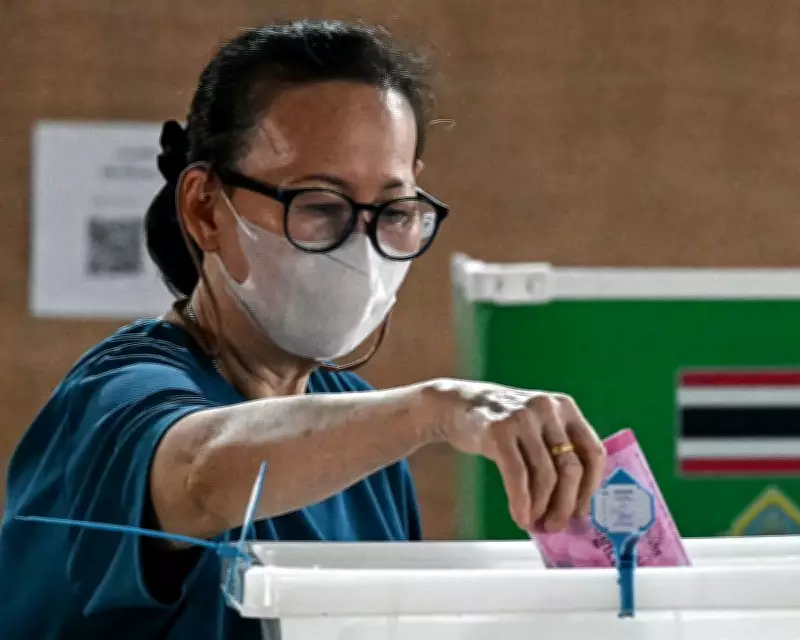
On Sunday, 8 February 2026, polling stations opened across Thailand for a highly anticipated general election, marking a critical moment in the nation's turbulent political landscape. Voters in Bangkok and beyond cast their ballots in a contest that pits a youthful pro-democracy movement against established rivals offering nationalist and populist platforms. This election unfolds against a backdrop of economic challenges and a history of judicial and military interventions that have repeatedly reshaped Thai politics.
A Three-Horse Race for Government Formation
The election features three main parties vying to form the next government, with none expected to secure an outright majority. The People's party, led by 38-year-old former software engineer Natthaphong Ruengpanyawut, has surged ahead in opinion polls, driven largely by support from younger voters. This party pledges sweeping structural changes to Thailand's political and economic systems, including making the military more accountable, tackling big business monopolies, and rewriting the constitution to enhance democracy. However, it faces significant hurdles, as its candidates are embroiled in looming legal battles, and the party is not anticipated to win a clear majority, potentially complicating coalition-building efforts.
Historical Context and Political Interference
Thailand's political history is marked by street protests, military coups, and frequent interference from powerful institutions like the constitutional court. The People's party's predecessor, Move Forward, which won the most votes and seats in the 2023 election, was blocked from power by military royalist factions and later dissolved by the court. In 2024, Move Forward was banned after its promise to reform the draconian lese-majesty law—which criminalises criticism of the monarchy with penalties of up to 15 years in prison—was deemed unconstitutional. An earlier incarnation, Future Forward, faced a similar fate, triggering months of protests. For legal reasons, the People's party has dropped its policy to amend this law but continues to advocate for other reforms and prioritise anti-corruption measures.
Key Rivals and Their Platforms
The People's party faces stiff competition from incumbent Prime Minister Anutin Charnvirakul, leader of Bhumjaithai, and the populist Pheu Thai party. Anutin, a staunch royalist, has positioned himself as a strong leader focused on protecting Thailand's sovereignty, particularly amid growing nationalism linked to border conflicts with Cambodia. He became prime minister in September after his predecessor was removed over ethics violations related to handling the Cambodia dispute and dissolved parliament in December to call this election when threatened with a no-confidence vote. Voters like Yuernyong Loonboot, 64, who cast the first ballot in Buriram, express anxiety over border tensions, highlighting the emotional weight of these issues.
Pheu Thai, associated with jailed former leader Thaksin Shinawatra, is promising populist policies, including a scheme to give nine people 1 million Thai baht daily to integrate the informal economy into the tax system. This three-horse race reflects deep divisions in Thai society, with each party appealing to different voter bases through promises of stability, reform, or economic relief.
Economic Struggles and Constitutional Referendum
The election occurs as Thailand's economy grapples with sluggish growth, hampered by political instability that has seen three prime ministers in three years, two ousted by court rulings. Adding to the complexity, Sunday's vote includes a referendum on whether to redraft the 2017 constitution, a legacy of military rule. Voters are asked only to authorise parliament to begin a formal drafting process, which is likely to be lengthy, with no details provided on the proposed changes. Pro-democracy groups argue that rewriting the charter is essential to reduce the influence of unelected institutions like the military and judiciary and to foster a more democratic system.
As Thai voters head to the polls, the outcome of this election could signal a shift towards greater reform or reinforce existing power structures, with implications for the country's future governance and international relations in the Asia Pacific region.




