
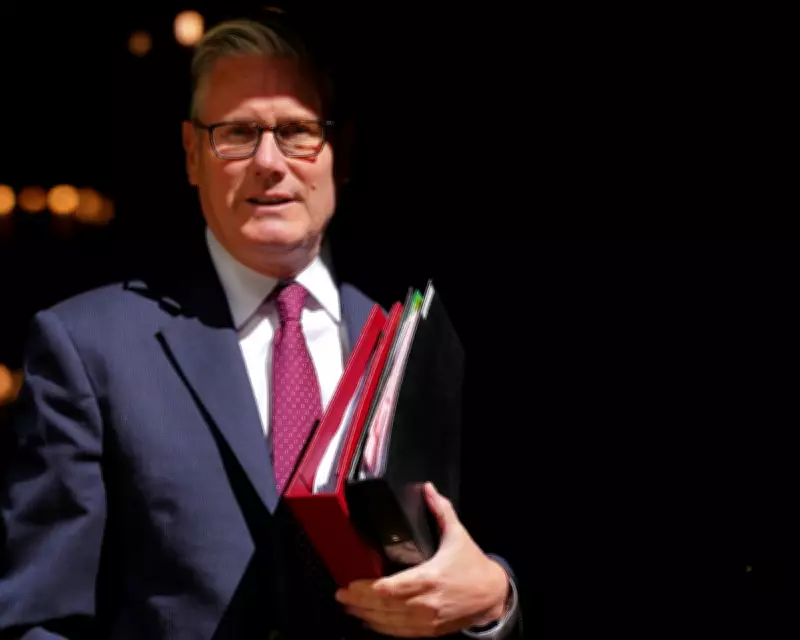
One of the last true believers, Pat McFadden, was sent out to defend kryptonite Keir Starmer, who is determined to see his five-year term through, even if it is not what the country or the party wants.
On the eve of the elections, Downing Street had concluded that letting Starmer loose on the campaign trail was a surefire way to lose votes. Canvassers confirmed that the prime minister was kryptonite to Labour’s chances; mentioning his name made voters turn away, some even making the sign of the cross. The less everyone saw of Starmer, the more they liked him. He functioned best as an abstract idea rather than a living person.
Thus, it fell to Pat McFadden, the secretary of state for work and pensions and one of the last true believers alongside Steve Reed, to take on the Wednesday morning media round. A trusted pair of hands, McFadden dismissed any panic. When asked why the prime minister had been so low profile with almost no campaign appearances, he insisted Starmer had been extremely busy running the country, coordinating a national antisemitism response, and dealing with the fallout from the Iran war that the Tories and Reform had as good as started.
McFadden argued that it would have been a dereliction of duty for Starmer to take time out for interviews and stump speeches. The Jewish community was under threat, and the country was on the verge of rationing. To prioritize party over country would be wrong. In fact, Starmer saw losing as many seats and councils as possible as a badge of honour, proving he was doing a good job. All other parties were preoccupied with their own narrow self-interest, showing they were unfit to govern, even though they were bound to do better than Labour and end up in power.
But whatever happened on Thursday, the prime minister would be going nowhere on Friday, Saturday, or Sunday. Starmer had unfinished business and was determined to see his five-year term through, despite what the country or the Labour party wanted. Even if Labour performed worse than expected, Starmer would remain in Downing Street. Talk of moves against him was nonsense; everyone was right behind him.
McFadden cited Wes Streeting as a loyal supporter, noting that Streeting had phoned Starmer to deny rumours of a coup. The more seats Labour lost, the safer Starmer’s position was. The only time Streeting might have second thoughts was if Labour did better than expected, but that was not going to happen. Similarly, Angela Rayner had apologized to Starmer for supporting the Tories’ humble address over the Peter Mandelson scandal, and they had shared a laugh about his threats to make life difficult for her with HMRC. She might even return to the cabinet after a reshuffle, depending on her acceptance of his offer.
As for Andy Burnham, he had been asking Manchester MPs if they fancied becoming life peers, but that was only because he was a caring man checking on future career plans. McFadden had no clue where rumours about Starmer not blocking Burnham’s return to the Commons in exchange for biding time came from; it was mischief-making from the Tory press.
McFadden argued that the country had voted for Starmer, so he should be given a fair chance to turn things around. Just because voters on the doorstep said he was unpopular and had to go did not mean they actually meant it. However, the logic of swiping left on prime ministers was tested: removing Boris Johnson and Liz Truss was clearly in the national interest, even if it was better not to have elected them in the first place. McFadden was not tested on this argument, so the conclusion remained: whatever happened in the elections, Starmer was safe in his job, unless he was not. It was entirely in his hands whether he stayed, as long as the Labour party also wanted him. The country wanted him to stay and go at the same time. One thing McFadden knew: anyone who came for Starmer would have to come for him first.




