
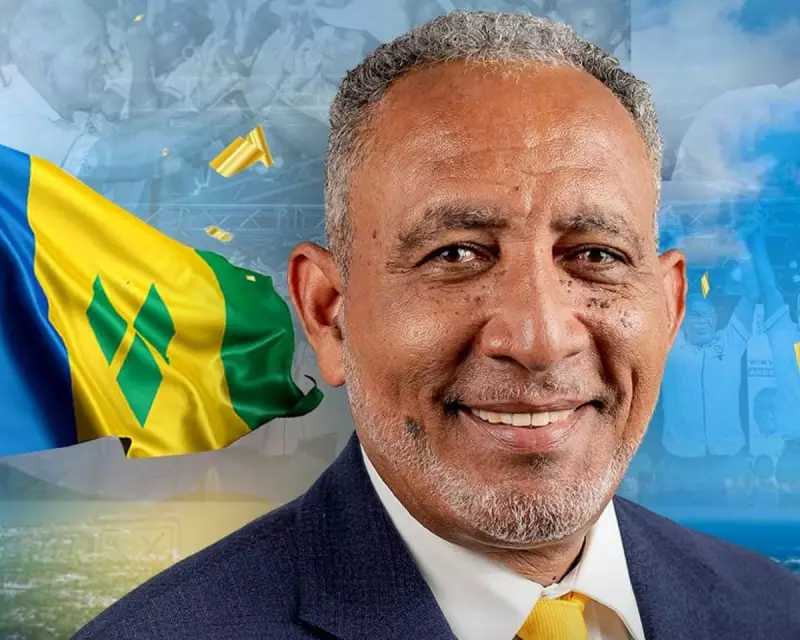
In a dramatic political upheaval, the New Democratic Party (NDP) has achieved a historic landslide victory in St Vincent and the Grenadines, fundamentally reshaping the Caribbean nation's political landscape after more than two decades of continuous rule by the Unity Labour Party (ULP).
A Crushing Defeat Ends an Era
Preliminary election results reveal an overwhelming triumph for the opposition NDP, which secured 14 of the 15 parliamentary seats in a decisive rebuke to the incumbent government. This outcome represents a devastating collapse for the ULP, which had maintained power since 2001 under the leadership of Ralph Gonsalves, the Caribbean's longest-serving prime minister.
The scale of the victory became apparent as results showed Gonsalves as the only ULP candidate to retain their seat, marking a severe decline from the party's previous nine-seat majority. The political earthquake means that after 23 years at the helm, Gonsalves will hand over power to NDP leader Godwin Friday.
Regional Reactions and Analysis
Regional political analyst Peter Wickham captured the significance of the moment, remarking on Facebook: "Looks like a giant has fallen in Vincy" as it became clear that Gonsalves, a prominent advocate for climate justice and slavery reparations, was facing defeat.
International congratulations began flowing to the incoming leader on Friday, with Jamaica's Prime Minister Andrew Holness describing the election as "an important moment for the Vincentian people." Despite dealing with Hurricane Melissa's devastation, Holness took to X to wish Dr Friday success in his new role and emphasize Jamaica's commitment to strengthening Caribbean cooperation.
Understanding the Political Shift
The incoming prime minister, 66-year-old lawyer Godwin Friday, assumed leadership of the NDP in 2016 but has served in parliament since 2001. His party's campaign resonated with voters by promising to create more and better-paid jobs, tackle rising crime and violence, and improve healthcare and infrastructure.
Notably, the NDP had also pledged to follow other Caribbean nations in establishing a citizenship by investment programme, a significant policy shift for SVG, which remains the only member of the seven-state Organisation of Eastern Caribbean States not to offer such schemes.
International relations lecturer Emanuel Quashie from the University of the West Indies attributed the ULP's defeat to multiple factors. "There was a lot of anti-Ralph sentiment given that he was in power for so long," Quashie observed, while acknowledging Gonsalves' leadership through numerous crises including the global financial crisis, pandemic, volcanic eruption, and hurricane events.
Quashie highlighted that the government's Covid-19 vaccine mandate significantly eroded support for the ULP. The controversial policy, which required most frontline workers to be vaccinated, resulted in job losses for some and even led to Gonsalves being hospitalised in 2021 after being struck on the head with a stone during an anti-mandate protest.
The analyst also suggested that the ULP's campaign messaging failed to effectively communicate their achievements, ultimately proving unconvincing to voters seeking change after more than two decades of continuous governance.




