
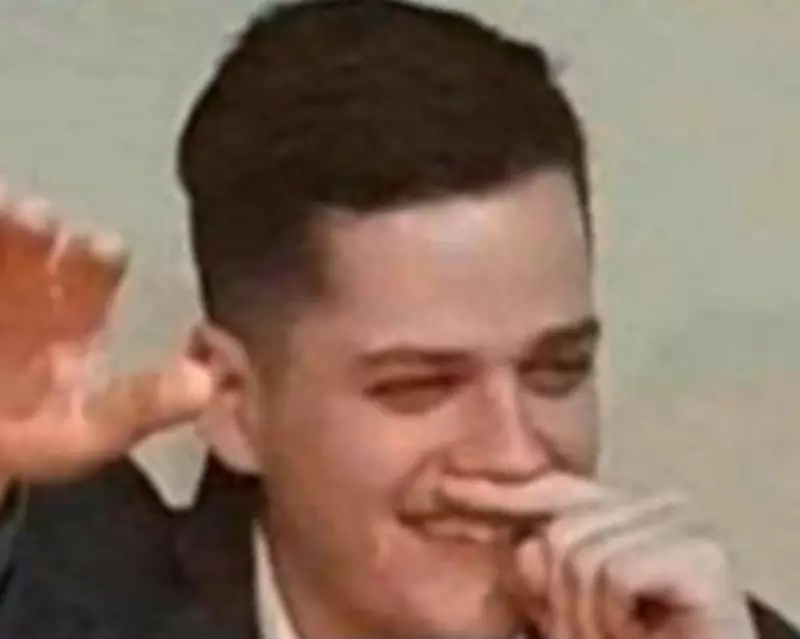
The political landscape in Wales has been rocked by a significant development as a Reform UK candidate for the upcoming Senedd elections has announced his withdrawal from the campaign. This decision comes in the wake of a controversial photograph that surfaced, depicting the candidate in a pose that closely resembles a Nazi salute. The incident has sparked widespread debate and raised questions about candidate vetting processes within the party.
The Controversial Photograph and Immediate Fallout
The photograph in question features Corey Edwards, who was Reform UK's lead candidate for the Pen-y-bont Bro Morgannwg constituency. The image, published by the Nation.Cymru website, shows Edwards raising his right arm with a finger of his left hand positioned under his nose. This gesture bears a striking resemblance to historical images associated with Nazi Germany, creating immediate controversy and public outcry.
Edwards, who previously served as an adviser to Conservative former Welsh secretary David TC Davies, found himself at the center of a political storm following the photograph's publication. The timing proved particularly sensitive with Welsh Senedd elections scheduled for May 7th, placing additional pressure on both the candidate and his party to address the situation promptly and appropriately.
Mental Health Concerns Prompt Withdrawal
In a significant turn of events, Reform UK announced that Edwards would be stepping down from his candidacy. A party spokesperson for Reform UK Wales stated: "Corey Edwards has informed us that he is stepping down as a candidate for the Senedd election this May, citing issues with his mental health. We wish him well for the future and hope his privacy can be respected at this difficult time."
The decision to withdraw on mental health grounds adds a complex dimension to what might otherwise have been a straightforward political controversy. It highlights the increasing awareness and sensitivity surrounding mental health issues in political life, even as it raises questions about the timing and circumstances of such declarations in response to political scandals.
Nigel Farage's Controversial Defense
Perhaps the most remarkable aspect of this unfolding story emerged from Reform UK leader Nigel Farage's initial response to the photograph. In a television interview conducted on Thursday, Farage offered an unexpected defense of his candidate's actions, suggesting the gesture might have been an imitation of a famous comedy character rather than a political statement.
"It was a Fawlty Towers impression," Farage asserted during the interview. "Maybe we should ban the BBC, I don't know." He was referring to a specific episode of the classic 1970s BBC sitcom where the main character, Basil Fawlty played by John Cleese, performs a similar gesture while goose-stepping in front of German hotel guests.
Despite this defense, Farage acknowledged the problematic nature of the image, stating: "I get the point – it looks terrible. Things in isolation often do. I wouldn't approve of it." When questioned about whether Edwards would face suspension from the party, Farage responded: "No, he's a human being," emphasizing a more compassionate approach to the situation.
Conflicting Explanations and Historical Precedents
The controversy deepened as Edwards himself offered a different explanation for the photograph. In an initial statement released on Thursday, the candidate claimed he had been imitating Welsh goalkeeper Wayne Hennessey, who was photographed making a similar gesture in 2019. Hennessey had famously claimed at the time that he didn't know what a Nazi salute was, a defense that drew considerable skepticism from commentators and the public alike.
This conflicting narrative – with Farage suggesting a Fawlty Towers reference and Edwards pointing to a football incident – created confusion about the true nature and intent behind the gesture. The multiple explanations only served to intensify scrutiny of both the candidate's judgment and the party's handling of the situation.
Broader Context of Reform UK Candidate Challenges
This incident represents just one of several candidate-related challenges facing Reform UK as it prepares for elections across the United Kingdom. The party has experienced similar difficulties in Scotland, where four candidates either stood down or were suspended within a week of being announced by Farage.
In one particularly notable Scottish case, Reform UK suspended candidate Stuart Niven less than a day after announcing his candidacy for Dundee City West. This swift action came after revelations that Niven had been struck off as a company director, raising questions about the party's vetting procedures.
Three other Scottish candidates have faced criticism for sharing offensive, far-right, or false information on social media platforms. These incidents include one candidate describing Scotland's first Muslim leader Humza Yousaf as "not British" and another endorsing social media posts by controversial figures Tommy Robinson and Britain First.
Welsh Political Landscape and Reform UK's Position
The withdrawal of Corey Edwards leaves Reform UK with confirmed candidate Laura Anne Jones as the party's sole Senedd member in Wales. Jones herself faced controversy last November when she was suspended from the Welsh parliament for two weeks after using an offensive Chinese slur in an office WhatsApp group.
These successive controversies raise significant questions about Reform UK's candidate selection processes and the broader challenges facing smaller political parties as they seek to expand their representation. With elections approaching, the party must navigate these difficulties while maintaining credibility with voters who may be concerned about the judgment and suitability of its candidates.
The incident also highlights the intense scrutiny facing political candidates in the digital age, where past actions and photographs can resurface with potentially devastating consequences for political careers. As social media and online archives make historical behavior increasingly accessible, political parties face growing pressure to implement thorough vetting processes while candidates must exercise greater caution in their public and private conduct.




