
In a remarkable political transformation, Queens has emerged as America's new electoral compass, replacing Ohio as the nation's premier political bellwether. This diverse New York borough now serves as the crucial indicator of national voting patterns that journalists and analysts once sought in Midwestern states.
The Decline of Traditional Bellwethers
For over half a century, Ohio stood as the undisputed predictor of American presidential elections. From 1964 through 2016, the state consistently backed the winning candidate, drawing political correspondents to cities like Columbus and Cincinnati every four years. However, this pattern shattered in 2020 when Joe Biden captured the presidency without carrying Ohio, which has since turned deeply Republican.
The bellwether collapse extends beyond Ohio. Several former battleground states including Iowa, Missouri, and Florida have similarly shifted firmly into Republican territory, leaving political observers searching for new territories that reflect the nation's evolving political landscape.
Queens: America in Microcosm
With 2.3 million residents, Queens would rank as America's fifth-largest city if independent from New York. Its extraordinary diversity makes it uniquely representative of the nation's changing demographics. Nearly half of Queens residents are foreign-born, creating a rich tapestry of cultures and political perspectives.
The borough's ethnic composition reveals its microcosmic quality: approximately 25% white, 25% Latino, nearly 25% Asian, and 17% Black. An astonishing 140 languages echo through neighbourhoods that range from Flushing's "Chinese Times Square" to Astoria's Greek communities, Jackson Heights' "Little Colombia," and Woodside's "Little Manila."
This cultural mosaic combines with quintessential American institutions like Citi Field, the USTA Tennis Center, and both LaGuardia and JFK airports. The borough claims both Archie Bunker's blue-collar legacy and Awkwafina's contemporary stardom, embodying America's cultural evolution.
The Political Realignment in Action
The 2024 election demonstrated Queens' new significance in dramatic fashion. While Joe Biden had carried the borough by a commanding 45-point margin in 2020, Kamala Harris saw that advantage shrink to just 24 points four years later. Trump gained significant ground in heavily Latino, Chinese, and South Asian neighbourhoods, signalling a notable political shift.
Multiple factors drove this transformation. Residents reported growing concerns about public disorder following the pandemic, exacerbated by the sudden influx of migrants placed in residential neighbourhood shelters. Complaints about crime, loitering, and diverted resources resonated through communities already grappling with rising rents and grocery costs.
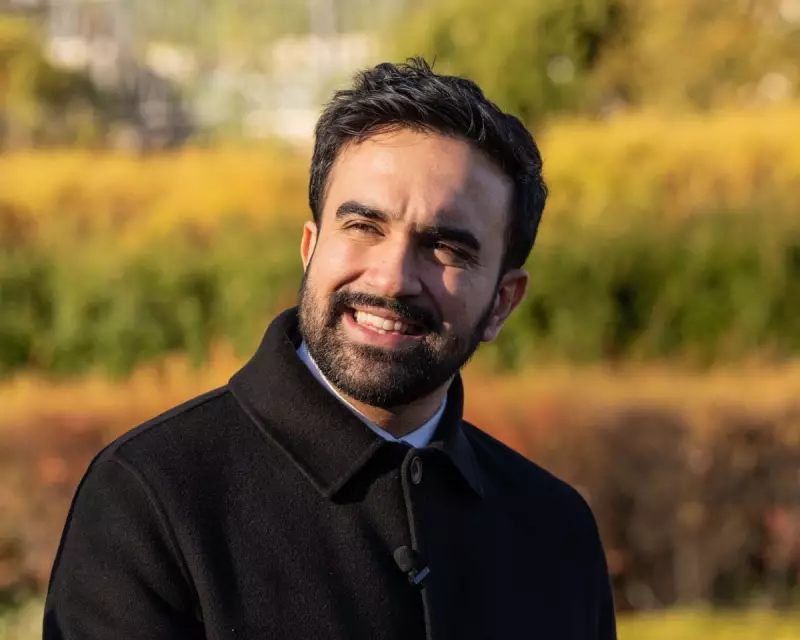
Yet this rightward movement coexists with strengthened progressive politics. Democratic socialist Alexandria Ocasio-Cortez secured 69% of the vote in her Queens-Bronx district, while state assemblyman Zohran Mamdani built a diverse coalition around platform of universal childcare, free buses, and rent freezes.
Mamdani's success in the 24 June Democratic primary demonstrated the complexity of Queens' political landscape. His campaign mobilized left-leaning young professionals, working-class Latinos, and recently arrived South Asians, with groups like Drum Beats canvassing tens of thousands of residents.
National Media's Blind Spot
Despite these developments, national news organizations have largely treated Queens as "flyover country," with The New York Times particularly slow to recognize the borough's political significance. As the paper transformed into a global publication, its coverage of New York's blue-collar neighbourhoods diminished significantly.
This oversight proved consequential during the mayoral race, when the Times failed to detect the groundswell supporting Mamdani. When his strength became undeniable, the paper responded with dismissive coverage, including an editorial questioning his qualifications and an investigative piece examining his college application ethnicity selections.
Only after Mamdani's victory and Ocasio-Cortez's continued influence did the Times acknowledge Queens' "moment," noting that three of the top four neighbourhoods to watch in 2025 surveys were located in the borough.
The convergence of Trump's gains and Mamdani's success underscores Queens' new role in American politics. Both figures represent anti-establishment currents appealing to working-class voters, despite their ideological differences. With Ocasio-Cortez considering higher office and Queens claiming multiple rising political stars, the borough has unquestionably become America's new political bellwether – no longer requiring journalists to book flights to the Midwest when the 7 train to Jackson Heights reveals the nation's political future.




