
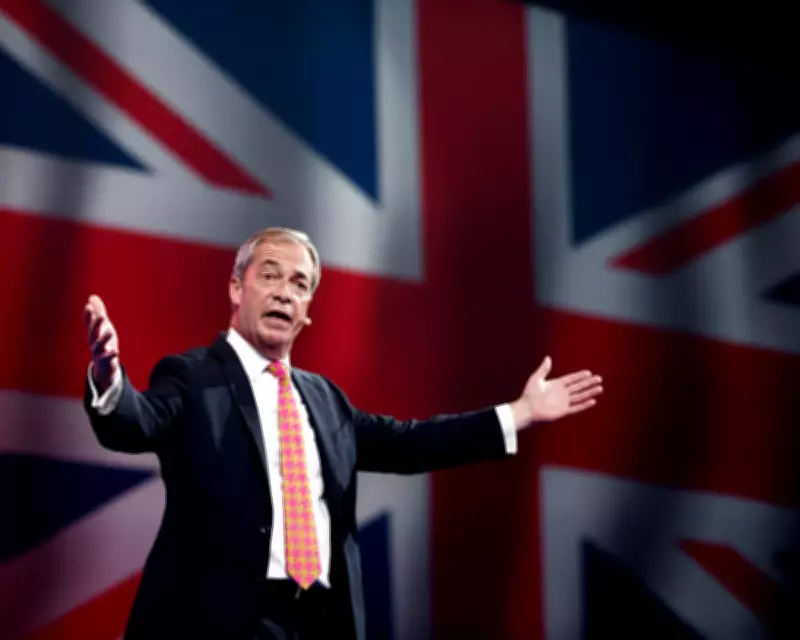
Labour’s nationwide collapse risks elevating Nigel Farage as the face of the UK’s fragile union, warns columnist Rafael Behr. Scottish and Welsh nationalism could be further radicalised if Reform UK sets the tone of debate over inclusion in the British state.
Keir Starmer has neither a heartland nor a stronghold, a picture likely to emerge once all votes in this week’s local and devolved elections are counted. Council seats in Labour’s traditional northern-English working-class base will fall to Reform UK, while parts of inner London will go Green.
The Scottish National party will remain the largest party at Holyrood, thwarting Labour’s hopes of ending its banishment from power there. If polls are correct, Plaid Cymru could become the largest party in the Senedd, ending Labour’s dominance in Welsh politics since devolution in 1999.
Northern Ireland and Scotland already have first ministers opposed to union with England. Wales will join that number if Plaid Cymru’s nationalist leader, Rhun ap Iorwerth, forms the next government at Cardiff Bay. This would not sound a death knell for the UK, but it would be a symbolic fracture.
Downing Street will look ridiculous pretending such results are normal midterm turbulence. Even in best-case scenarios from current polling, Starmer will appear as a caretaker leader of a party struggling to identify its core voters. The Conservatives are not faring better, with their electoral base partitioned along a Brexit faultline.
Reform appeals to angry, disillusioned leave voters, while the Liberal Democrats consolidate their hold over remainer belts in former Tory suburbs. The two-party duopoly that defined 20th-century British politics has broken down everywhere except the Palace of Westminster.
Labour’s first “red wall” to fall was in Scotland, demolished by the SNP. Some terrain was recovered in Starmer’s 2024 general election win, but Scottish Labour faces another term of opposition in Edinburgh. The SNP benefits from a bedrock of independence supporters and a fragmented pro-union vote.
Anas Sarwar, Labour’s leader in Scotland, has repudiated Starmer, but the national brand remains an albatross. Eluned Morgan, Wales’s first minister, faces similar problems compounded by double incumbency. Starmer’s arrival in Downing Street removed the ability to deflect blame onto Tory rule.
For Welsh left-leaning voters, Plaid Cymru offers a multi-use electoral tool: try something new, punish Labour, prolong Tory exile, and block Faragism. This does not amount to a surge in independence demand, but a Welsh nationalist government could effect systemic drift, making Welsh politics feel remote from the rest of the UK.
Plaid, like the SNP, can govern from a stance of perpetual opposition, framing debates as questions of who can be trusted to stand up for Wales without conflicting allegiance. The challenge could be greater if Farage becomes the standard bearer for unionism, with his party poised to come second in Wales and Scotland.
Reform’s Scottish and Welsh supporters care about immigration, economic insecurity, and antipathy towards Westminster politics. Constitutional structures are not their focus, but the union question could be sucked into a feedback loop of polarisation if Faragism sets the tone of resistance to independence movements.
Reform’s anglocentric, Brexit-coded, racially inflected British nationalism could give moderate voters in devolved nations a taste for rupture. A sharpening of pro-independence demands would animate resentful English nationalism, viewing the constitutional setup as a scam.
There is a precedent in the breakup of the USSR, where secession demands on the periphery became inevitable once Russia moved for dissolution. The comparison is flawed, but it is possible to glimpse in Starmer a hint of Mikhail Gorbachev – the reforming apparatchik who underestimated the scale of the challenge.
Votes have not yet been cast, but a safe prediction is that the map of British politics will be a more Technicolor mosaic after these polls. Britain will still have a Labour government with a huge majority, but Starmer will lead a party with no place to call home.




