
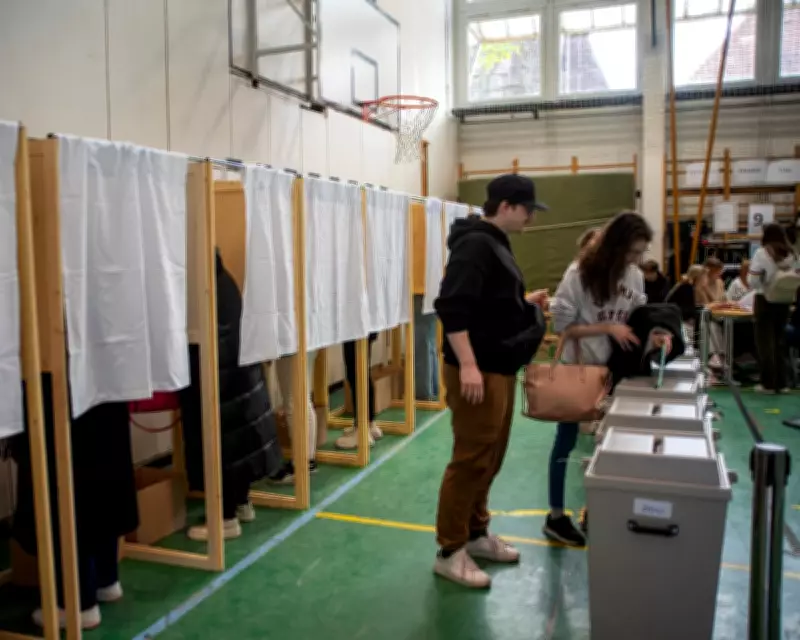
Hungarian Election: Hope and Fear as Voters Challenge Orbán's 16-Year Rule
Voters across Hungary turned out in record numbers on Sunday, casting ballots in a parliamentary election that represents the most significant challenge to Prime Minister Viktor Orbán's 16-year tenure. The atmosphere was charged with what one young voter described as "hope, anxiety, and fear" as Hungarians weighed the prospect of change against the stability of the status quo.
A Nation at a Crossroads
For 22-year-old Fruzsi, waiting to vote at a polling station in central Budapest, the election felt historic. "I think everyone is hopeful," she said, her voice tinged with optimism. "It feels like we might be writing history tonight." Like many Hungarians, Fruzsi has known no other prime minister than Orbán, who has transformed Hungary into what he calls "a petri dish for illiberalism" during his time in power.
The election campaign has been particularly hard-fought, with Orbán's Fidesz party consistently trailing in polls against the newly formed Tisza party led by Péter Magyar, a former Fidesz insider who has become a vocal critic of the government.
The Rise of an Unexpected Challenger
The political landscape shifted dramatically in early 2024 when Magyar began speaking out against his former party, alleging widespread corruption and cronyism within Fidesz. His hastily formed centre-right Tisza party quickly rose to the top of opinion polls with promises to repair Hungary's relationship with the European Union, crack down on corruption, and restore democratic checks and balances.
This transformed the election from a routine parliamentary contest into a broader plebiscite on Hungary's future direction. Magyar's campaign focused on tackling economic stagnation, fraying social services, and systemic corruption, while Orbán emphasized national security concerns, particularly the war in Ukraine, positioning himself as the only leader capable of keeping peace.
Divergent Perspectives Among Voters
The campaign's contrasting messages were reflected in how different voters approached Sunday's election. Mária, an 81-year-old voter, expressed support for Fidesz, saying, "Hopefully Fidesz will win. They help the young and elderly in so many ways, and I trust that they will continue to protect the country."
Another voter named Mária, 58, echoed this sentiment: "I can't think of any negative things to say about Fidesz. I'm hopeful they will have a super majority." She expressed fear about the alternative, calling Magyar "a disaster" and describing Tisza as "unpredictable."
In contrast, Gergő, 36, said the time had come for change after 16 years of watching Orbán's government target various groups and institutions. "The government attacks everyone, from teachers to judges, all kinds of minority groups," he said. "There's always another enemy – it's endless."
International Implications and Domestic Concerns
The election is being closely monitored internationally, as an Orbán defeat could impact far-right movements globally and reshape Hungary's relationships with both Russia and the European Union. Despite Tisza's lead in pre-election polls, analysts cautioned that the outcome remained uncertain due to several factors: undecided voters, electoral map changes favoring Fidesz, allegations of vote-buying, and votes from Hungarians living abroad.
Orbán maintains strong support among certain international allies, particularly in the United States where his brand of right-wing populism has inspired figures like Donald Trump, who repeatedly endorsed Orbán on social media during the campaign. Ohio Senator JD Vance traveled to Budapest in the final days before the election to rally behind the Hungarian leader.
Personal Stakes and Practical Realities
For many younger Hungarians, the election carries deeply personal implications. Mira, a 26-year-old lawyer, explained that her decision to remain in Hungary depends on the election outcome. "I want to stay here, but obviously corruption has reached such proportions that healthcare and education are practically unacceptable," she said. If change doesn't come, she's uncertain about her prospects abroad with a Hungarian law degree.
Even among Tisza supporters, expectations for immediate change are tempered by practical realities. During Fidesz's 16 years in power, the party has stacked state institutions, media, and the judiciary with loyalists. Additionally, constitutional changes require a two-thirds parliamentary majority, meaning Tisza's ability to implement reforms could be limited even with an electoral victory.
Zoltán, 29, acknowledged these challenges: "They're leaving so much behind – from the budget deficit to all their loyalists – as long as those things remain, nothing will change. But there will be a vision for the future. And that means that in the long run we can start to build something."
As Hungarians await the election results, the country stands at a pivotal moment, balancing hope for democratic renewal against fears of instability, with an outcome that remains genuinely unpredictable after years of political dominance by one leader.




