
High-Stakes Election in Honduras
Voters in Honduras are participating in a pivotal presidential election that could determine the country's political direction and its relationship with the United States. The election occurs under the shadow of direct intervention from former US President Donald Trump, who has threatened to cut American aid if his preferred candidate fails to win.
Polling stations opened at 7:00 am local time (1300 GMT) and will remain operational for ten hours, with initial results anticipated on Sunday. The election follows years of leftwing governance under President Xiomara Castro and could mark Honduras as the latest Latin American nation to shift rightward, following recent political changes in Argentina and Bolivia.
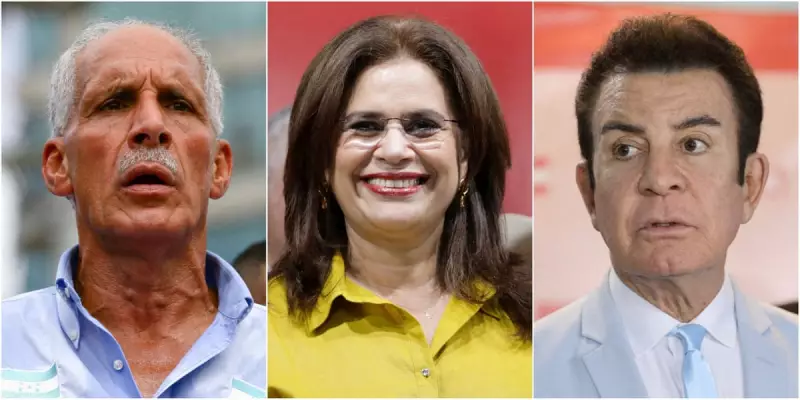
The Three Main Contenders
Current polling indicates an exceptionally tight race between three principal candidates. Nasry 'Tito' Asfura, the 67-year-old candidate from the rightwing National party, has emerged as Trump's favoured contender. Before entering politics, Asfura worked as a building entrepreneur and served two terms as mayor of the capital city, Tegucigalpa.
His main challengers include Rixi Moncada, a 60-year-old lawyer representing the ruling Libre party who has held ministerial positions under both Manuel Zelaya and current President Castro. Moncada has framed the election as a choice between what she calls a 'coup-plotting oligarchy' – referencing rightwing support for the 2009 military ouster of Zelaya – and democratic socialism.
The third major contender is Salvador Nasralla, a 72-year-old television host from the Liberal party. Although Nasralla previously served in Castro's government, he has since distanced himself from the ruling party and shifted his political stance toward the right.
Trump's Controversial Intervention
In a dramatic development on Friday, Donald Trump explicitly conditioned continued US support for Honduras on Asfura's victory. On his Truth Social platform, Trump declared: 'If he [Asfura] doesn't win, the United States will not be throwing good money after bad.' This approach mirrors similar threats he made during Argentina's recent midterm elections in support of President Javier Milei's party.
Even more controversially, Trump announced his intention to pardon former Honduran president Juan Orlando Hernandez, who is currently serving a 45-year prison sentence in the United States for cocaine trafficking and related charges. Despite Hernandez's conviction for transforming Honduras into a 'narco state' during his presidency from 2014 to 2022, Trump claimed the former leader had been 'treated very harshly and unfairly' according to sources he respects.
This pardon pledge represents a significant reversal, given that Trump previously made narco-traffickers the focus of substantial military buildup in the Caribbean region during his presidency.
Broader Implications and Domestic Response
The election occurs against a backdrop of preemptive accusations of electoral fraud from both governing and opposition parties, creating widespread mistrust in the electoral process and raising concerns about potential post-election unrest.
Ana Paola Hall, president of the National Electoral Council, has publicly urged all political parties 'not to fan the flames of confrontation or violence' as the single-round elections proceed. Hondurans are simultaneously selecting members of the unicameral Congress and local mayors alongside the presidential vote.
The outcome carries substantial economic implications for one of Latin America's poorest nations. Since Trump returned to office in January, nearly 30,000 Honduran migrants have been deported from the United States. This crackdown has severely impacted a country where remittances constituted 27% of GDP last year, highlighting the crucial importance of US-Honduras relations for the nation's 11 million citizens.
Asfura has attempted to distance himself from the controversial legacy of his party's figurehead, Hernandez, telling AFP on Friday: 'I have no ties [with Hernandez] ... the party is not responsible for his personal actions.'
Domestic reactions to Trump's intervention have been mixed. Some Hondurans welcome the involvement, hoping it might lead to more favourable treatment of Honduran migrants in the US. Others strongly reject what they perceive as foreign meddling in their country's democratic processes.




