
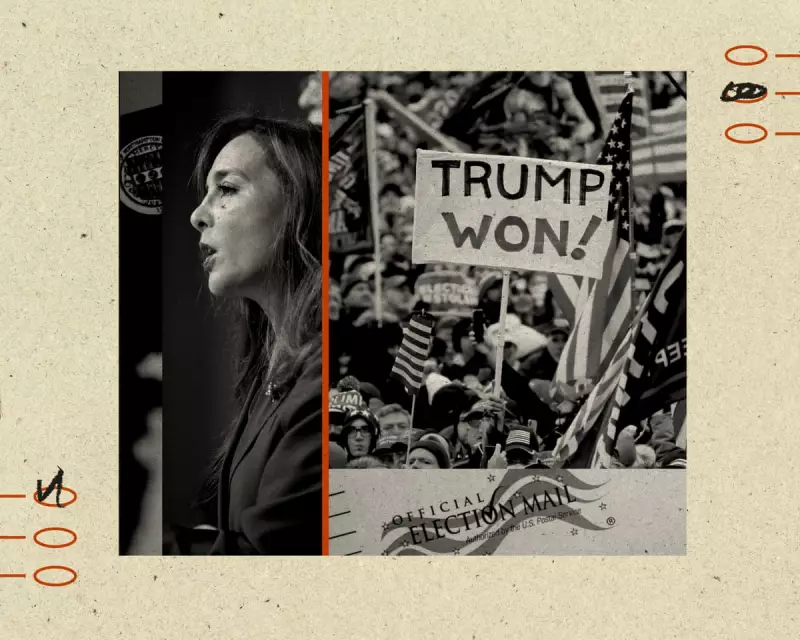
Prominent figures who actively worked to overturn the results of the 2020 presidential election now hold significant power within key federal agencies, creating what experts describe as an unprecedented threat to American democracy ahead of the 2026 elections.
The New Power Structure
Several key appointments have placed election denial advocates in positions of substantial influence. Harmeet Dhillon, an attorney who helped advance Donald Trump's claims of a stolen election, now leads the civil rights division at the justice department. Heather Honey, another election denier, serves as deputy assistant secretary for election integrity within the department of homeland security.
Kurt Olsen, an attorney involved in the 'stop the steal' movement, currently works as a special government employee investigating the 2020 election. This represents a dramatic shift from a movement that once pressured elected officials to one that now operates from within government institutions.
Joanna Lydgate, co-founder and chief executive officer of the States United Democracy Center, observed that 'the call is literally coming from inside the house'. She noted that the movement now has 'its tentacles in the White House, in Congress and federal agencies'.
Systematic Undermining of Election Processes
The Trump administration has initiated multiple efforts that election experts warn could destabilise future elections. These include making dubious requests for voter data from states, implementing rules that limit voter access, and sowing distrust in voting procedures.
David Becker, executive director of the Center for Election Innovation & Research, suggests these actions serve as misdirection for broader intentions. 'All of this, while focused on past elections, is misdirection about what the actual intention likely is, which is to interfere with the 2026 elections and attempt to delegitimise them if the president's party doesn't do well', he explained.
The administration's strategy appears to follow three key pillars according to Lydgate: removing power from nonpartisan election officials, overwhelming administrators with frivolous work and threats, and shaping the electorate by removing voters from rolls.
Damaged Federal-State Relationships
The appointment of election deniers has severely damaged relationships between state election officials and federal agencies. Jena Griswold, the Democratic secretary of state in Colorado, stated bluntly that 'the federal government is no longer a trusted partner in democracy'.
Arizona secretary of state Adrian Fontes expressed similar concerns, saying he would need to see 'a significant shift in the rhetoric and the attitude coming out of senior leadership in the administration' before reopening communication channels. 'It'd be foolish of me to let the fox into the hen house', he added.
The administration has simultaneously weakened federal expertise on election security. The Cybersecurity and Infrastructure Security Agency (CISA) has experienced massive cuts, and election disinformation research has been disbanded.
Legal and Administrative Actions
The administration has taken concrete steps to advance election denial priorities. Trump granted clemency to all those involved in the January 6 Capitol insurrection on his first day in office. By November, he issued dozens of preemptive pardons for participants in fake elector schemes.
Election activists helped draft the Safeguard American Voter Eligibility (Save) Act, which would require voters to prove citizenship. When the House passed the legislation, Cleta Mitchell, leader of an influential 'election integrity' group, was presented with the vote count card.
A March executive order about 'preserving and protecting the integrity of American elections' closely resembled a 'US Citizens Elections Bill of Rights' that Mitchell had promoted. Both documents called for documentary proof of citizenship for voter registration.
The justice department has sought voter rolls from dozens of states to create a national database, though the purpose remains unclear. Some states have refused, citing privacy concerns and lack of clarity about how the information would be used.
Looking Toward 2026
Election experts anticipate these efforts to undermine electoral processes will intensify as the 2026 midterms approach. Pressure campaigns on local officials, attempts to limit voting access, and challenges to voter eligibility are expected to expand significantly.
Samantha Tarazi, co-founder and chief executive officer of Voting Rights Lab, noted that while Trump lacks direct authority over election administration, he has allies at state and local levels. 'In the ways that you're seeing more high-profile election deniers in positions in the federal government, you have to also keep in mind that the benches are currently also being stacked at the more grassroots level', she explained.
Some election denial activists have called for more extreme measures, including declaring a national emergency to justify federal intervention in elections. California Democratic senator Alex Padilla has warned about this threat, citing Trump's hiring of election deniers into prominent roles.
Despite these challenges, the decentralized nature of American elections and the court system remain significant barriers to overturning election results. However, the chaos being sown represents a more extreme version of what occurred after the 2020 election.
Fontes urged election administrators nationwide to 'stay strong' and 'just do your job' in the face of mounting political pressure. The integrity of future elections may depend on their ability to withstand these unprecedented challenges to democratic processes.




