
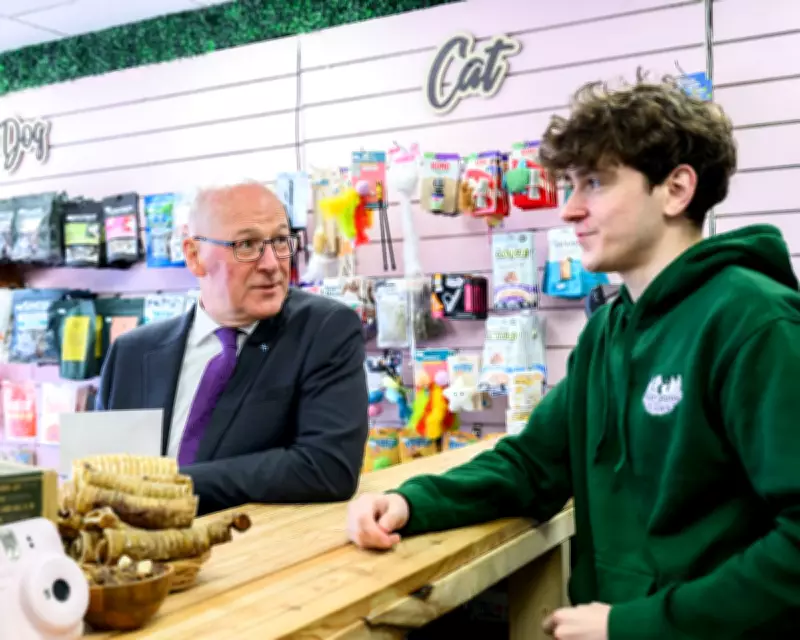
The first minister, John Swinney, faced an unexpectedly hostile reception while campaigning in Hamilton on the final day of the Scottish election campaign. Instead of a carefully choreographed walkabout through a target seat, he encountered angry voters, including some from his own party.
Voter Discontent
Natasha Kelly, a 35-year-old mother, confronted Swinney about her damp council flat, which she said had left her two sons, aged 13 and 8, with chronic asthma. A pro-independence SNP voter, she expressed wavering loyalty. "I do believe in the SNP but I am losing faith vastly," she said. "I can't be concerned with my own country when I'm concerned about my sons." Swinney promised immediate action, briefly placating her.
Gavin Boyle, owner of a popular Glasgow bar, was furious over a 438% hike in business rates, raising his venue's bill to £645,000. Swinney's attempt to placate him failed. Boyle said he would not vote for the SNP or any other party, stating, "They're as bad as each other."
The daughter of an elderly woman struggling with failing social care wept as she spoke to the first minister, highlighting the emotional toll of inadequate services.
Unpredictable Election
This election is the most unpredictable in over a decade, according to polling analyst Mark Diffley, who described the campaign as "uninspiring, short of fresh policy and ideas, and failed to make an impression on voters." The lack of enthusiasm could be upended by turnout and tactical voting.
The Diffley Partnership, an independent polling organization, released final projections showing the SNP would win 56 seats, well short of the 65 needed for a majority. Labour would have its worst Holyrood performance with 18 seats, one behind Reform UK on 19. The Greens would win a record 16 seats, the Conservatives 11, and the Liberal Democrats 9.
Labour's Strategy
Scottish Labour held a noisy eve-of-poll rally in Glasgow, where leader Anas Sarwar had supporters chant, "Reject Reform, beat the SNP, change Scotland and vote Scottish Labour." Despite a buoyant mood, Labour privately admits it will not beat the SNP but argues Sarwar could challenge for first minister. Senior figures claim their doorstep data suggests up to 23 constituency seats and regional top-ups.
Labour invested £200,000 in a heavy social media advertising campaign over the final 72 hours, aiming to "flood the zone" and capture wavering voters. A senior source predicted Labour would come second "unless something pretty seismic happens."
SNP and Reform Challenges
The SNP has shown nervousness, doubling down on its core vote strategy by pledging a vote on independence powers on day one of the new parliament. A-list supporters like actors Martin Compston and Alan Cummings have been drafted in, with Cummings urging pro-independence Green supporters to choose the nationalists in every constituency.
Reform UK's campaign has been chaotic, dogged by candidate resignations and social media racism revelations. Scottish leader Malcolm Offord struggled to cut through, and his boast about having "six houses, five boats and six cars" invited derision. Research suggests Scottish Reform voters are less enthused than those in England or Wales.
Outlook
With a high number of undecided voters, turnout and tactical voting could significantly alter outcomes. Labour hopes to pick up wavering voters, while the SNP relies on its core base. The Greens aim for a breakthrough constituency, and Reform faces uncertainty about voter turnout, especially lacking a ground operation in areas like Aberdeen.




