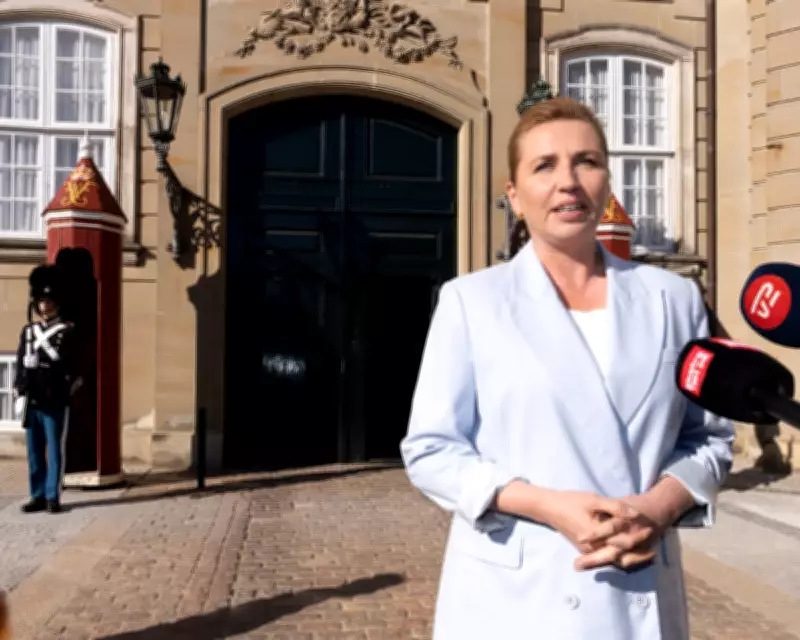
Denmark's political landscape has been shaken after King Frederik asked a centre-right politician to attempt to form a new government. This development comes after Prime Minister Mette Frederiksen, a stalwart of Danish politics for decades, failed to assemble a ruling coalition following the March parliamentary elections.
Election Results and Coalition Challenges
Frederiksen's Social Democrats secured the most votes in the March elections, but it was their worst performance since 1903, with no party winning a majority. The party's left-leaning stance struggled to attract sufficient support from an increasingly fragmented political spectrum. Frederiksen sought to build a coalition with Lars Løkke Rasmussen's centre-right Moderates, who hold a pivotal kingmaker role between the Social Democrats and the centre-right Liberal Party led by Troels Lund Poulsen.
Negotiations Collapse
Despite weeks of negotiations, Frederiksen failed to gather the necessary backing. On Friday night, Rasmussen withdrew from talks and threw his support behind Poulsen, prompting King Frederik to ask Poulsen to lead government formation efforts. The king's statement explicitly requested Poulsen to negotiate a government without the participation of the Social Democrats and Moderates.
Right-Wing Shift
Danish politics has been tilting rightward, with several right-wing parties gaining ground in the March elections. The far-right Danish People's Party tripled its vote share to 9.1%, reflecting a broader European trend where immigration has become a hot topic. Even left-leaning parties have adopted stricter immigration policies. The king's statement indicated that the Danish People's Party had pushed for Poulsen under the condition that the new government aims for a "Muslim net-exodus of Denmark."
Poulsen's Task
Poulsen now faces the daunting task of marshalling a coalition of right-wing parties, a fragile process that could take weeks. This attempt has already become the longest government formation in Danish history. If successful, it would mark a significant shift in Denmark's political direction.
Frederiksen's Future
Despite her failure to form a government, Frederiksen remains a popular figure, particularly for her handling of US President Donald Trump's attempt to acquire Greenland. However, she has faced criticism on domestic issues like taxation and immigration. Analysts suggest that while Frederiksen is currently sidelined, she could return if Poulsen fails to form a coherent coalition. Frederiksen herself acknowledged the possibility, stating, "The Danes have composed the parliament in such a way that a right-wing government can absolutely be formed."
Denmark's unique political model is under strain, and the coming weeks will determine whether the country moves toward a right-wing coalition or sees Frederiksen make a comeback.