
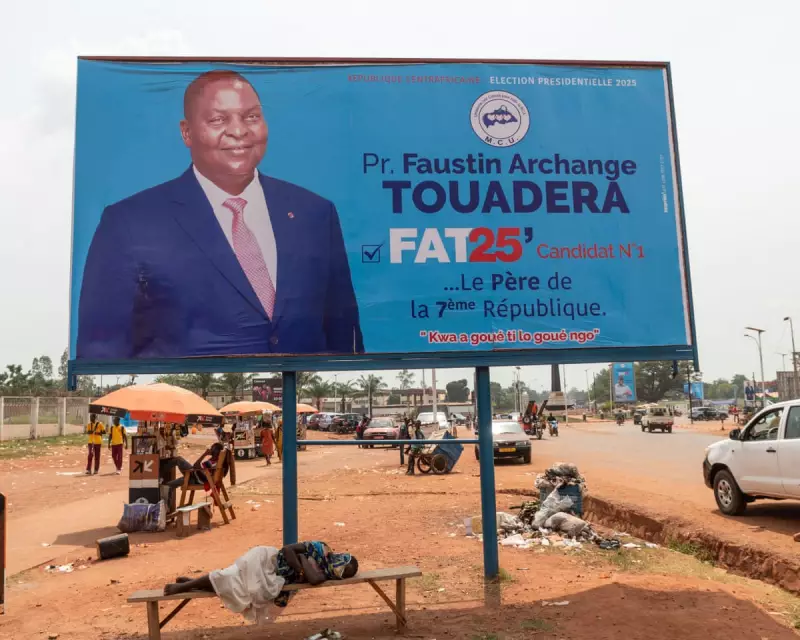
Voters in the Central African Republic (CAR) are heading to the polls this Sunday in a critical electoral test, with President Faustin-Archange Touadéra aiming to secure a controversial third term in office.
A Nation at a Crossroads
Approximately 2.3 million registered voters are eligible to cast ballots in what is being described as a quadruple election. Citizens will vote for the presidency, parliament, and local and municipal offices simultaneously. The presidential race features seven candidates, including notable figures like former prime ministers Anicet Georges Dologuélé and Henri-Marie Dondra. Both were permitted to stand by the constitutional court after initial bans were overturned.
The opposition is seeking to harness widespread public discontent in a nation where violent conflict remains a daily reality for many. More than half a million people are internally displaced within CAR's borders, with a similar number living as refugees in neighbouring countries.
Touadéra's Path and the Stakes for Stability
Despite the challenges, Touadéra, a former mathematics professor who first came to power in 2016, is widely favoured to win. His political journey began in 2008 when then-President François Bozizé appointed him prime minister, a role he held until a rebel coalition toppled the government in 2013, sparking a brutal civil war.
After a turbulent three-year transition, Touadéra's perceived neutrality from the warring Séléka and anti-Balaka militias helped propel him to a second-round victory. A peace accord signed with two main rebel groups in April has offered a glimmer of hope. Lewis Mudge, Central Africa director at Human Rights Watch, noted there had been "tangible progress to establish peace."
Abdou Abarry of the UN regional office for central Africa (Unoca) echoed this cautious optimism, telling the UN Security Council this month that the country was "laying the foundations for peace consolidation."
Logistical Hurdles and Allegations of Disenfranchisement
Significant concerns persist that logistical failures and violence could disrupt the electoral process, particularly in rural areas. The UN peacekeeping mission, Minusca, is providing essential security and logistical support that the state's frail infrastructure cannot manage.
Allegations of electoral irregularities are mounting. Critics claim the voter list was published only online, despite most of the population lacking reliable internet access or electricity. These issues have prompted a faction of opposition politicians to announce a boycott.
Lewis Mudge warned that such irregularities risk "disenfranchising large segments of the population" and undermining the entire process's integrity.
Many citizens fear another term for Touadéra would further entrench foreign influence. A 2023 constitutional referendum not only abolished presidential term limits but also extended the mandate from five to seven years. Since taking office, Touadéra has relied heavily on the Russian mercenary group Wagner for personal security, while Minusca and Rwandan troops help secure the countryside. Despite the death of Wagner's founder, Yevgeny Prigozhin, Touadéra has resisted integrating the fighters into Russia's new Africa Corps.
Rwanda has pursued a different strategy, focusing on smaller business ventures. A recent report by a pro-opposition outlet alleged the government evicted its own soldiers from a World Bank-funded youth centre to make way for a Rwandan livestock farming operation, a claim emblematic of deeper anxieties about national sovereignty.
As polls open, the people of the Central African Republic are voting not just for a leader, but for a future path between fragile peace, entrenched conflict, and foreign dependency.




