
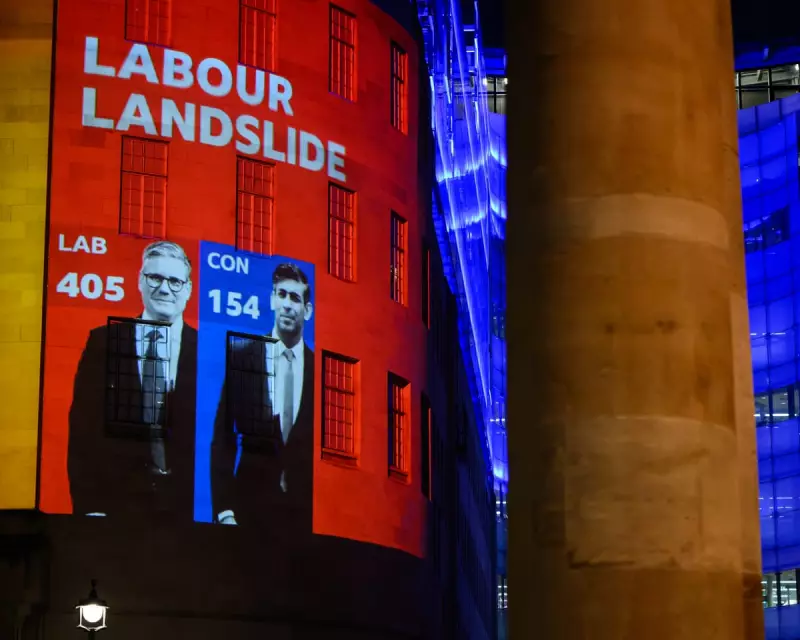
The 2024 UK general election has been declared the most disproportionate in the nation's history, a verdict starkly projected onto the BBC's Broadcasting House on election night. This seismic result has ignited a fierce debate about the future of Britain's electoral system, with growing pressure on the Labour party to embrace fundamental reform.
A System Under Scrutiny
The core of the issue lies with the First Past the Post (FPTP) system. Analysis of the 2024 results reveals a shocking statistic: 57.8% of voters were left unrepresented, meaning the candidate they voted for was not elected. This has led commentators like Andy Beckett to argue that the case for Proportional Representation (PR) may now be irresistible as Britain's traditional two-party politics fragments.
John Culley, writing from Barcombe in East Sussex, suggests that backing PR would be a pragmatic move for Labour. He points to Electoral Calculus forecasts which indicate that PR could act as a crucial hedge for Labour against a future 'doomsday scenario' where the party could lose up to 90% of its seats. Culley urges the Labour leadership to ignore the 'conventional wisdom' that voting for such change is akin to 'turkeys voting for Christmas,' and to instead focus on the long-term benefits.
The Pragmatic Case for Change
The argument is shifting from pure principle to hard-nosed political strategy. The risk of maintaining the status quo, as highlighted by Austen Lynch from Garstang, Lancashire, is profound. Under the current system, a smaller, disparate group could potentially form the next government despite being opposed by a significant majority of the electorate. This, he warns, creates a dangerous democratic deficit.
For those wanting to visualise a different outcome, the Electoral Reform Society's website provides a graphic breakdown of how the 2024 election would have looked under a Proportional Representation model. This tool underscores the dramatic difference an alternative system could make in ensuring parliamentary seats more accurately reflect the will of the people.
Labour's Defining Choice
The central obstacle to reform remains a lack of political will to legislate. However, the unprecedented disproportionality of the 2024 result is applying more pressure than ever on parties, particularly Labour, to reconsider their stance. The party's position is now seen as crucial to any potential change.
The debate is no longer just about fairness; it's about survival and relevance in a new political era. The question facing Labour is whether it will cling to a system that has historically benefited it, or whether it will acknowledge that the age of two-party dominance is over and lead the charge for a modern, representative democracy. The future shape of British politics hangs in the balance.




