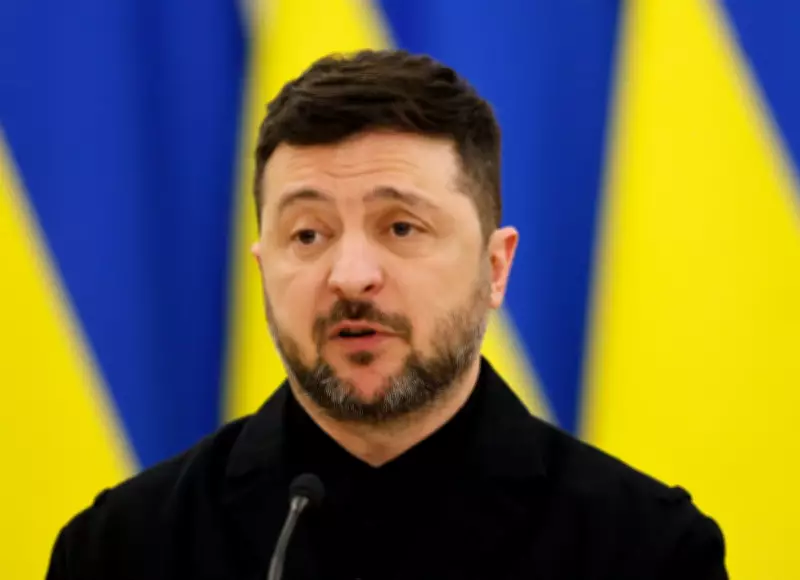
Ukrainian President Volodymyr Zelenskyy has publicly stated that the scheduled date or location for the next round of United States-mediated negotiations between Ukraine and Russia, aimed at finding a pathway to end the ongoing war, is subject to potential alteration. This announcement introduces a layer of uncertainty into diplomatic efforts that have been cautiously progressing.
Diplomatic Uncertainty Amid Geopolitical Tensions
President Zelenskyy, in remarks released by his office on Friday, explicitly linked the possible changes to escalating tensions between the United States and Iran. He emphasised the critical importance of having all agreed participants present at the meeting to ensure meaningful feedback and progress. "The date or the location may change," Zelenskyy confirmed. "From our point of view, something is happening in the situation between the United States and Iran, and those developments could affect the timing."
US Participation and the Context of Reduced Hostilities
This diplomatic development follows a statement from US Secretary of State Marco Rubio on Wednesday, indicating that key envoys from the previous round of talks would not be attending the weekend meeting in Abu Dhabi. Concurrently, there has been a notable reduction in military attacks from both sides. Ukraine is enduring one of its most severe winters in decades, with widespread power and heating outages, and the capital, Kyiv, is preparing for temperatures as low as -26°C from Sunday.
Zelenskyy addressed this apparent lull in strikes, clarifying that while there is no formal ceasefire agreement with Russia, Kyiv is prepared to reciprocate any pause in attacks on cities and energy infrastructure. He noted that from Thursday night to Friday, there were no strikes on Ukrainian energy facilities across all regions. "Ukraine is ready in reciprocal terms to refrain from strikes and today we did not strike at Russian energy facilities," he stated.
International Reactions and European Stances
The situation has prompted varied responses from European leaders. Incoming Dutch Prime Minister Rob Jetten, whose party recently formed a minority coalition government, voiced strong opposition to suggestions from some EU figures about reopening diplomatic channels with Russia. He argued this could prevent former US President Donald Trump from dominating the dialogue with Moscow.
Jetten pledged continued support for Ukraine, stating he would not engage with Moscow as there are currently "no indications" Russia desires to end the conflict. "And as long as the aggression continues, we will continue our support for the Ukrainian people," he affirmed. He also urged Europe to foster a stronger internal debate about its own capabilities, rather than looking towards the United States under a potential Trump administration.
Hungary's Opposition to Ukrainian EU Membership
Meanwhile, Hungarian Prime Minister Viktor Orbán has intensified his campaign against Ukraine's accession to the European Union. He claimed the bloc is considering admitting Ukraine in 2027 primarily to allow it to benefit from the next seven-year EU budget cycle. These comments follow President Zelenskyy's reiterated goal for EU membership by 2027, despite scepticism within the Union about the accelerated timeline required.
Analysts suggest Orbán's stance may be part of a broader political strategy ahead of Hungary's critical parliamentary election in April, which could potentially end his 16-year tenure in office.
The convergence of these factors—shifting US-Iran dynamics, a fragile reduction in hostilities, and complex European political manoeuvring—creates a highly volatile backdrop for the proposed peace talks. The international community watches closely as the details of the next round of negotiations remain in flux, underscoring the intricate and interconnected nature of global diplomacy in resolving the protracted conflict.