Ukrainian President Volodymyr Zelenskyy has declared his country faces one of its most challenging periods in modern history as former US President Donald Trump demands acceptance of a controversial 28-point peace plan within days.
The Ultimatum and Ukraine's Dilemma
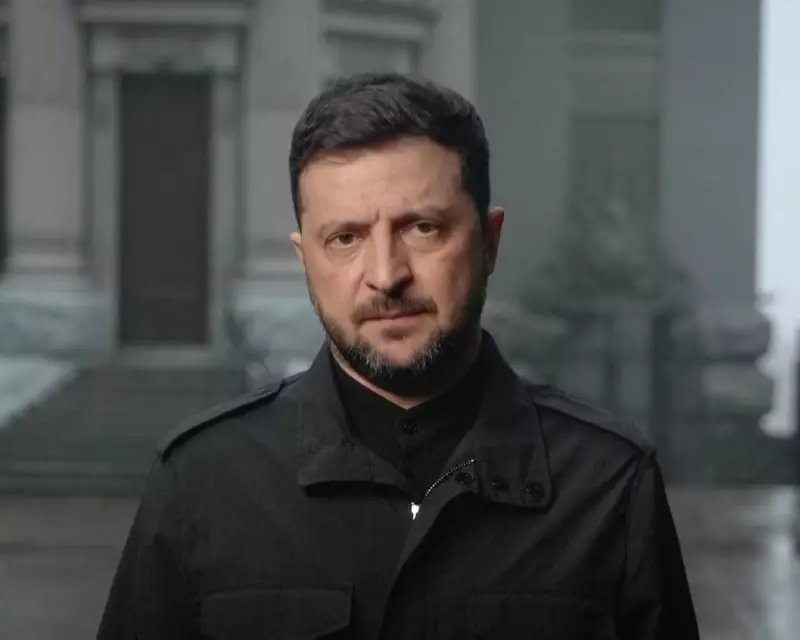
In a solemn address delivered outside his presidential palace, Zelenskyy revealed Ukraine confronts an impossible decision: maintain national dignity or risk alienating a crucial ally. Trump confirmed Thanksgiving Thursday as his "acceptable" deadline for Ukraine to sign the agreement, which European and Ukrainian officials have labelled a capitulation to Russian demands.
The US-Russian negotiated plan would require Ukraine to surrender the eastern Donbas region, including territories it currently controls, and significantly reduce its military capacity. The proposal explicitly rules out European peacekeeping forces and demands Ukraine relinquish long-range weapons while abandoning NATO membership aspirations.
International Reactions and Solidarity
European leaders responded with firm support for Kyiv's position. French President Emmanuel Macron, German Chancellor Friedrich Merz, and British Prime Minister Keir Starmer each spoke with Zelenskyy on Friday, reaffirming their commitment to Ukraine's sovereignty. They emphasised that any peace agreement must be genuinely fair and respect Ukraine's fundamental interests.
British Prime Minister Starmer articulated the shared principle that "Ukraine must determine its future under its sovereignty" as fundamental to any negotiations. The European leaders suggested using the current line of contact as the starting point for territorial discussions, contrasting sharply with Trump's proposal that would see Ukraine abandon several major cities.
EU Foreign Policy Chief Kaja Kallas issued a stark warning about the global implications, stating that a peace deal rewarding invasion would establish a "very dangerous" precedent that could encourage aggression elsewhere.
Behind the Scenes Negotiations
The controversial 28-point plan emerged from discussions between Vladimir Putin's envoy Kirill Dmitriev and Trump's special representative Steve Witkoff during meetings in Miami, notably excluding European and Ukrainian input. Despite US officials claiming Ukrainian security representatives contributed modifications, Kyiv has denied endorsing terms violating national sovereignty.
Zelenskyy maintains he will work constructively with Washington while "offering alternatives" to protect Ukrainian interests. He emphasised his commitment to achieving "real peace that would not be broken by a third Russian invasion," referencing Moscow's previous violations of agreements.
The Ukrainian president acknowledged the immense pressure his citizens face after nearly four years of full-scale invasion, noting that "even the strongest metal can break" while vowing not to sacrifice national interests or constitutional principles.
As the Thanksgiving deadline approaches, a delegation of senior US military officials led by Army Secretary Dan Driscoll—appointed as Trump's newest special representative—is expected to travel to Moscow to discuss the plan with Kremlin officials, underscoring the aggressive timeline the US administration is pursuing to end the conflict.