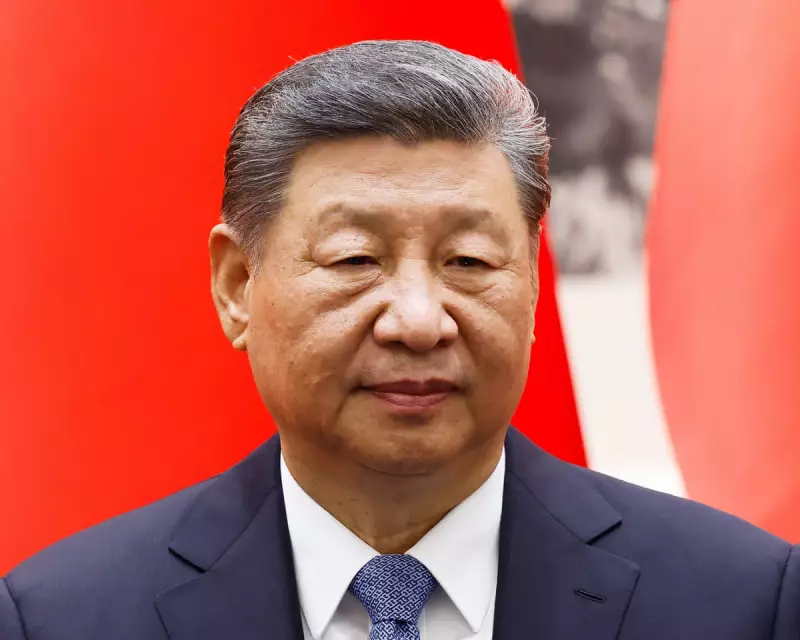
Chinese President Xi Jinping has firmly reiterated Beijing's longstanding position on Taiwan during a significant phone conversation with former US President Donald Trump, emphasising that the island's reunification with mainland China remains an essential component of the post-war international framework.
Taiwan Takes Centre Stage in High-Level Discussion
The Monday call between the two leaders occurred against a backdrop of escalating tensions surrounding Taiwan, with Xi asserting that Taiwan's return to China represents an integral element of the international order established following the Second World War. According to statements from China's foreign ministry, Xi referenced the collaborative efforts between China and the United States in combating fascism and militarism as foundational to this perspective.
While the United States maintains no formal diplomatic recognition of Taiwan as an independent nation, Washington continues to serve as the island's primary international partner and military equipment supplier. Notably, Trump's subsequent social media commentary omitted any reference to Taiwan, instead highlighting what he characterised as exceptionally robust relations between the United States and China.
Broader Diplomatic Context and Trade Developments
The discussion unfolded amidst a weeks-long diplomatic confrontation between China and Japan, a key American ally, triggered by remarks from Japan's new Prime Minister Sanae Takaichi suggesting potential military intervention should Taiwan face attack. This exchange has resulted in tangible consequences, including reduced Chinese tourism to Japan, restrictions on Japanese seafood imports, and cancellations of joint cultural events.
Beyond Taiwan, the leaders addressed multiple pressing international matters, including the ongoing conflict in Ukraine. Xi reiterated China's position as a neutral party while expressing support for efforts to conclude the nearly four-year war.
The conversation also built upon progress made during their October meeting in South Korea, which produced a tentative trade agreement. Under this arrangement, China committed to suspend certain export restrictions on critical minerals for one year, while the United States agreed to reduce tariffs on Chinese products. Additionally, Beijing pledged to purchase substantial quantities of American soybeans—12 million metric tons by year's end and 25 million metric tons in 2026.
Future Engagement and Bilateral Relations
Both leaders expressed optimism regarding the trajectory of Sino-American relations. Xi emphasised the importance of maintaining positive momentum, describing their October meeting as successfully redirecting the course of bilateral relations. Trump echoed this sentiment, noting substantial progress in implementing their agreements and looking toward broader strategic objectives.
The discussion also confirmed plans for reciprocal state visits, with Trump scheduled to travel to China in April, followed by Xi's visit to Washington later in 2026, though Beijing's statements did not explicitly reference these diplomatic engagements.
US Treasury Secretary Scott Bessent indicated that Washington hopes to finalise an agreement with Beijing concerning rare earth supplies by the upcoming Thanksgiving holiday, underscoring the ongoing economic interdependency between the two global powers.