Behind the Scenes of the Abu Dhabi Peace Negotiations
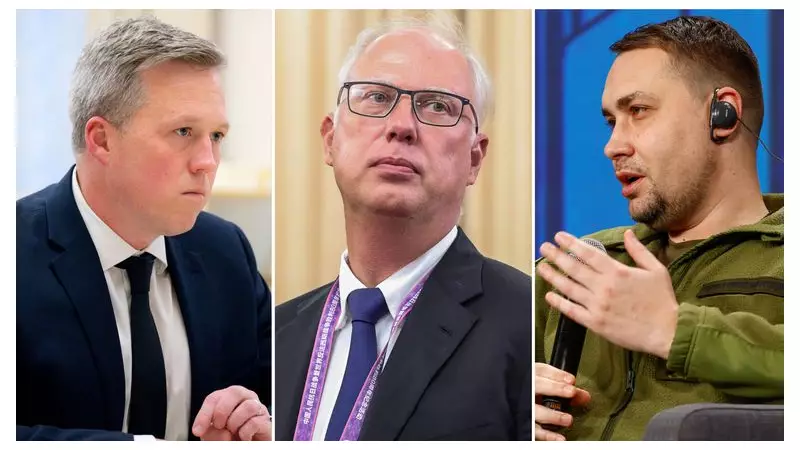
High-level representatives from the United States, Russia, and Ukraine convened in Abu Dhabi this week in a significant push to find consensus on ending the war that began with Russia's invasion nearly four years ago. As these delicate talks continue, the focus turns to the key individuals tasked with navigating this complex diplomatic terrain.
The American Negotiator: US Army Secretary Dan Driscoll
Dan Driscoll, the US Army Secretary, stands as one of the top civilian officials within the Pentagon. He leads the US Department of the Army, which now operates under the recently rebranded Department of War. In the hierarchy, he reports to Secretary of War Pete Hegseth, though Washington speculation suggests notable tension exists between the two.
Despite this, Mr Driscoll's position appears secure. He cannot be easily purged by Mr Hegseth due to his close friendship with Vice President JD Vance, a relationship forged during their time at Yale. This connection, coupled with favour from former President Donald Trump, solidifies his standing. Unusually for an official in the Trump administration, he also enjoys bipartisan popularity.
It was Mr Driscoll who was entrusted with the critical mission of presenting the initial 28-point peace plan directly to Ukrainian President Volodymyr Zelenskyy in Kyiv last week.
The Russian Envoy: Kirill Dmitriev
On the Russian side, Kirill Dmitriev, Vladimir Putin's investment envoy, is a central figure. The 50-year-old has cultivated a particularly close relationship with Steve Witkoff, the American envoy, and is consistently present during the latter's visits to Moscow.
Mr Dmitriev brings a unique background to the table. Born in Ukraine, he was later educated in the United States at Stanford and Harvard. His career includes roles as an investment banker at Goldman Sachs and a position with the consultancy firm McKinsey. His rise within the Kremlin apparatus accelerated in 2011 when he became head of Russia's sovereign wealth fund.
Personal connections have likely aided his ascent; his wife works closely with one of Mr Putin's daughters. Mr Dmitriev is no stranger to US-Russia diplomacy, having led Moscow's early contacts with the first Trump administration back in 2016. He is once again at the vanguard, with reports indicating the initial 28-point plan, which heavily favoured Russia, resulted from an October meeting in Miami between Mr Dmitriev, Mr Witkoff, and Jared Kushner, Mr Trump's son-in-law and informal adviser.
The Ukrainian Commander: Lieutenant General Kyrylo Budanov
Representing Ukraine is Lieutenant General Kyrylo Budanov, one of the country's top and youngest commanders at just 39 years old. He has led Ukraine's military intelligence service (GUR) since before the full-scale invasion and has been waging covert operations against Russian forces since 2014.
Lt Gen Budanov's commitment is underscored by his personal sacrifices. He has been wounded in battle on three separate occasions, received awards for courage, and survived an assassination attempt. His wife has also been targeted, surviving a poisoning. A close ally of President Zelenskyy, he was once considered a potential candidate for defence minister but has remained in his intelligence role.
In this capacity, he oversees top-secret operations, including a major ongoing mission to develop and deploy long-range drones capable of striking military and energy targets deep inside Russian territory. Wanted by Russia for an attack on the Crimean Bridge in 2022, his participation in the Abu Dhabi talks may be contentious for Moscow, yet it signals his significant and watchable role in Ukraine's defence and diplomatic strategy.