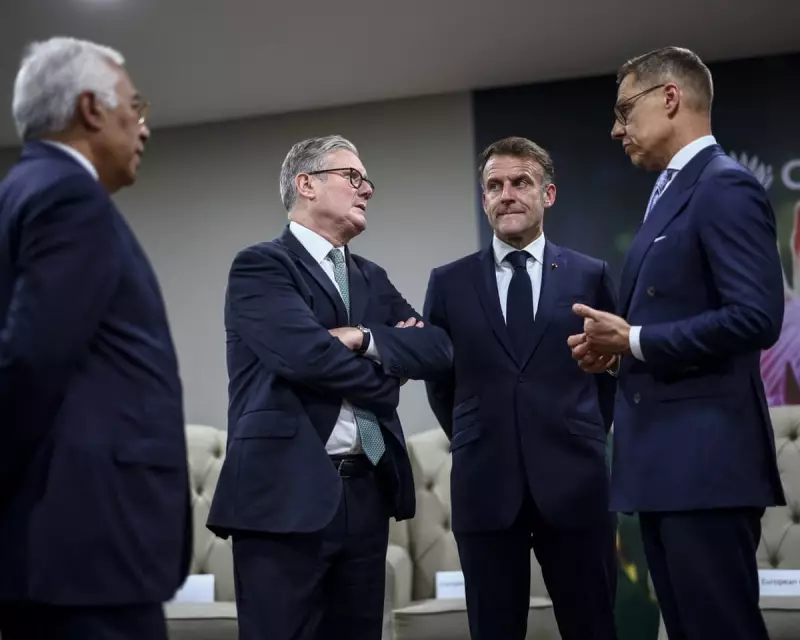
Western leaders have delivered a stark assessment of a controversial American peace plan for Ukraine, declaring the proposal will require significant additional work during the G20 summit in Johannesburg.
Divisions Over Draft Proposal
The draft plan, which was leaked earlier this week, has raised serious concerns among European allies. It reportedly endorses several of Russia's key demands, including handing over areas of Ukraine's eastern Donbas region, limiting Ukrainian military capabilities, and relinquishing the country's ambitions to join NATO. Washington has given Kyiv a deadline of Thursday to respond to these proposals.
European leaders convened urgently on the sidelines of the summit to coordinate their response. In a joint statement signed by Britain, France, Germany, Italy, Spain, the Netherlands, Ireland, Finland, Norway, the EU, Canada, and Japan, they acknowledged the draft "includes important elements that will be essential for a just and lasting peace" but emphasised it represents "a basis which will require additional work".
Fundamental Principles at Stake
The leaders were unequivocal in stating that borders must not be changed by force, directly challenging elements of the US plan that would see Ukrainian territory ceded to Russia. They further asserted that any elements relating to the European Union and NATO would require their agreement, and expressed readiness "to engage in order to ensure that a future peace is sustainable".
British Prime Minister Keir Starmer voiced particular concern about proposals to cap Ukraine's military capacity, telling reporters at the summit that "it's fundamental that Ukraine has to be able to defend itself if there's a ceasefire". He described the Ukraine meeting as being between "mainly allies from the coalition of the willing" and confirmed that "the consensus was that there are elements in the 28-point plan which are essential to lasting peace, but it requires additional work".
G20's Future in Question
Beyond the immediate Ukraine discussions, French President Emmanuel Macron delivered a sobering warning about the G20's future relevance. "The G20 may be coming to the end of a cycle," Macron stated, noting that the group is struggling to find common ground on major crises. He specifically highlighted difficulties reaching consensus on humanitarian law and sovereignty issues.
Macron pointed to the US unilateral peace plan as an example of the challenges facing the forum, reiterating that "there can be no peace in Ukraine without Ukrainians, without respect for their sovereignty". He warned that "the G20 is at risk if we do not collectively re-engage around a few priorities" and called for concrete actions to revitalise the forum.
The absence of several world leaders, including the US president who boycotted the gathering over disputed claims about South Africa's white minority, further complicated proceedings. Despite these challenges, host President Cyril Ramaphosa defended the G20's importance, arguing it "underscores the value of the relevance of multilateralism".
Looking ahead, Ukraine and the US are scheduled to meet in Switzerland in the coming days to discuss Washington's plan, while Starmer confirmed he expects to speak with the US president shortly. The main focus, however, will be on Sunday's talks in Geneva where senior US personnel, European security advisers and Ukrainian representatives will work further on the draft proposal.