
Venezuela has launched a defiant response to former US President Donald Trump's declaration that the airspace above and surrounding the South American nation should be closed entirely. The escalating diplomatic confrontation has led to the immediate suspension of all migrant deportation flights between the two countries.
Trump's Airspace Declaration Sparks Diplomatic Crisis
In a dramatic social media post on his Truth Social platform, Donald Trump issued a stark warning to airlines, pilots, and what he described as 'drug dealers and human traffickers'. The former president declared that Venezuelan airspace should be considered 'closed in its entirety', though he provided no specific details about enforcement mechanisms or legal authority for such a move.
The Venezuelan government responded swiftly and forcefully, characterising Trump's statement as a 'colonialist threat' against their national sovereignty. In an official statement, authorities emphasised that Venezuela 'does not accept foreign orders or threats' and demanded respect for its airspace under international law.
Deportation Flights Suspended Amid Rising Tensions
The immediate consequence of Trump's announcement has been the unilateral suspension of all migrant deportation flights to Venezuela. These flights have been a significant point of contention for the Trump administration as it continues to pursue its mass deportation programme.
The US Department of Defense has not yet commented on the situation or clarified whether any official changes to airspace policy are being implemented. The lack of immediate official clarification has created uncertainty about the practical implications of Trump's statement.
Broader Military Context in Caribbean Waters
The airspace controversy occurs against a backdrop of increasing US military activity in the region. American strikes against alleged drug smuggling vessels in the Caribbean have been ongoing for months, accompanied by a noticeable US military buildup in the area.
Additionally, reports indicate that Trump has authorised covert CIA operations within Venezuela, though specific details about these operations remain classified. The combination of these developments suggests a significant escalation in US pressure on the Maduro government.
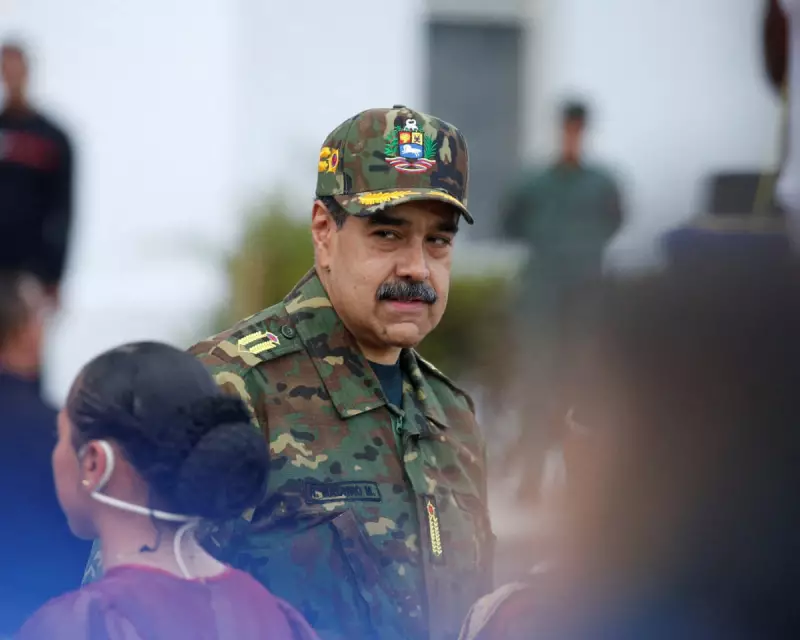
Venezuelan President Nicolás Maduro has publicly attended rallies protesting against potential escalation of US actions against his country, demonstrating his government's determination to resist what it perceives as American aggression.
White House Media Criticism and Other Developments
Separately, the White House has launched a new website feature that publicly criticises media organisations it accuses of biased coverage. The section, titled with the words 'Misleading. Biased. Exposed.', specifically names the Boston Globe, CBS News and the Independent as 'media offenders of the week'.
In defence matters, US Defense Secretary Pete Hegseth has denied allegations that he illegally ordered military personnel to 'kill everybody' on an alleged 'narco-boat' during Caribbean operations. Hegseth described the reporting as 'fake news' and maintained that all strikes conducted were 'lawful under both US and international law'.
The Trump administration continues to assert - without providing public evidence - that individuals killed in recent Pentagon operations in the Caribbean were involved in drug smuggling activities.
This developing situation represents one of the most significant escalations in US-Venezuela relations in recent months, with potential implications for regional stability and international air travel protocols.




