Ukrainian negotiators are travelling to Florida for crucial meetings with American officials to discuss Washington's proposed framework for ending Russia's war in Ukraine, following another weekend of deadly attacks across the country.
Weekend of Violence Precedes Diplomatic Push
The diplomatic efforts come against a backdrop of continued Russian aggression, with at least six people killed and dozens wounded in attacks across Ukraine over the weekend. A drone strike on the outskirts of Kyiv on Saturday night claimed one life and left eleven people injured, according to regional authorities.
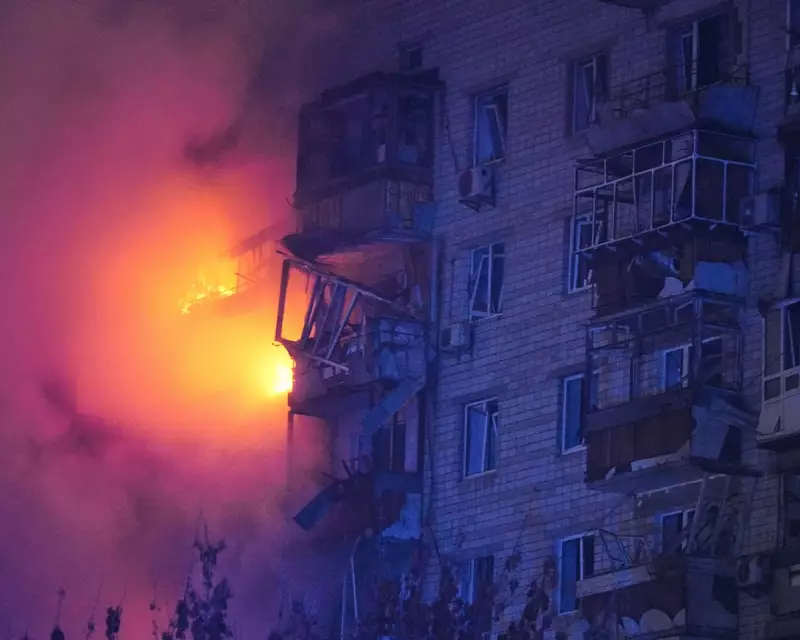
In Vyshgorod, a residential building was set ablaze during early Sunday attacks, with dramatic photographs capturing the devastation wrought by Russian forces. Meanwhile, a Ukrainian security source claimed responsibility for naval drone attacks on two oil tankers off Turkey's Black Sea coast, alleging the vessels were covertly transporting sanctioned Russian oil.
Key Players Gather for Florida Negotiations
The high-stakes meetings in Florida will see Secretary of State Marco Rubio, special envoy Steve Witkoff, and Jared Kushner - Donald Trump's son-in-law - sitting down with a Ukrainian delegation on Sunday. This precedes planned US talks in Moscow later this week with Vladimir Putin.
The discussions are expected to focus on refining a draft framework to end the conflict, now in its third year since Russia launched its full-scale invasion in 2022. The US has already scaled back an initial proposal after criticism from Kyiv and European allies that it disproportionately favoured Russian interests.
Contentious Peace Framework Details
The original 28-point plan, developed last month by Putin's special envoy Kirill Dmitriev and Witkoff, faced strong opposition for demanding that Ukraine withdraw from cities it controls in the eastern Donbas region, limit its military size, and abandon NATO membership aspirations.
Washington's initial proposal - notably drafted without input from Ukraine's European allies - would have involved Kyiv's withdrawal from Donetsk and de facto US recognition of Donetsk, Crimea and Luhansk as Russian territory.
Following negotiations in Switzerland led by Rubio and Ukrainian representatives, the plan underwent substantial revisions. Kyiv and its European partners maintain that the existing frontline must form the starting point for territorial discussions, with no recognition of land seized militarily by Russia.
They further insist that Ukraine must retain sovereignty over decisions regarding EU and NATO membership - something the Kremlin has sought to veto or impose conditions upon.
Ukrainian Political Turbulence Complicates Negotiations
The talks occur during significant political turbulence within the Ukrainian government. President Volodymyr Zelenskyy's powerful chief of staff, Andriy Yermak, was forced to resign on Friday after anti-corruption officials searched his flat while investigating an alleged kickback scheme.
Yermak had previously served as the lead negotiator in talks with the US. Zelenskyy has confirmed that the Ukrainian delegation in Florida includes Andrii Hnatov, head of Ukraine's armed forces, Andrii Sybiha, the foreign minister, and Rustem Umerov, head of the security council.
Ukraine faces mounting pressure from Washington to agree to peace terms while confronting severe challenges on multiple fronts. Russian forces are making incremental gains along the frontline, and Ukrainian cities endure daily blackouts due to relentless attacks on the country's power infrastructure.
President Zelenskyy has described Ukraine as facing one of the most difficult moments in its history, promising in a dramatic address last week that he would not betray the nation.
Valerii Zaluzhnyi, the Ukrainian ambassador to Britain and former commander-in-chief of Ukraine's armed forces - considered a potential presidential challenger - emphasised the precarious situation in comments to the Telegraph. "We are in an extremely difficult situation, where a rushed peace will only lead to a devastating defeat and loss of independence," he wrote, stressing that "effective security guarantees" remain essential to any workable framework.
International support continues as French President Emmanuel Macron prepares to meet Zelenskyy in Paris on Monday. French Foreign Minister Jean-Noël Barrot told La Tribune Dimanche that "peace is within reach, if Vladimir Putin abandons his delusional hope of reconstituting the Soviet empire by first subjugating Ukraine."
Barrot issued a stark warning to the Russian leader: "Vladimir Putin must accept the ceasefire or accept exposing Russia to new sanctions that will exhaust its economy, as well as intensified European support for Ukraine."