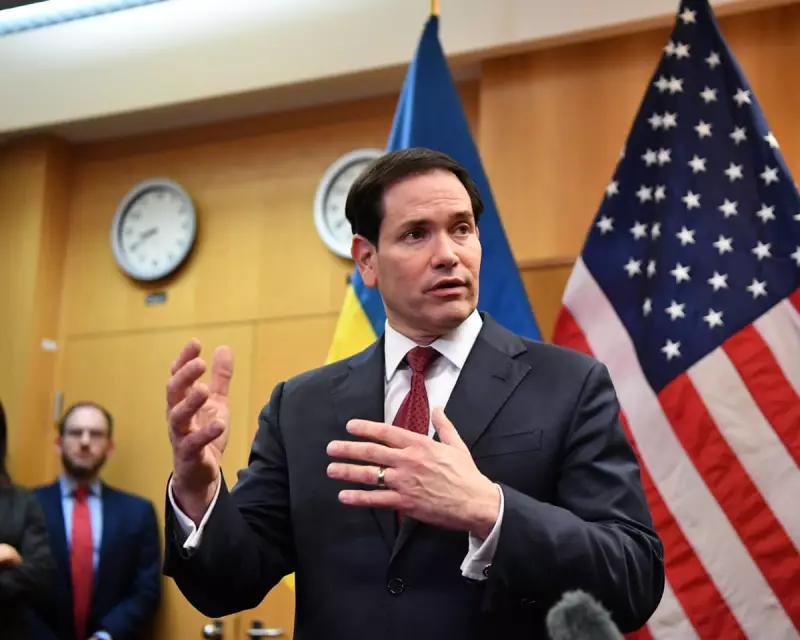
The Trump administration's latest attempt to broker peace in Ukraine has encountered significant resistance from European allies, who argue the proposed framework heavily favours Russian interests. Following talks in Geneva, US Secretary of State Marco Rubio indicated the need for a more refined approach after presenting a 28-point plan that echoed Kremlin talking points.
Controversial Peace Proposal
The peace framework, reportedly drafted by Donald Trump's envoy Steve Witkoff and Kremlin adviser Kirill Dmitriev, demanded substantial concessions from Ukraine that would effectively reward Russian aggression. The proposed terms included transferring additional territory in the Donbas region to Russia, imposing restrictions on Ukrainian sovereignty, and placing drastic limits on the size of Ukraine's future military forces.
Ukrainian President Volodymyr Zelenskyy and European leaders were reportedly blindsided by the proposal, which excluded them from preliminary discussions. This marks the second time in recent months that the Trump administration has engaged directly with Moscow while marginalising Kyiv and its European partners.
European Pushback Grows
European leaders are now mobilising to counter what they perceive as an unbalanced approach to peace negotiations. With Europe bearing the bulk of the cost for Ukraine's continued resistance against Russian invasion, EU countries are insisting on a more proactive role in any future peace talks.
The European Union is considering a substantial financial package to support Ukraine, including a €140 billion reparations loan underwritten by frozen Russian assets. This economic support, combined with continued military assistance, aims to strengthen Ukraine's negotiating position and challenge Vladimir Putin's assumption that he can outlast Ukrainian resistance.
Principles for Sustainable Peace
As negotiations continue, European leaders emphasise that any viable peace agreement must uphold fundamental principles. Future European security and international law require that Russia's aggression is not simply rubber-stamped and rewarded, while Ukraine's sovereignty and independence must remain paramount.
President Zelenskyy reiterated this position over the weekend, stating: The crux of the entire diplomatic situation is that it was Russia, and only Russia, that started this war, and it is Russia, and only Russia, that has been refusing to end it.
There are indications that the Kremlin may reject modifications to the initial peace framework, while the Trump administration continues to position itself as a neutral broker despite criticism that it disproportionately advocates for Moscow's interests.