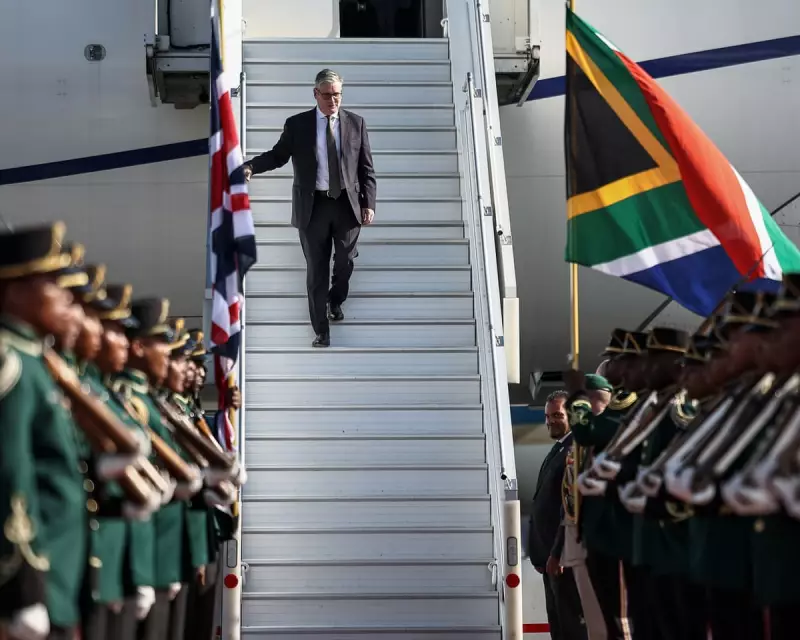
The opening of the G20 summit in Johannesburg has been overshadowed by a significant diplomatic dispute between host nation South Africa and the United States. The event, which marks the first time the gathering of the world's largest economies has been held on the African continent, begins on Saturday under a cloud of geopolitical friction.
A Diplomatic Clash Over Protocol
The core of the disagreement stems from the US decision to boycott the summit. The Trump administration's move prompted South Africa to object to a American plan for a junior embassy official to participate in the closing ceremony, which is designed to mark the handover to the next host. The 2026 summit is scheduled for the Trump National Doral Miami golf resort in Florida.
South Africa's president, Cyril Ramaphosa, stated at a press conference that the US had changed its mind about participation and that discussions were ongoing about the form any US involvement might take. He emphasised that countries should not be bullied and their sovereignty must be respected.
The White House press secretary, Karoline Leavitt, issued a sharp rebuttal. "The US is not participating in official talks at the G20 in South Africa," she said. "I saw the South African president running his mouth a little bit against the United States... and that language is not appreciated." She clarified that the embassy representative was only present to receive the handover for the next summit, not to engage in official talks.
With the US currently without an ambassador in Pretoria, acting ambassador Marc Dillard is the senior official on the ground. South Africa's foreign ministry was firm, stating: "President will not be handing over to a junior embassy official." Ramaphosa had previously suggested he would hand the G20 presidency to an "empty chair" rather than comply with the US plan.
Broader Geopolitical Tensions and Local Priorities
The two-day summit occurs at a febrile moment in global politics. The US has proposed a deal to end Russia's invasion of Ukraine, negotiated directly with Moscow without input from Ukraine or the EU. Furthermore, Washington has for months accused South Africa of racial discrimination against minority white Afrikaners, a claim Pretoria has vehemently denied.
Analysts suggest the US boycott may damage its international standing. Marisa Lourenço, a political risk consultant in Johannesburg, commented: "Now the US is really being seen as the unreasonable one, because it's becoming clearer that what it's doing to South Africa is just completely misguided."
Amidst the diplomatic row, South Africa has taken great pride in its G20 presidency, championing key issues for the African continent. Its priorities include:
- Tackling high levels of public debt.
- Maximising benefits from the demand for 'critical minerals' used in green technologies.
- Increasing financing for a 'just energy transition' away from fossil fuels.
- Improving disaster resilience and response mechanisms.
Addressing Global Inequality Takes Centre Stage
As part of his presidency, Ramaphosa commissioned a major report on global inequality. Produced by a panel of independent experts led by Nobel prize-winning economist Joseph Stiglitz, the report revealed stark findings: the world's wealthiest 1% captured 41% of all wealth generated between 2000 and 2024, while the poorest 50% received just 1%.
The panel recommended creating an independent body, similar to the Intergovernmental Panel on Climate Change, to monitor inequality and assess policies to combat it. Ramaphosa, alongside the leaders of Brazil and Spain, endorsed this proposal in a Financial Times opinion piece.
Jayati Ghosh, an economics professor and panel member, highlighted that "wealth concentration is growing" and is possibly the biggest problem, as it generates greater inequality of power. Winnie Byanyima of UNAids noted that such a body could be formed without needing full G20 consensus or US involvement.
As world leaders, including UK Prime Minister Keir Starmer, gather for talks, civil society in South Africa has used the global spotlight to address domestic issues. Protests over violence against women were timed to coincide with the summit, with thousands participating in lie-down demonstrations across the country to memorialise the 15 women murdered on average every day in South Africa.