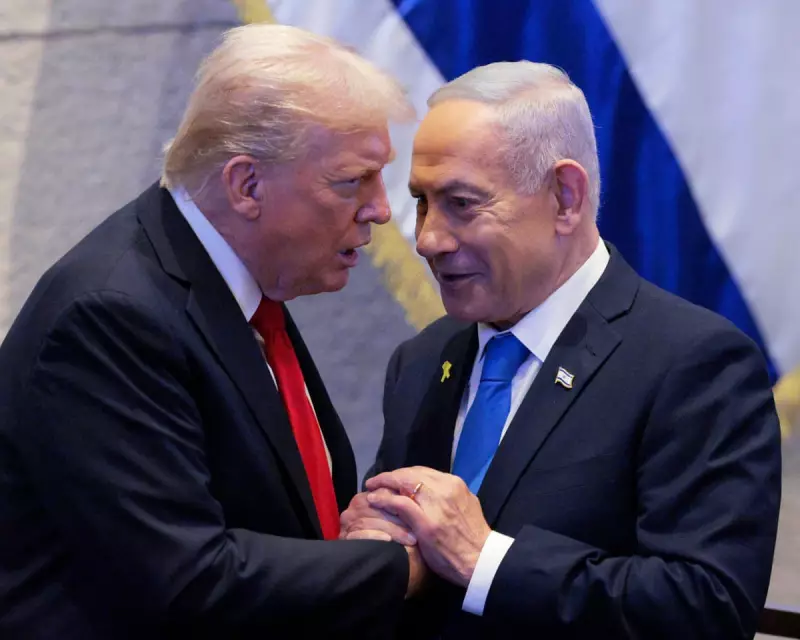
In an unprecedented move that has sent shockwaves through international legal circles, the United States has imposed sanctions on three International Criminal Court judges after they approved arrest warrants for Israeli Prime Minister Benjamin Netanyahu. The sanctions place these senior jurists on the same list as al-Qaida terrorists and drug cartels, raising fundamental questions about America's commitment to international justice.
The Targeted Judges and Their Legal Ruling
The three judges from the ICC's pre-trial chamber I - including French judge Nicolas Guillou - face severe personal and professional consequences for fulfilling their judicial duties. Guillou's experience illustrates the real-world impact: he cannot shop online, his hotel reservations are cancelled, and he finds himself blacklisted by much of the world's banking system.
The judges had approved arrest warrants not only for Netanyahu but also for his former defence minister Yoav Gallant and Mohammed Deif, the former commander of Hamas's military wing. The US justified its sanctions by claiming the judges had actively engaged in the ICC's illegitimate and baseless actions targeting America or our close ally, Israel.
The Legal Basis and Western Hypocrisy
The ICC's jurisdiction over this case stems from Palestine acceding to the court a decade ago, giving it authority over crimes committed on Palestinian territory. The warrants followed a lengthy legal process that examined evidence of starvation being used as a weapon of war.
Republican senator Lindsey Graham bluntly articulated the US position, telling ICC chief prosecutor Karim Khan that the court was made for Africa and thugs like Putin, not democracies like Israel. This statement reveals the underlying assumption that international law should apply only to certain nations while exempting Western allies.
The case against Israeli leaders focused specifically on the use of starvation, with Israeli officials having made public statements about blocking humanitarian aid. Former defence minister Yoav Gallant had announced a complete siege on the Gaza Strip, describing the conflict as fighting against human animals.
Broader Implications for International Order
This incident exposes the fundamental flaw in the so-called rules-based international order. The United States, which refused to sign up to the ICC from its inception, now finds itself alongside human rights abusers like China and Russia in opposing the court's authority.
Other Western nations have followed America's lead. Italy and France, both ICC member states, have reassured Netanyahu he would not face arrest if he visited their countries. France has notably failed to defend its own citizen, Judge Guillou, despite his service to an international institution that France helped establish.
The timing of these sanctions comes amid growing international consensus among genocide scholars that Israel is committing genocide in Gaza. Nearly four decades ago, Joe Biden told Congress that Israel represented the best $3bn investment we make, highlighting the strategic importance Washington places on its Middle Eastern ally.
Western liberal nations appear divided between justifying Israel's actions and offering empty platitudes, while much of the world watches in horror. In the United States itself, approximately half the population believes genocide was committed in Gaza, with only slightly over a third denying it.
Historical Context and Future Consequences
This is not the first time Western disdain for international law has rebounded as a strategic disaster. The illegal invasion of Iraq damaged Washington's moral authority, while war crimes in Afghanistan helped resuscitate the Taliban.
The international legal system has always tilted in the West's favour, which makes South Africa's decision to accuse Israel of genocide at the International Court of Justice particularly significant. The support this move received from the global south and European states like Spain indicates shifting global power dynamics.
Waging a campaign against judges who apply international law consistently will not arrest Western decline but may well accelerate it. The hubris displayed in this episode continues a pattern of 21st-century foreign policy missteps that have sent Western influence into freefall.
As the world watches the United States sanction international judges for doing their jobs, the question remains: who will ever again accept Western lectures on human rights or the rules-based order?