Secret Peace Talks Emerge Amid Escalating Violence
American and Russian officials have secretly drafted a controversial peace proposal that would require Ukraine to make significant territorial concessions and dramatically reduce its military capacity, according to reports emerging on Wednesday. The development comes as Russian forces launched a devastating assault on the western Ukrainian city of Ternopil, killing at least 25 people including three children.
Details of the Proposed Agreement
The draft plan, reportedly developed through an unofficial backchannel between Donald Trump's envoy Steve Witkoff and Kremlin adviser Kirill Dmitriev, outlines 28 specific points that would effectively grant Russia substantial control over Ukraine's military and political sovereignty. The proposed conditions, which Ukrainian President Volodymyr Zelenskyy has previously described as "non-starters," include:
Ukraine would be forced to cede territory it currently controls in the eastern regions of the country, accepting Russian territorial gains made during the nearly four-year conflict.
The nation would need to halve the size of its military forces, severely limiting its defensive capabilities against future aggression.
The agreement would restrict American military assistance and specific categories of armaments available to the Ukrainian armed forces.
It remains unclear whether the Trump administration has formally endorsed the proposal, though the administration has repeatedly suggested it is close to securing a peace deal between the warring nations.
Deadly Attacks Coincide with Diplomatic Developments
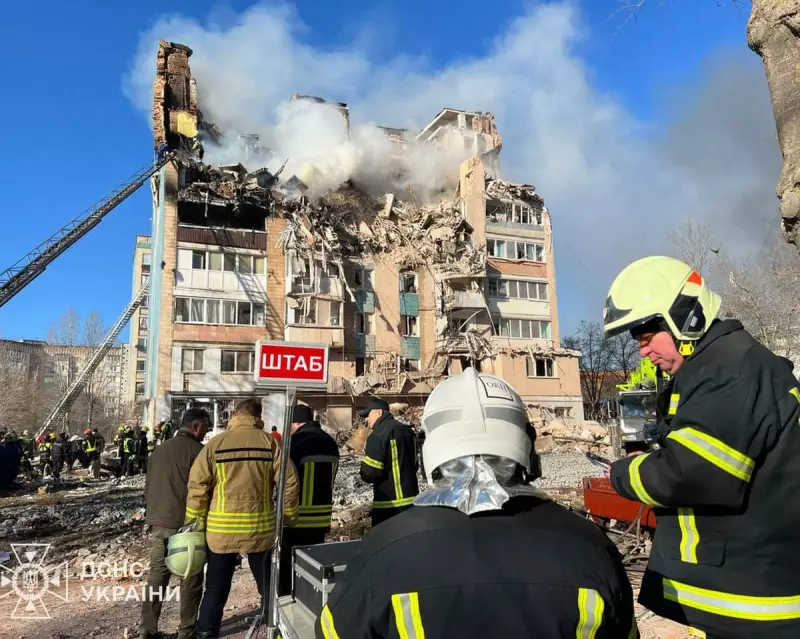
As reports of the draft plan circulated, Russia intensified its military campaign with a major assault on western Ukraine. The attack targeted multiple residential buildings in Ternopil and energy facilities in Ivano-Frankivsk and Lviv regions.
Oleg Hrytsyshyn, a resident of one damaged apartment block, described the terrifying moments after the strike. "There were several loud explosions. When I tried to get dressed, there was thick black smoke in the entrance. It was burning. It was impossible to get out, although I tried twice," he recounted. The sixth-floor resident was eventually rescued and received medical treatment for high blood pressure.
Local witness Yaroslav Teslyuk reported that the attack occurred around 5:30 a.m., catching most residents asleep in their beds. "I was told some people burned alive in their apartments because the strike happened when everyone was still asleep. The bodies were covered up," he stated.
Ukrainian emergency services confirmed the attack killed 25 people, including three children, with 73 others injured—15 of them children.
International Response and Diplomatic Moves
President Zelenskyy, who met with Turkish President Tayyip Erdoğan on Wednesday to reinvigorate peace negotiations, urged Western allies to increase pressure on Moscow. "Every brazen attack against ordinary life shows that the pressure on Russia is insufficient," he wrote on social media platform X. "Effective sanctions and assistance to Ukraine can change this."
The Ukrainian leader is expected to meet with a senior delegation of US military officials on Thursday, following US Army Secretary Daniel Driscoll's arrival in Kyiv on Wednesday for talks about ending the conflict.
Meanwhile, Kremlin spokesman Dmitry Peskov denied significant progress in peace talks, stating: "So far there are no innovations on this that can be reported to you." Russia's foreign ministry also claimed unawareness of any new US peace proposal, with spokeswoman Maria Zakharova noting that formal diplomatic channels had not been used for such communications.
The diplomatic developments occur against a backdrop of continued Russian military advances, including recent gains in the strategically important city of Pokrovsk, and a widening corruption scandal in Ukraine's energy sector that represents the most serious political crisis since the war began.