A controversial 28-point plan to end the war in Ukraine has reportedly been drafted by American and Russian officials, a move that has sparked alarm in Kyiv and across European capitals. The proposed deal, details of which emerged on Wednesday, would require significant concessions from Ukraine, including ceding sovereign territory.
Key Demands of the Proposed Peace Deal
The plan's tenets, first reported by Axios, the Financial Times, and the New York Times, present what many see as a reflection of Moscow's maximalist demands. Ukraine would be required to formally cede the remainder of the Russian-occupied eastern Donbas region, effectively handing over land that Moscow's forces have been unable to capture completely through military means.
Further stipulations include a demand for Kyiv to halve the size of its armed forces and to reduce or abandon certain weaponry, with a specific focus on long-range missiles capable of striking targets within Russia. The proposal would also see Ukraine commit to reducing or halting US military assistance and formally ban the future deployment of western troops, a key element of the Franco-British-led 'coalition of the willing'.
Cultural Concessions and Security Guarantees
Beyond military and territorial demands, the deal reportedly ventures into cultural policy. Ukraine would be compelled to recognise Russian as an official state language and grant formal status to the Russian Orthodox Church. These clauses have raised profound concerns about attempts to Russify the country from within.
In a potential concession to Ukraine and Europe, the plan allegedly offers some form of US security guarantees against future Russian aggression. However, no concrete details were provided, leaving observers to question its efficacy, especially given that the US was a signatory to the 1994 Budapest memorandum, which Russia later violated.
Political Fallout and European Concerns
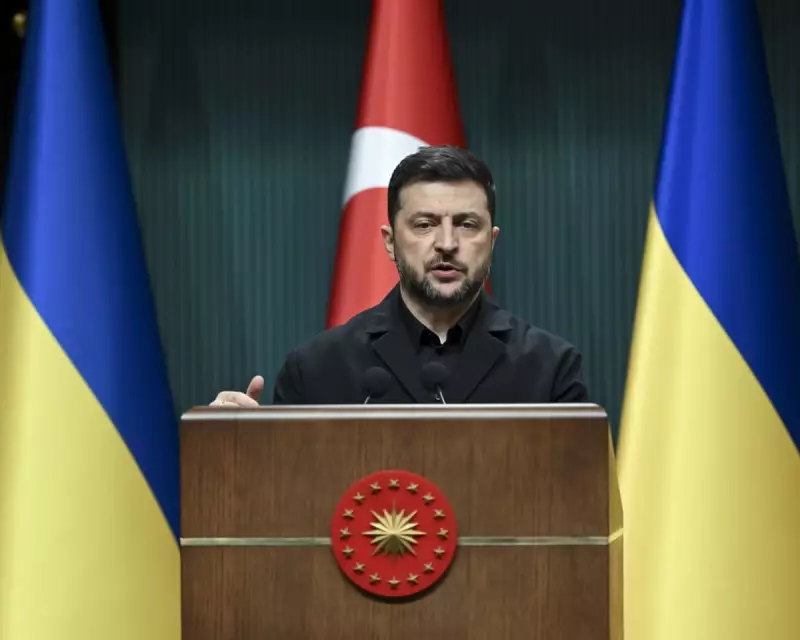
The proposed plan represents a direct challenge to numerous Ukrainian red lines and would force a humiliating reversal from President Volodymyr Zelenskyy, who was in Ankara on Wednesday. Zelenskyy has consistently and publicly insisted that no Ukrainian territory will be handed to Russia, making the terms of this draft agreement politically untenable for his government.
The deal is also likely to be deemed unacceptable by Ukraine's European allies. These nations have long argued for a central role in any peace talks, given the settlement's significant implications for the continent's security architecture, particularly for NATO's eastern flank. The fact that the plan was reportedly drafted by Russian and US officials, notably Russia's Kirill Dmitriev and US special envoy Steve Witkoff, has sidelined European stakeholders.
US officials have not formally confirmed the plan's contents. White House deputy chief of staff, Stephen Miller, stated he had no announcements on the topic. US Secretary of State, Marco Rubio, offered a cryptic response on social media, saying that ending a complex war requires an 'extensive exchange of serious and realistic ideas' and that achieving peace would require 'difficult but necessary concessions' from both sides.