
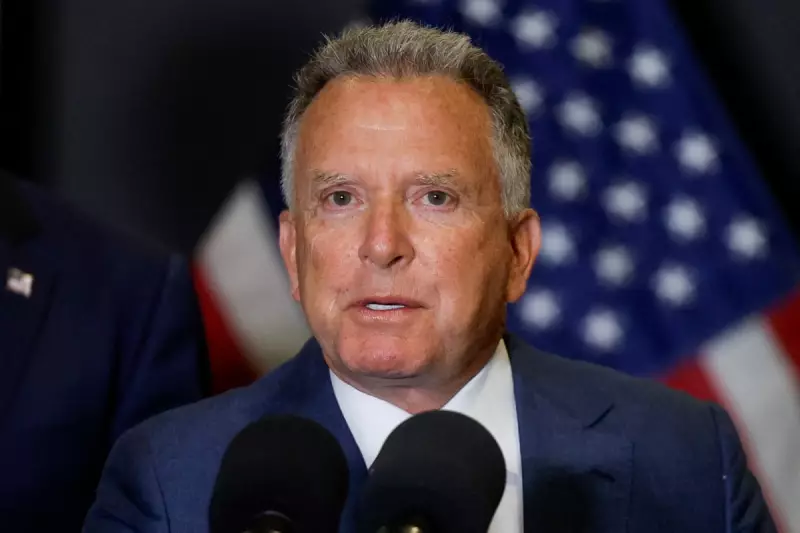
A significant political storm has erupted in Washington following the emergence of a leaked phone conversation between Donald Trump's special envoy to Ukraine, Steve Witkoff, and a senior Kremlin official, prompting bipartisan calls for his immediate dismissal.
Bipartisan Fury Over Leaked Conversation
The controversy centres on a recording obtained by Bloomberg of a 14th October phone call between Witkoff and Yuri Ushakov, Vladimir Putin's top foreign policy aide. During the conversation, Witkoff reportedly provided strategic advice to Moscow on handling the Ukraine peace negotiations with the Trump administration.
According to a transcript published by Bloomberg, Witkoff told Ushakov that achieving peace would likely require Russia gaining control of Donetsk and potentially additional Ukrainian territory through a land swap. He was quoted as saying: "Now, me to you, I know what it's going to take to get a peace deal done: Donetsk and maybe a land swap somewhere."
The envoy also offered tactical guidance, suggesting how the Russian leader should approach discussions with Trump, including scheduling a Trump-Putin phone call before Ukrainian President Volodymyr Zelenskyy's planned visit to the White House.
Lawmakers React: 'Traitor' and 'Cannot Be Trusted'
The leak has triggered fierce reactions from both sides of the political aisle. Republican representative Don Bacon of Nebraska led the charge, demanding Witkoff's immediate removal from his position.
"For those who oppose the Russian invasion and want to see Ukraine prevail as a sovereign & democratic country, it is clear that Witkoff fully favours the Russians," Bacon wrote on social media platform X. "He cannot be trusted to lead these negotiations."
Fellow Republican Brian Fitzpatrick of Pennsylvania described the situation as "a major problem" and called for an end to "ridiculous side shows and secret meetings," urging that Secretary of State Marco Rubio be allowed to manage diplomacy properly.
Democratic representative Ted Lieu delivered the most severe condemnation, directly labelling Witkoff an "actual traitor." Lieu stated emphatically: "Steve Witkoff is supposed to work for the United States, not Russia."
White House Response and Confirmation
On Wednesday, Russian official Yuri Ushakov appeared to confirm the call's authenticity during an interview with Russian state television, suggesting the leak was deliberately intended to "hinder" ongoing peace negotiations.
President Trump defended his envoy while travelling aboard Air Force One on Tuesday evening. "That's what a dealmaker does," Trump asserted. "You've got to say look, they want this, you've got to convince them of this. That's a very standard form of negotiation." The president added that he believed Witkoff was "saying the same thing to Ukraine."
Meanwhile, Richard Grenell, the president's special missions envoy, took a different approach, calling for the identification and dismissal of the person who leaked the conversation rather than punishing Witkoff. "Find the leaker and fire them immediately," Grenell wrote in a social media post. "The anonymous leaker is a national security risk."
The proposed peace deal, which comprises 28 points, would compel Ukraine to surrender the entire Donetsk region, including areas currently under Ukrainian control. These territories would become a demilitarised buffer zone recognised internationally as Russian territory.
The controversial plan would also grant Russia control of Luhansk and Crimea while freezing battle lines in Kherson and Zaporizhzhia. Notably, Russia has not fully captured Donetsk despite nearly four years of conflict.
In a significant development, President Trump announced on Tuesday that he is dispatching Witkoff to Moscow to meet with Putin, while sending US Army Secretary Dan Driscoll to confer with Ukrainian officials. This diplomatic movement precedes a potential meeting between Trump and Zelenskyy scheduled for Friday.




