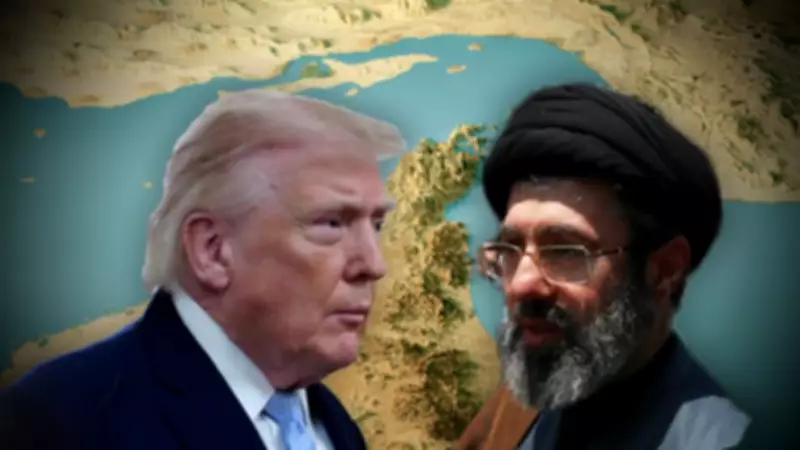
US-Iran Peace Talks: Conflicting Claims and Secret Negotiations Unveiled
The ongoing conflict between the United States and Iran has taken a perplexing turn with contradictory statements from both sides regarding potential peace negotiations. US President Donald Trump has repeatedly claimed that Washington and Tehran are engaged in "very good and productive" talks aimed at ending the war, a declaration he insists signifies American victory. However, Iran has firmly denied any such negotiations, with military spokespeople mocking the Trump administration for what they describe as internal discord leading to self-negotiation.
Trump's Assertions and Military Moves
In a recent post on Truth Social dated 24 March, President Trump announced that the two nations had been involved in constructive conversations over multiple days. This statement coincided with a deadline he had set for Iran to relinquish control over the Strait of Hormuz, threatening to target Iranian power plants if demands were not met. Following his claims of diplomatic progress, Trump ordered the US military to postpone all strikes against Iranian energy infrastructure.
When questioned about the negotiations, Trump identified a team including his son-in-law Jared Kushner, special envoy Steve Witkoff, Vice President JD Vance, and Secretary of State Marco Rubio as key participants. Despite these bold assertions, sources reveal that over 1,000 additional US soldiers are being deployed to the region, approved by the president on Monday night, with orders prepared for headquarters and ground forces.
Iran's Denials and Leadership Dynamics
Iran has consistently refuted Trump's claims, with Major General Ali Abdollahi Aliabadi, spokesman for the top military command, vowing to continue fighting until "complete victory." The leadership landscape in Iran remains uncertain following the death of former Supreme Leader Ali Khamenei, replaced by his son Ayatollah Mojtaba Khamenei, who has not been publicly seen since the conflict began. Potential Iranian figures in any talks could include Parliamentary Speaker Mohammad Bagher Ghalibaf, Foreign Minister Abbas Araghchi, and President Masoud Pezeshkian.
Indirect Talks and Pakistan's Mediation Role
Military analyst Professor Michael Clarke suggests that negotiations are indeed occurring but through indirect channels. He posits that Pakistan's Army Chief General Asim Munir is mediating a process akin to "Chinese whispers," communicating directly with Iran's Parliamentary Speaker Ghalibaf, who influences the Revolutionary Guard. Additionally, Pakistan's Prime Minister Shehbaz Sharif has engaged with Iranian President Pezeshkian, relaying information to US envoys Witkoff and Kushner.
Pakistan has officially offered to host renewed negotiations, with Prime Minister Sharif stating readiness to facilitate meaningful talks, tagging key US and Iranian figures in social media posts. According to officials from Pakistan, Egypt, and the Gulf, the US has agreed in principle to join talks in Pakistan, focusing on trust-building and mechanisms to reopen the Strait of Hormuz.
Divergent Objectives and Peace Plans
Since the war's inception in February, Trump's objectives have been vague and shifting, initially demanding the surrender of Iranian leaders and removal of enriched uranium. Iran has rejected these demands, asserting its right to peaceful nuclear activities. The announcement of talks may indicate Trump's concern over the war's economic impact, particularly regarding keeping the Strait of Hormuz open.
Iran claims the strait remains accessible except to vessels associated with aggressors like the US and Israel. Professor Clarke notes that by postponing strikes, Trump may have given Iran leverage, leading Tehran to outline peace terms including retaining ballistic missile and nuclear capabilities, which the US is unlikely to accept.
The 15-Point vs 5-Point Plans
Trump has referenced a 15-point plan for ending the conflict, delivered to Iran via Pakistani intermediaries, though details remain scarce. Reports from Israel's Channel 12 cite a Western source indicating the plan involves Iran's nuclear programme. In response, Iran has labeled the proposal "excessive" and presented a five-point plan for ending the war, which includes halting aggression, ensuring non-attack guarantees, war reparations, regional ceasefire, and international recognition of Iran's authority over the Strait of Hormuz.
Israel's Stance and Regional Implications
Notably, Israel is not involved in these negotiation efforts. While previously aligning with Trump's lead, Israel continues to pursue its own war aims, with Prime Minister Benjamin Netanyahu acknowledging diplomatic efforts but affirming ongoing strikes. An end to the Iran conflict would not necessarily halt Israel's campaign in Lebanon against Hezbollah, which has supported Iran with rocket fire.
This complex web of claims, denials, and secretive diplomacy underscores the volatile nature of the US-Iran conflict, with peace talks shrouded in uncertainty and geopolitical maneuvering.