UN Landmark Slavery Ruling Energizes African Union's Fight for Reparations
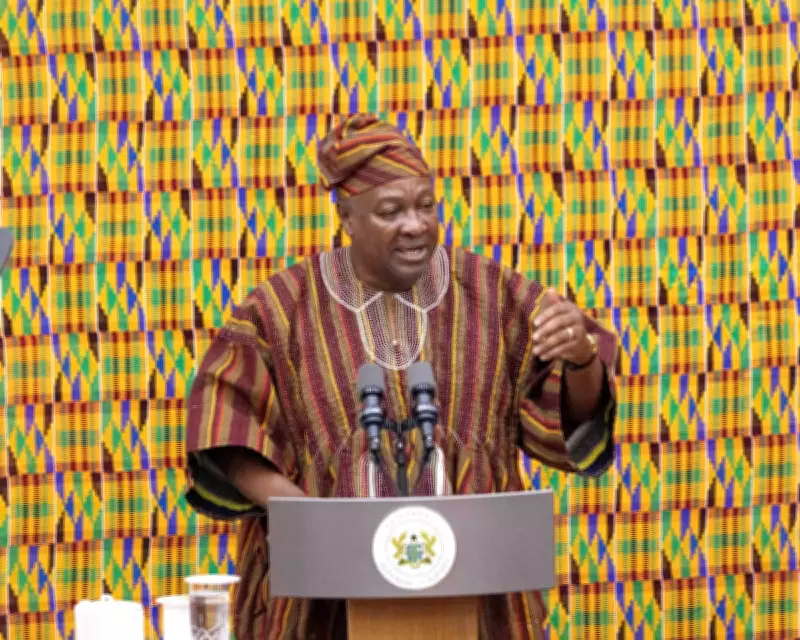
In a historic move that has energized the African Union's long-standing fight for reparations, the United Nations General Assembly has voted decisively to declare the transatlantic slave trade as "the gravest crime against humanity." This landmark resolution, championed by Ghana's President John Mahama, passed with overwhelming support from 123 nations, marking a significant step in the global acknowledgment of historical injustices.
A World Divided on Historical Accountability
The vote revealed deep international divisions regarding the gravity of enslaving over 15 million people as chattel across four centuries. While Africa, Asia, the Caribbean, most of Latin America, and the Arab world supported the resolution, Western nations including Australia, Canada, the United Kingdom, and European Union states abstained. Only three countries—Argentina, Israel, and the United States—voted against the measure.
Human rights advocates believe this opposition stems from concerns that the resolution, though not legally binding, opens the door to reparations claims. The U.S. ambassador to the UN Economic and Social Council, Dan Negrea, explicitly stated that Washington "does not recognise a legal right to reparations for historical wrongs that were not illegal under international law at the time they occurred."
Ghana's Leadership in the Global Movement
President John Mahama, who recently completed a remarkable political comeback in Ghana, has emerged as a central figure in this global movement. Having rallied international support for the resolution despite opposition from nations with historical ties to slavery, Mahama has been named the African Union's reparations champion. The union has designated 2026-2036 as its "decade of reparations," with Mahama positioned to potentially become its chair in 2027.
"We travel this long road, each step guided by a desire to be better and to do better, each step bringing us closer to the kind of world we would want to leave for our children," Mahama declared in his speech at the UN General Assembly.
The Path Forward for Reparatory Justice
Following this historic victory, attention now turns to the African Union's next steps. An AU committee of experts is already developing a framework for reparatory justice and engaging with descendants of enslaved people worldwide. UN Secretary General António Guterres has called for "far bolder action" in the wake of the vote, emphasizing the need for continued momentum.
The resolution itself resulted from months of consultations across the African continent and diaspora communities. This same collaborative approach is now being employed to determine practical next steps for achieving reparatory justice, even in the face of Western resistance.
Historical Context and Contemporary Resistance
Ironically, during the debate, the Vatican's permanent observer to the UN highlighted papal condemnations of slavery while omitting Pope Nicholas V's 15th-century edicts that actually facilitated Portuguese enslavement of non-Christians in Africa. This selective historical narrative underscores the challenges in achieving comprehensive acknowledgment of historical complicity.
Despite resistance from nations with historical ties to slavery, the resolution's passage represents what Russia called "a long overdue recognition" of historical crimes. The African Union now faces the complex task of translating this symbolic victory into tangible justice through creative approaches to reparations that can overcome Western stonewalling.