Palestinian Leadership Divided Over UN-Backed Peace Plan
The Palestinian foreign minister has described the recent UN Security Council resolution endorsing a peace plan for Gaza as a necessary first step toward lasting peace, even as Hamas firmly rejected key elements of the proposal.
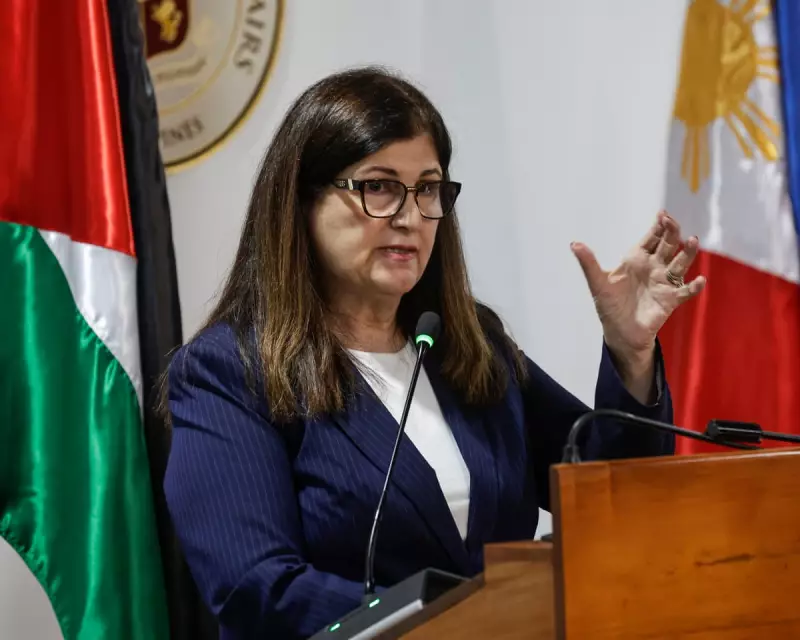
Varsen Aghabekian Shahin made her comments during a press briefing on Tuesday while visiting the Philippines, backing the resolution that passed on Monday by 13 votes to 0, with China and Russia abstaining.
Hamas Resistance to International Force
The militant group, which remains dominant in Gaza, strongly objected to the requirement to decommission its weapons and rejected the concept of an international stabilisation force operating inside the territory.
"Assigning the international force with tasks and roles inside the Gaza Strip, including disarming the resistance, strips it of its neutrality, and turns it into a party to the conflict in favour of the occupation," Hamas stated in their official response.
The group insisted that any international presence should only be stationed at the border to monitor ceasefire arrangements and should operate under full UN supervision without Israeli involvement.
Technical Challenges and Political Complexities
Arab state leaders who reluctantly adopted the plan have called for urgent clarification from the United States regarding several key components. These include the composition of the proposed Palestinian technocratic committee that would deliver services inside Gaza and the leadership structure of the international stabilisation force.
Membership of the board of peace, the body intended to oversee both the ISF and a Palestinian civilian police force, also remains undetermined, creating uncertainty about the plan's implementation.
A British diplomat involved in the negotiations acknowledged that weapon decommissioning would represent the most challenging aspect of the process, likely only occurring in the context of a full Israeli withdrawal from Gaza.
Palestinian Minister's Cautious Optimism
Despite the objections from Hamas and concerns among many Palestinians about the conditional path to statehood outlined in the resolution, Foreign Minister Shahin maintained a positive outlook.
"The UN resolution is the first step in a long road towards peace," she stated. "That step was needed because we could not embark on anything else before we had a ceasefire."
Shahin acknowledged that the US president's plan only alludes to possible Palestinian statehood after the Palestinian Authority carries out reforms, but suggested this issue could be addressed later in the process.
Mahmoud Abbas, president of the Palestinian Authority, has already agreed to work with French President Emmanuel Macron on drafting a new constitution for the authority, a precondition for holding long-delayed elections and addressing endemic corruption.
International Reactions and Next Steps
US Ambassador to the UN Mike Waltz defended the resolution during the debate, stating: "This resolution presents a possible path to a Palestinian state if the Palestinian Authority meets the conditions. A vote against is a vote to return to war."
Following the resolution's endorsement, Waltz claimed it demonstrated the UN's capacity to remain "a beacon for peace, and not just a bystander" and would enable a Gaza Strip "finally free of Hamas's terror and reign."
Within Israel, reaction to the UN resolution has been mixed, with Prime Minister Benjamin Netanyahu welcoming the plan while opposition leader Yair Lapid accused the government of having turned a "blind eye" to Hamas arming itself over the years.
The United Kingdom successfully inserted a reference to aid delivery in line with international law into the resolution text, preserving a potential role for UNRWA in humanitarian efforts. Britain is also contributing expertise based on its experience with the IRA in Northern Ireland to inform the disarmament process.
The ultimate success of the peace plan may depend on continued engagement from the Trump administration and effective pressure on the Israeli government to follow through with withdrawal from Gaza, as numerous opportunities exist within the resolution's text for Israel to delay or avoid full implementation.