Ukraine Peace Talks: Assessing Progress in Abu Dhabi Trilateral Negotiations
Negotiators from Russia, Ukraine and the United States have convened in Abu Dhabi for the first trilateral security discussions since the full-scale invasion of Ukraine in 2022. These talks represent a significant diplomatic development in efforts to reach a comprehensive agreement to end the ongoing conflict.
The Current State of Negotiations
While initial discussions are being described as informal, more formal negotiations are scheduled to follow later in the day. The Kremlin has confirmed participation while simultaneously warning that lasting peace cannot be achieved without resolving critical territorial issues. This comes after recent diplomatic activity saw three US envoys, including Steve Witkoff and Jared Kushner, meeting with Russian President Vladimir Putin in Moscow, while former President Donald Trump held discussions with Ukrainian President Volodymyr Zelenskyy at the World Economic Forum in Davos.
Territorial Disputes: The Primary Obstacle
The central sticking point in any potential agreement remains territorial control. Russia continues to demand that Ukraine surrenders approximately 20% of the Donetsk region that remains under Ukrainian control - territory covering roughly 1,900 square miles that President Zelenskyy has consistently refused to relinquish. Donetsk, along with Luhansk, comprises the Donbas region, with Russian forces already controlling nearly all of Luhansk.
Following his meeting with Donald Trump, President Zelenskyy acknowledged that the status of Russian-occupied territories in eastern Ukraine remains unresolved, though he indicated that peace proposals are nearly ready. Russian foreign affairs adviser Yuri Ushakov reinforced Moscow's position, stating that President Putin had reaffirmed to US envoys that achieving a long-term settlement cannot be expected without solving the territorial issue.
Security Guarantees and International Commitments
President Zelenskyy has emphasized that he awaits confirmation from Donald Trump regarding a specific date and time to sign an agreement on US security guarantees for Ukraine. While the document is reportedly done, it remains unsigned and undisclosed to the public. Ukraine has consistently sought robust security guarantees from international allies to counter potential future Russian aggression.
Donald Trump's proposed 28-point peace plan specifically outlines that Ukraine would receive robust security guarantees. Meanwhile, the United Kingdom and France have already committed to deploying troops to military hubs in Ukraine as part of the Coalition of the Willing, should a ceasefire be established.
Delegation Composition and Meeting Structure
The Abu Dhabi talks involve delegations rather than national leaders. Ukraine is represented by lead negotiator Rustem Umerov and President Zelenskyy's chief of staff Kyrylo Budanov, while Moscow has designated Admiral Igor Kostyukov to head its delegation. Separately, President Putin's envoy Kirill Dmitriev is expected to hold economic discussions with US envoy Steve Witkoff.
Historical Context and Cautious Optimism
Sky News correspondent Sally Lockwood described the trilateral meeting as a significant moment while advising tempered expectations, noting that similar diplomatic efforts have occurred previously without breakthrough results. In November, military officials from all three sides met in Abu Dhabi, though it remains unclear whether they convened simultaneously in the same room.
Previous diplomatic encounters include a May meeting between Ukrainian and Russian officials in Turkey that lasted barely two hours despite initial hopes for a turning point in Europe's deadliest conflict since World War Two. An August meeting between Donald Trump and Vladimir Putin in Alaska discussed potential territorial concessions but yielded no firm agreements.
Lockwood suggested that the rapid organization of the current Abu Dhabi talks might indicate that each side has contemplated potential compromises they might be willing to accept. The presence of Kyrylo Budanov, appointed in early January as President Zelenskyy's chief of staff, is considered particularly significant, with US sources reportedly describing him as the only member of Zelenskyy's staff they take really seriously.
Ongoing Conflict Amid Diplomatic Efforts
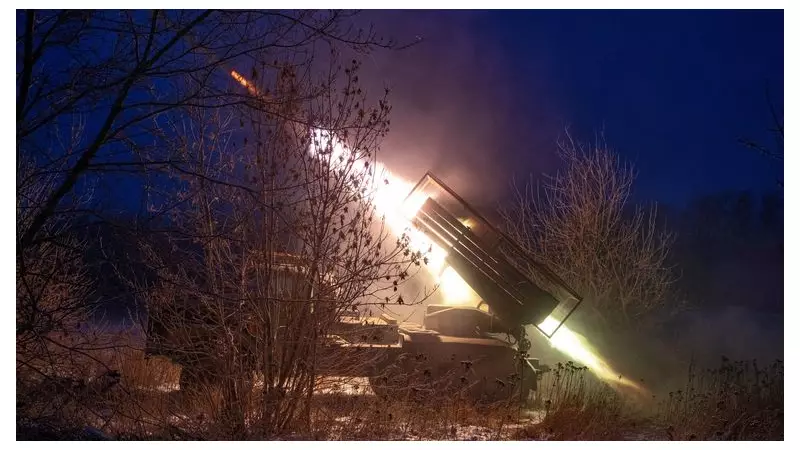
While peace negotiations proceed in Abu Dhabi, military hostilities continue unabated. Russia has shown no indication of halting attacks on Ukrainian civilian infrastructure, with overnight assaults involving approximately 101 drones targeting Ukraine. Ukrainian air forces reported intercepting 76 drones while 19 struck twelve locations.
In eastern Ukraine, four civilians including a five-year-old child were killed in Russian overnight strikes, according to the state emergency service. Nearly 2,000 apartment buildings in Kyiv remain without heating following a Russian attack that caused a blackout last week. The European Union has responded by deploying 447 emergency generators from strategic reserves in Poland to alleviate freezing conditions for affected residents.
Kremlin aide Yuri Ushakov emphasized that until a diplomatic solution is achieved, Russia will continue to pursue military objectives, noting that Russian armed forces maintain strategic initiative on the battlefield.