Washington's former ambassador to Caracas has issued a stark warning that military action against Venezuela now appears increasingly likely, with an 80% probability of some form of US attack occurring imminently.
Diplomatic Assessment Shifts Dramatically
James Story, who served as Washington's top diplomat in Venezuela from 2018 to 2023, initially believed the military buildup that began in August was primarily theatrical - designed to pressure authoritarian leader Nicolás Maduro through shows of force rather than actual combat.
However, Story's assessment has changed dramatically in recent days as the world's largest aircraft carrier, the USS Gerald R Ford, and its strike group entered Latin American waters. This represents the United States' largest military deployment in the region in decades.
The former ambassador now believes there is an 80% chance the situation will evolve into military action, a complete reversal from his previous position where he gave only a 10% likelihood of an attack on Venezuelan soil.
Military Buildup Intensifies Caribbean Tensions
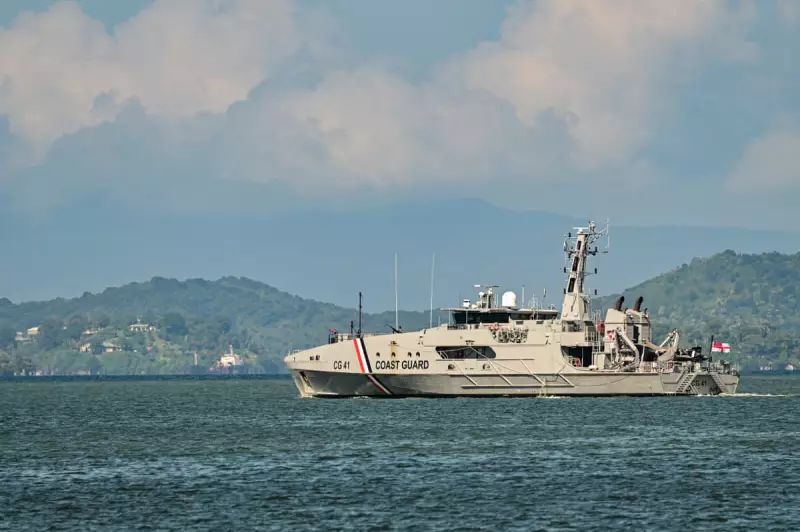
The escalating situation saw visible demonstration on 30 October 2025, when a Trinidad and Tobago coast guard vessel escorted the USS Gravely, a US navy warship, departing the port of Spain. This naval activity forms part of President Donald Trump's broader campaign targeting what the US describes as a "narco-terrorist" drug cartel allegedly operated by Maduro's government.
The deployment includes marine units, reaper drones, and notably, the same special forces helicopter unit used to transport Panamanian dictator Manuel Noriega into US custody during the 1989 invasion. This has sparked uncomfortable comparisons with that military intervention.
Benjamin Gedan, director of the Latin America programme at the Stimson Centre in Washington, described the precarious balance: "We are both on the verge of war and on the verge of total normalisation of diplomatic ties. You would almost never say that about any conflict."
Potential Scenarios and Regional Consequences
Story outlined several possible military approaches, including a "Soleimani-style attack" targeting one of Maduro's closest political allies, referencing the 2020 US drone strike that killed Iran's second-most powerful man. Alternatively, he suggested the US could execute a devastating aerial blitz that would "take out their air force, their navy, their surface-to-air missile systems and we could decapitate the government very quickly."
While some of Maduro's political opponents welcome potential US intervention as the only way to break his 12-year grip on power, experts warn of severe consequences. Elías Ferrer of Orinoco Research raised concerns about a "Libya scenario," where the country could descend into civil war following regime change.
Gedan cautioned that Venezuela bears more resemblance to Afghanistan than Panama, suggesting that toppling Maduro would be complex and rebuilding the nation enormously challenging. Venezuela's potential destabilisation threatens to impact the entire region, with neighbouring Colombia's experience with persistent guerrilla conflicts serving as a cautionary tale.
Despite the military posturing, back-channel negotiations between US and Venezuelan officials are widely believed to be ongoing, leaving open the possibility of diplomatic resolution even as war drums grow louder.