Kyiv Confronts 'Impossible Choice' Over Controversial US Peace Proposal
Ukrainian President Volodymyr Zelenskyy has delivered a sobering warning to his nation, stating they face an impossible choice between national dignity and losing crucial American support following the revelation of Donald Trump's controversial peace plan. The US president has given Ukraine until Thursday to sign the 28-point document, which has drawn comparisons to Neville Chamberlain's 1938 Munich agreement with Adolf Hitler.
The Geneva Summit and Mounting International Pressure
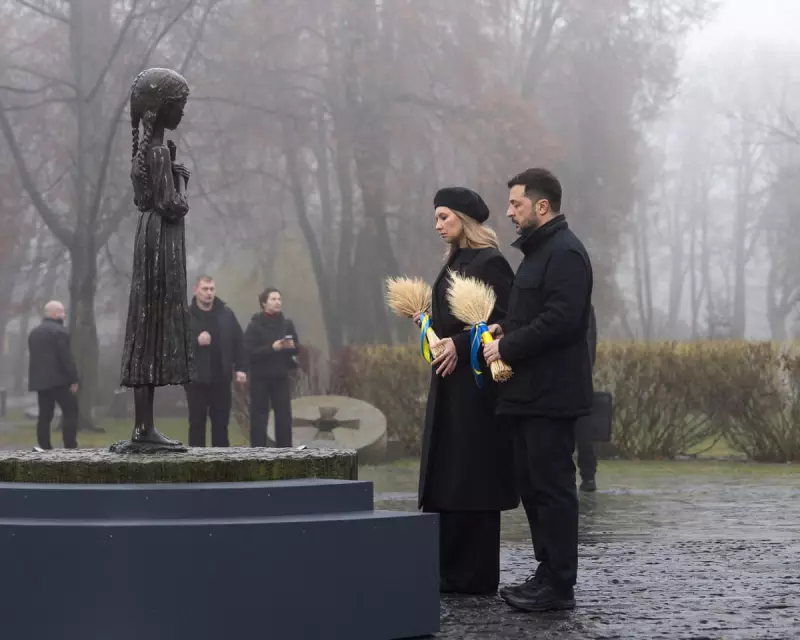
Ukrainian and American officials are scheduled to meet in Geneva on Sunday for critical talks, with security officials from France, Britain, and Germany expected to join. The timing is particularly poignant as President Zelenskyy and his wife, Olena, visited a monument to victims of the Holodomor famine in the 1930s in Kyiv on Saturday, a stark reminder of Ukraine's historical struggles.
In a significant development, US Secretary of State Marco Rubio contacted senators while en route to Geneva, attempting to distance the administration from the leaked proposal. According to independent Maine senator Angus King, Rubio described the plan as a wish list of the Russians rather than the administration's official position.
Contentious Terms and Ukrainian Red Lines
The proposed agreement presents several deeply problematic conditions for Ukraine:
- Surrender territory currently controlled by Ukrainian forces to Russia
- Significantly reduce the size of its military
- Relinquish long-range weapons systems
- Accept restrictions on future NATO membership
- Grant full amnesty for Russian war crimes
President Zelenskyy has appointed a negotiating team led by his chief of staff, Andriy Yermak, with former defence minister Rustem Umerov also participating. Umerov emphasised that Ukraine approaches these talks with a clear understanding of its interests, hinting at established red lines that Kyiv cannot cross.
International Backlash and Historical Parallels
The proposed deal has triggered overwhelming hostility within Ukraine and concern among European allies. Mustafa Nayyem, a prominent journalist and politician who led Ukraine's 2014 pro-democracy Maidan revolution, described the agreement as belonging to the same recognisable genre as Chamberlain's Munich deal, where the victim is invited to formulate his own defeat.
G20 leaders and the European Council issued a joint statement pushing back on Trump's plan, stating it requires additional work and consultation with EU and NATO members. Former European leaders have been even more blunt in their criticism.
Finnish former prime minister Sanna Marin called the proposal a catastrophe not only for Ukraine but for all of the democratic world, warning that western weakness could lead to more aggression and conflicts. Guy Verhofstadt, former prime minister of Belgium, quoted Winston Churchill's definition of an appeaser as one who feeds a crocodile, hoping it will eat him last.
Ukrainian Public Reaction: Defiance and Division
On the streets of Kyiv, reactions reflected the nation's difficult position. Dmytro Sariskyi, 21, expressed concern that Russia has been trying to control Ukraine politically and territorially for years and saw the deal as an attempt to break Ukraine with unjust conditions.
Meanwhile, 19-year-old Sofia Barchan remained defiant, stating Ukraine will keep strong without American support and fight for as long as necessary to retain all its territory, including Crimea and the eastern regions.
Some voices, like Olena Ivanovna speaking near Kyiv's Golden Gate monument, expressed gratitude for Trump's peace efforts and suggested Ukraine should consider temporary territorial concessions to maintain the American partnership, proposing a referendum to decide the matter.
As the Geneva talks approach, President Zelenskyy faces what may become one of the most defining moments in modern Ukrainian history, balancing the desperate need for peace against the fundamental principles of sovereignty and justice that have sustained his nation's resistance.