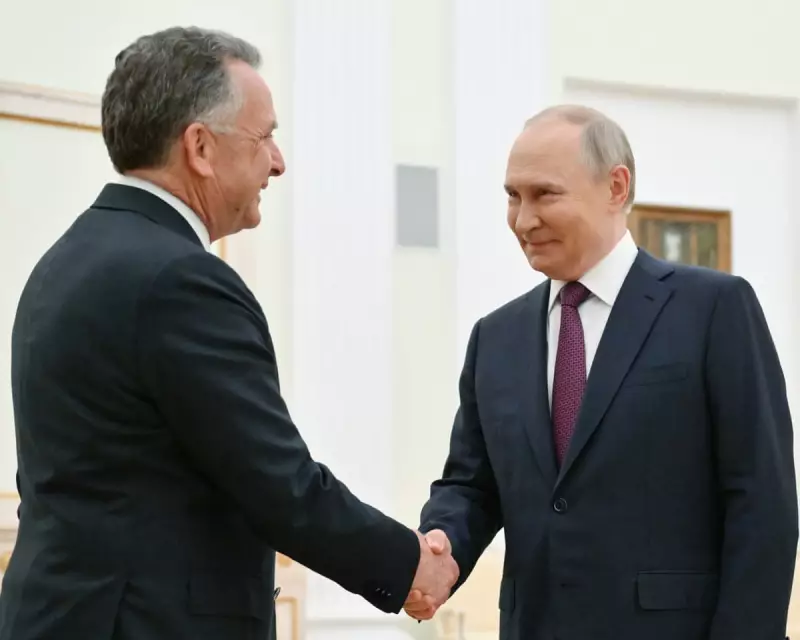
Trump's Diplomatic Push for Ukraine Peace
Former US President Donald Trump has declared his plan to end the war in Ukraine has been 'fine-tuned' and is deploying a high-level diplomatic team to advance negotiations. The initiative will see envoy Steve Witkoff travel to Moscow for a meeting with Russian President Vladimir Putin, potentially accompanied by Trump's son-in-law, Jared Kushner.
Simultaneously, US Army Secretary Dan Driscoll is set to engage with Ukrainian officials. Despite a sense of optimism from the White House, significant hurdles remain on core issues, with little visible progress reported as diplomatic talks continue.
Shifting Deadlines and Territorial Concessions
In a notable shift, President Trump has stepped back from his previously stated Thursday deadline for Ukraine to accept a US-backed peace agreement. He told journalists aboard Air Force One, 'The deadline for me is when it’s over.'
Trump also appeared to downplay a contentious element of his proposal that would require Ukraine to cede territory to Russia. He suggested that Russian forces were likely to seize the land regardless, stating, 'The way it’s going, if you look, it’s just moving in one direction. So eventually that’s land that over the next couple of months might be gotten by Russia anyway.'
While Trump has expressed a willingness to meet with both Presidents Putin and Zelenskyy, he clarified this would only happen 'when the deal to end this War is FINAL or, in its final stages,' as he posted on his Truth Social platform.
Wider Conflict and International Reactions
The diplomatic manoeuvres unfold against a backdrop of continued violence. Russian forces staged a mass drone attack on the southeastern city of Zaporizhzhia late on Tuesday, injuring 12 people and causing significant damage to buildings and vehicles. This assault followed a major strike on Ukraine's energy infrastructure in Kyiv 24 hours earlier, which killed seven and injured 21.
In a concerning development, Nato jets were scrambled to track two Russian drones that crossed into Romanian airspace. One drone later crashed in Puieşti, approximately 70 miles from the Ukrainian border.
Leaders of Britain, France, and Germany have voiced support for Trump's peace efforts following a 'coalition of the willing' meeting. Keir Starmer, Emmanuel Macron, and Friedrich Merz issued a joint statement emphasising that 'borders must not be changed by force' and that any solution must fully involve Ukraine.
Meanwhile, a document signed by President Putin and published on Tuesday outlines a strategy to consolidate Russian language and identity in occupied parts of Ukraine, aiming for 95 percent of the population to identify as Russian by 2036.
In unrelated international incidents, French authorities have arrested three people suspected of spying for Russia and promoting war propaganda, while South African police are investigating allegations that a daughter of former president Jacob Zuma recruited men to fight for Russia under false pretences.