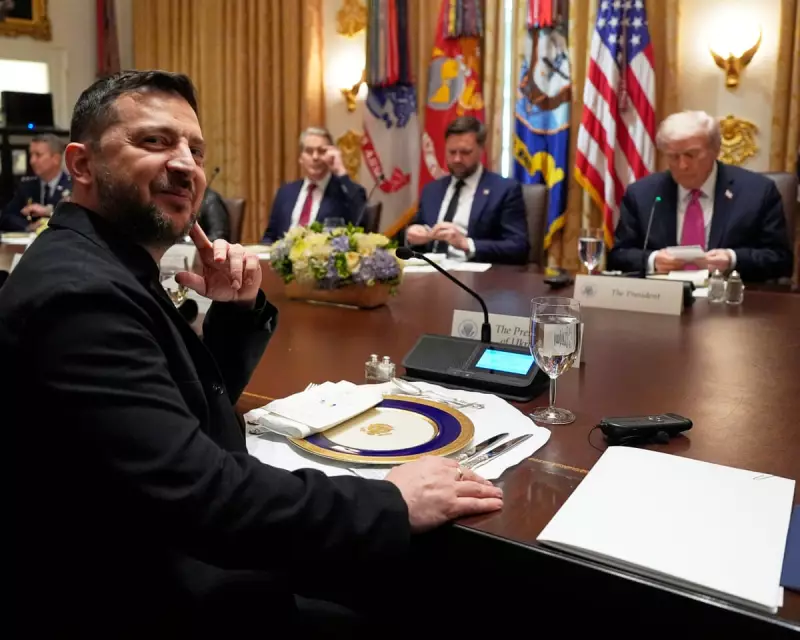
Trump's Controversial Peace Proposal Sparks International Backlash
President Donald Trump has indicated that positive developments may be emerging from peace negotiations in Switzerland aimed at ending the ongoing conflict in Ukraine. European and Ukrainian representatives are currently working to substantially modify the 28-point peace plan that Trump introduced last week, seeking to create terms more favourable to Ukraine's position.
The original proposal, negotiated between Putin confidant Kirill Dmitriev and Trump associates Steve Witkoff and Jared Kushner, placed Ukraine in an extremely disadvantageous starting position. It offered Vladimir Putin significant concessions that Russian forces have failed to achieve through military means despite recent advances around Pokrovsk and Myrnohrad in Donetsk province.
Imbalanced Terms and Kremlin-Friendly Provisions
The initial peace plan contained several provisions that heavily favoured Russian interests. Ukraine would have been required to cap its armed forces at 600,000 troops while Russia faced no comparable restrictions. The proposal also demanded constitutional changes eliminating Ukraine's commitment to joining NATO, effectively granting Moscow one of its long-standing strategic objectives.
Perhaps most controversially, the plan recognised Crimea, Donetsk and Luhansk as de facto Russian territory - granting Putin control over portions of Donetsk that Russian forces haven't actually captured. The agreement would freeze current battle lines, allowing Russia to retain territory seized in Kherson and Zaporizhzhia regions.
Meanwhile, Russia stood to gain numerous benefits without meaningful concessions:
- Readmission to the G8 group of nations
- Reintegration into the global economic system
- Staged lifting of international sanctions
- Cooperation with the US on energy, infrastructure and technology projects
Military Realities and Ukrainian Resilience
While Ukraine faces significant challenges, including troop shortages along an 800-mile contact line and reduced air defences after Trump cut direct US military assistance, the Ukrainian army shows no signs of collapse. Russian forces have suffered staggering losses, with UK Ministry of Defence estimates indicating over 1 million casualties and nearly 150,000 confirmed deaths.
Ukrainian deep strikes have successfully targeted at least 17 Russian refineries by mid-November, causing substantial fuel shortages, panic buying and reducing Russia's refining capacity by up to one-fifth. These operations demonstrate Ukraine's continued capacity to inflict significant economic damage despite military disadvantages.
Diplomatic Fallout and Plan Revisions
The controversial proposal triggered immediate criticism, with Secretary of State Marco Rubio reportedly telling Congress members that the plan appeared to be "produced by Russia." This led to subsequent negotiations between Rubio and Andriy Yermak, Volodymyr Zelenskyy's closest adviser, to rework the proposal based on Ukraine's objections.
Trump responded to criticism by accusing Ukraine of ingratitude but notably described the plan as "not my final offer" and suggested flexibility regarding implementation deadlines. This represents a significant shift from the original ultimatum-style approach that gave Ukraine mere days to accept the terms.
The ongoing revisions to Trump's peace plan offer a glimmer of hope that a more balanced agreement might emerge from the Swiss negotiations. As the conflict approaches the duration of Stalin's war against Nazi Germany, the international community watches closely to see whether diplomatic efforts can achieve what military operations have not - a sustainable resolution that respects Ukrainian sovereignty while addressing legitimate security concerns.