Trump's Controversial Blueprint for Ukraine Peace
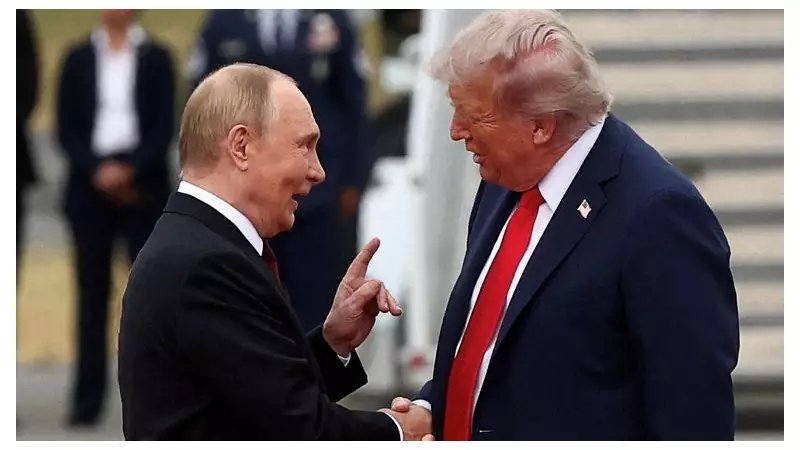
A draft peace agreement obtained by the Associated Press has revealed Donald Trump's proposed 28-point plan to end the war in Ukraine, a document that appears overwhelmingly favourable to Russian interests. The proposal, originating from negotiations between Washington and Moscow, closely mirrors demands repeatedly outlined by Vladimir Putin since Russia's full-scale invasion nearly four years ago.
Key Territorial and Military Concessions
The draft agreement, reportedly devised by Trump negotiator Steve Witkoff and Kremlin official Kirill Dmitriev, requires Ukraine to make significant territorial concessions. Ukraine would be forced to cede the entirety of Crimea, Luhansk and Donetsk to Russia, despite currently controlling approximately one-third of Donetsk oblast. The regions of Kherson and Zaporizhzhia would be frozen along existing conflict lines.
In addition to territorial losses, the plan demands substantial military limitations. Ukraine's armed forces, currently numbering around 880,000 troops, would be reduced to 600,000 personnel. The agreement would permanently bar Ukraine from NATO membership, requiring both Ukraine to enshrine this prohibition in its constitution and NATO to include a similar provision in its statutes.
Security Guarantees and Economic Provisions
The proposed security guarantees include a "decisive coordinated military response" to future Russian incursions, though the document doesn't specify America's role in such actions. A side agreement indicates that significant Russian attacks would be viewed as "threatening the peace and security of the transatlantic community," though it doesn't obligate direct military intervention by the US or European allies.
Economic arrangements feature prominently in the proposal. $100 billion in frozen Russian assets would be invested in Ukraine's reconstruction, with the United States receiving 50% of the profits from this venture. Europe would be expected to contribute an additional $100 billion. Sanctions on Russia would be lifted in stages, and Moscow would be invited to rejoin the G8 group of nations.
Other notable provisions include requirements for Ukraine to hold elections within 100 days of agreement, the establishment of a Peace Council headed by Donald Trump to monitor implementation, and the distribution of electricity from the Zaporizhzhia Nuclear Power Plant equally between Russia and Ukraine under IAEA supervision.
International Reaction and Ukrainian Position
The plan has been met with significant concern among international observers, with some describing it as "terrible," "weird," and "baffling." The proposals are widely seen as untenable for Ukrainian President Volodymyr Zelenskyy, who has previously rejected Trump's calls for territorial concessions.
The timing of the proposal's emergence adds pressure on Kyiv, as Ukraine faces devastating drone attacks, potential loss of the strategic city of Pokrovsk, and domestic political challenges. However, the extreme nature of the demands may paradoxically strengthen Zelenskyy's position by forcing Ukrainian political rivals to rally around their wartime leader.
European and Ukrainian officials face a delicate balancing act - they cannot outright reject the plan without risking alienation of the Trump administration, yet accepting its terms would amount to surrender of significant Ukrainian territory and sovereignty. The developing situation suggests prolonged diplomatic manoeuvring as stakeholders attempt to navigate this controversial proposal.