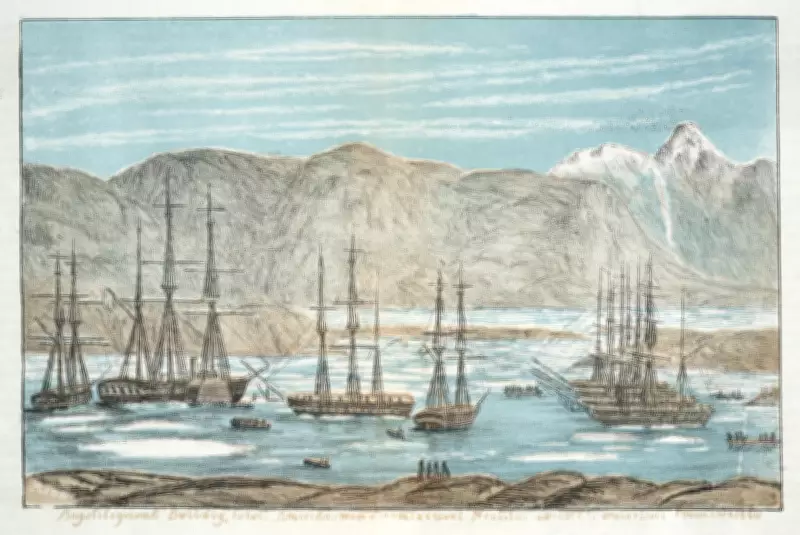
In 2019, then-President Donald Trump sparked international headlines by expressing a desire to purchase Greenland, an autonomous territory of Denmark. This proposal, though met with swift rejection from Danish officials and widespread ridicule, was not an isolated whim but rather a modern echo of a long-standing pattern in American history. The United States has a rich legacy of territorial expansion, driven by strategic, economic, and political motives, and Trump's Greenland gambit fits neatly into this historical narrative.
A Legacy of Acquisition: From Alaska to the Caribbean
The US has historically pursued territorial growth through various means, including purchases, annexations, and treaties. Key examples include the Louisiana Purchase in 1803, which doubled the size of the young nation, and the acquisition of Alaska from Russia in 1867, often dubbed "Seward's Folly" at the time but later proven valuable for its resources. In the late 19th and early 20th centuries, the US expanded its influence through the Spanish-American War, gaining territories like Puerto Rico and Guam, and asserting control over the Philippines and Cuba temporarily. These moves were often justified by notions of manifest destiny or strategic necessity, such as securing naval bases and trade routes.
Strategic and Economic Motivations Behind Greenland
Trump's interest in Greenland was underpinned by similar strategic and economic considerations. Greenland, the world's largest island, holds significant geopolitical importance due to its location in the Arctic, a region becoming increasingly accessible due to climate change. The melting ice opens new shipping lanes and reveals untapped natural resources, including oil, gas, and rare minerals. For the US, controlling Greenland could enhance its military presence in the Arctic, countering rivals like Russia and China, who have been expanding their own activities in the area. Economically, the potential for resource extraction aligns with Trump's "America First" policy, aiming to bolster domestic energy independence and economic growth.
Diplomatic Fallout and Historical Parallels
The proposal led to a diplomatic spat, with Denmark's Prime Minister Mette Frederiksen calling the idea "absurd" and cancelling a planned state visit. This reaction mirrors historical tensions, such as the US annexation of Hawaii in 1898, which faced opposition from native Hawaiians and international scrutiny. In both cases, the US's ambitions clashed with the sovereignty and interests of other nations, highlighting the complexities of territorial acquisition in a globalised world. Unlike past expansions, however, Trump's idea was quickly dismissed, reflecting modern norms of self-determination and international law that discourage such land grabs.
Broader Implications for US Foreign Policy
This episode sheds light on the evolving nature of US expansionism. While the 19th and early 20th centuries saw physical territorial growth, contemporary ambitions often focus on economic influence, military alliances, and soft power. Trump's Greenland interest, though unconventional, underscores a continued US desire to assert dominance in key regions. It also raises questions about how future administrations might approach similar opportunities, balancing strategic interests with diplomatic relations. As climate change reshapes the Arctic, Greenland's significance will only grow, making it a potential flashpoint in international politics.
In summary, Donald Trump's fleeting pursuit of Greenland is more than a curious footnote; it is a reminder of the US's historical appetite for expansion. By examining this through the lens of past acquisitions, we gain insight into the enduring drivers of American foreign policy—strategy, economy, and power—even as the methods and global context continue to evolve.