Ukraine's Precarious Position as Winter Looms
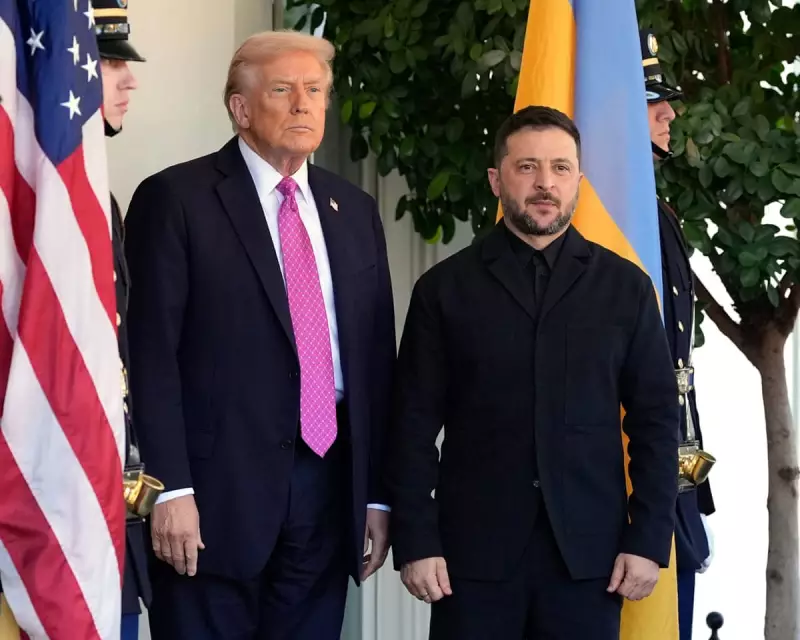
Ukrainian President Volodymyr Zelenskyy has delivered a stark warning to his nation, stating they face a very tough choice between preserving their dignity or risking the loss of a key partner. This comes amid increasing pressure from the Trump administration to accept a peace agreement that European leaders have described as amounting to capitulation.
The proposed 28-point plan, reportedly being pushed by Donald Trump's team, would require Ukraine to make significant concessions including surrendering the eastern Donbas region – including areas it currently controls – reducing its military capacity, giving up long-range weapons, and abandoning ambitions of NATO membership.
The Military Stalemate and Diplomatic Pressure
As the conflict prepares to enter its fourth winter, military analysts suggest neither side appears capable of achieving a decisive breakthrough. The grinding infantry battles on the eastern front, Russia's aerial bombardment campaigns, and Ukraine's long-range strikes against Russian infrastructure have created an equilibrium that shows little sign of shifting.
According to Shaun Walker, the Guardian's central and eastern Europe correspondent, Russia maintains military momentum only in the bleakest sense. They've demonstrated an inability to capture territory without first reducing it to ruins through their slow, destructive advances.
The prospect of either side achieving what could be considered a clear military victory appears increasingly unlikely. Neither Russian forces storming into major cities nor Ukrainian troops making sweeping territorial gains seem feasible in the current circumstances.
The Human Cost and Political Calculations
The mood in Ukraine has grown increasingly despondent, with Walker noting that this winter feels harder than any since the invasion began. Previous winters carried some measure of hope – whether in anticipated counteroffensives or potential political changes that might transform Ukraine's fortunes. Now, that hope has largely evaporated.
Ukrainian society shows signs of profound fatigue, and more people may be willing to contemplate a painful compromise than at any previous point in the conflict. However, any acceptable deal would likely require robust security guarantees, potentially involving Western troops stationed along contact lines.
Yet serious questions remain about whether Western nations would have the appetite for such commitments, particularly given their consistent policy of avoiding direct military confrontation with Russia.
For Vladimir Putin, the situation presents two difficult choices. Continuing the indefinite war strains Russia's economy and could eventually lead to domestic unrest. However, ending the conflict without clear achievements after so much loss of life also carries significant political risks.
Zelenskyy faces his most precarious political moment since the invasion began, navigating corruption scandals involving close associates and increasing disaffection with his governing style. The timing of the Trump administration's peace proposal may have inadvertently provided him with a unifying external threat that has temporarily focused domestic attention away from internal challenges.
The possibility of elections adds another layer of complexity. Constitutionally overdue by a year, the prevailing sentiment has been that elections cannot be held during wartime. The proposed American peace plan calls for elections within 100 days of conflict resolution, which could prove destabilizing for a society grappling with returning soldiers and political tensions suppressed during the war effort.
For now, the best-case scenario for Ukraine appears to be maintaining the status quo – a continuation of the grinding, attritional conflict that preserves Ukrainian sovereignty and prevents further territorial collapse. While this represents a positive outcome compared to many alternatives, it provides little motivation for a weary population facing another difficult winter.