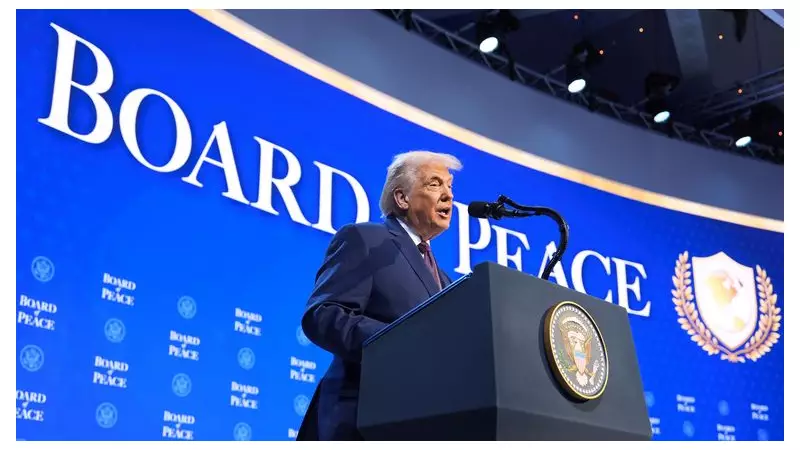
Trump's Board of Peace Expands Its Global Ambitions
When it was first announced four months ago, Donald Trump's Board of Peace appeared primarily focused on the future of Gaza. However, recent developments at the Davos summit have revealed a far more expansive vision for this diplomatic initiative. The board's ambitions have become overtly broader, with its scope widening significantly and its pace accelerating dramatically.
From Gaza Reconstruction to Global Influence
The initial presentation by Jared Kushner, Trump's son-in-law and roving diplomat, showcased a radical reimagining of Gaza as an investment opportunity rather than a warzone. His PowerPoint presentation outlined a vision where free market economics would transform the region, replacing aid dependency with entrepreneurship and investment. This ambitious proposal stands in stark contrast to the current reality of displaced populations living amidst rubble that will take years to clear.
The message emerging from Davos was clear: while Gaza remains important, the board's aspirations now encompass much more. This shift raises significant questions about the initiative's ultimate purpose and potential impact on global diplomatic structures.
A Potential Challenge to Established Institutions
While the Board of Peace is unlikely to replace the United Nations in the immediate future, it represents a meaningful challenge to existing international frameworks. The UN, despite its humanitarian credentials, faces mounting criticism worldwide regarding institutional bias and operational inefficiencies. Israel's recent decision to demolish the Jerusalem headquarters of UNRWA, a UN agency supporting Palestinian refugees, exemplifies the growing tensions between some nations and established international bodies.
Israeli officials have expressed clear preference for dealing directly with the White House rather than through UN channels, regardless of perceived capriciousness in American foreign policy. This sentiment reflects broader dissatisfaction with current diplomatic structures that the Board of Peace seeks to address.
The Evolving Composition and Future Prospects
Currently, the board functions largely as an assembly of Trump's allies and those seeking closer relations with his administration. With Trump serving as chairman for life and retaining the right to nominate his successor, the initiative's longevity remains uncertain, particularly regarding potential changes in American leadership after the 2028 presidential election.
The potential inclusion of major global powers could dramatically alter the board's influence. Should Russia, India, or China choose to participate, the initiative could develop significant gravitational pull in international affairs. Such developments would transform the board from a regional peace initiative into a powerful diplomatic entity with global reach.
European nations have largely maintained skepticism toward the initiative, with the United Kingdom explicitly declining participation due to concerns about Russia's potential involvement. This division highlights how the Board of Peace reflects broader shifts in global alliances and diplomatic approaches.
A Symbol of Changing World Order
The emergence of Trump's Board of Peace represents more than just another diplomatic initiative; it symbolizes fundamental changes in how international relations are conducted. The United States, traditionally positioned as leader of the free world, is now establishing alternative frameworks that operate outside conventional multilateral institutions.
This development creates both opportunities and uncertainties in global diplomacy. While some welcome more direct approaches to conflict resolution, others find the unpredictability and potential fragmentation of international cooperation deeply concerning. As the world navigates this new diplomatic landscape, the Board of Peace will undoubtedly continue evolving, potentially reshaping how nations engage with one another on the global stage.