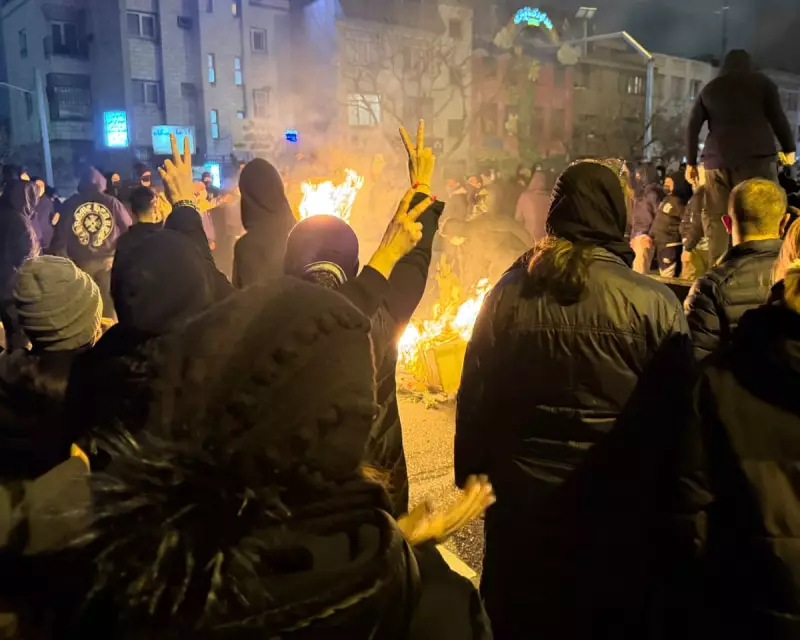
Former US President Donald Trump has issued a stark warning to Iranian authorities, threatening unspecified but "very strong action" if they proceed with the reported planned executions of anti-government protesters. The warning comes as the crisis in Iran deepens, with the reported death toll now exceeding 2,500 individuals.
Imminent Threat to Detained Protesters
There are grave international concerns that Iranian authorities may soon begin carrying out death sentences against those arrested during the recent nationwide unrest. A focal point of this fear is the case of Erfan Soltani, a 26-year-old reportedly facing imminent execution. Soltani was arrested in Karaj, near Tehran, at the peak of the demonstrations and has been swiftly tried, convicted, and sentenced since his detention on Thursday last week.
Rights groups, including Amnesty International, have highlighted his situation, warning that Iran might use "swift trials and arbitrary executions to crush and deter dissent." The scale of the crackdown is immense, with more than 18,100 people detained and at least 2,571 killed, according to the US-based Human Rights Activists News Agency (HRANA). This figure includes 12 children and represents the deadliest period of unrest in Iran for decades.
Trump's Vague but Forceful Warning
In an interview with CBS News, Trump was asked about the potential hangings. "If they do such a thing, we will take very strong action," he stated, repeating the threat for emphasis. When pressed for details, he alluded to previous US military operations, referencing strikes in Venezuela and the 2019 raid that killed Islamic State leader Abu Bakr al-Baghdadi.
"We don't want to see what's happening in Iran happen… When they start killing thousands of people. And now you're telling me about hanging. We'll see how that works out for them. It's not going to work out good," Trump added. He also posted a message on his Truth Social platform, urging "Iranian Patriots" to continue protesting and promising that "help is on its way."
Iran's Defiant Response and Ongoing Crackdown
Tehran has forcefully rejected the American warnings. Iran's UN mission accused Washington of using sanctions, threats, and "engineered unrest" to create a "pretext for military intervention." A Russian foreign ministry spokesperson echoed this sentiment, characterising US pressure as an attempt by "external forces hostile to Iran" to destabilise the state.
Despite authorities claiming to have regained control, the aftermath of the protests reveals a severe situation. For the first time in days, international phone lines were restored after a widespread communications blackout. Security forces are reportedly searching for Starlink satellite terminals, with raids reported in northern Tehran.
Disturbingly, Iranian state media has broadcast at least 97 coerced confessions from protesters since 28 December, according to HRANA. The group states these confessions are often extracted under torture and can lead to severe punishments, including execution. Witnesses describe a continued heavy security presence in public spaces, with anti-riot police equipped for further confrontation.
The international community watches with apprehension as the situation develops, with the US and several Western nations having issued urgent travel warnings for their citizens in Iran.