Trump Ultimatum to Hamas Looms as Gaza Peace Plan Stalls Over Disarmament
The progress of the US-brokered Gaza peace plan has hit a significant roadblock due to intense disputes over the disarmament of Hamas. Israeli officials are now claiming that former US President Donald Trump is poised to deliver a critical ultimatum to the militant group within days, setting the stage for potential escalation back to full-scale war if conditions are not met swiftly.
Deadline for Disarmament Sparks Tensions
According to reports from Israeli government sources, Trump is expected to issue a 60-day deadline for Hamas to completely disarm and demilitarize Gaza. This ultimatum, as stated by far-right Finance Minister Bezalel Smotrich in a public radio address, would come directly from Washington. Smotrich emphasized that failure to comply would grant the Israel Defense Forces (IDF) international legitimacy and American backing to enforce disarmament militarily.
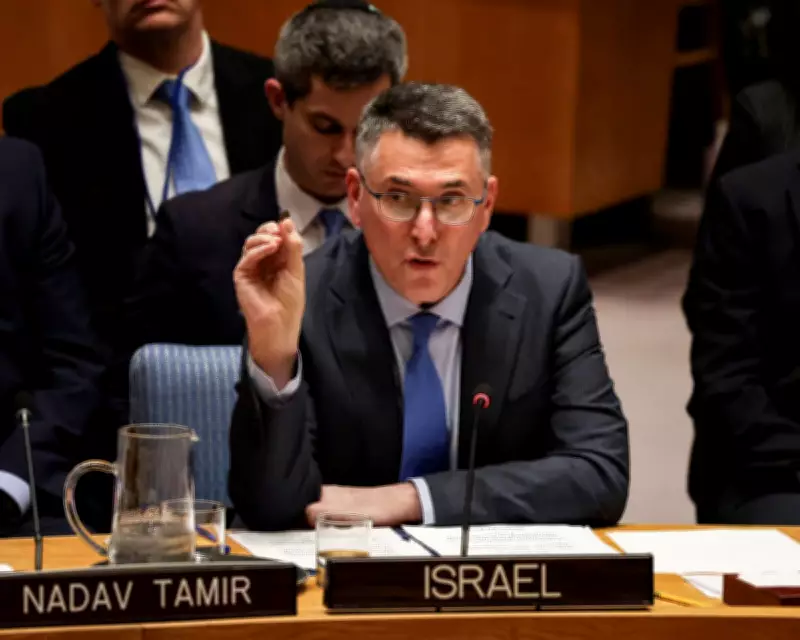
Israeli Foreign Minister Gideon Saar reinforced this timeline, telling the security cabinet that Trump's ultimatum is imminent. However, Trump did not address the issue in his recent State of the Union speech, leaving some ambiguity around the exact timing and details of the demand.
Peace Plan Sequencing Remains Vague
The second phase of the ceasefire agreement, which began in January, was designed to involve Hamas disarming, Israeli forces withdrawing, and a Palestinian interim administration taking over Gaza with support from a Palestinian police force and an International Stabilization Force (ISF). The 20-point plan, overseen by Trump's newly established Board of Peace, lacks clear sequencing, leading to conflicting interpretations.
Israel insists that Hamas must disarm first before any other steps are taken. In contrast, other parties, including Egypt and Saudi Arabia, advocate for a phased approach similar to the Northern Ireland peace agreement, where all paramilitary groups would disarm under independent oversight.
Challenges in Implementation and Readiness
Even if a disarmament campaign is announced, significant logistical hurdles remain. The National Committee for the Administration of Gaza (NCAG), a group of 15 Palestinian technocrats, has convened in Cairo but is not yet prepared to enter Gaza. Funding delays and security concerns have stalled their deployment.
A police force is being trained in Jordan and Egypt to serve under the NCAG, but Israel's vetting process has rejected many recruits with past ties to Hamas, resulting in an insufficient force for Gaza's 2.2 million residents. Additionally, while countries like Indonesia and Morocco have offered troops for the ISF, the force's mandate is unresolved, and contributors are reluctant to engage in direct disarmament operations against Hamas.
Hamas Resistance and Israeli Maximalist Demands
Analysts predict that Hamas will likely reject the disarmament plan as outlined in Israeli media reports. Muhammad Shehada, a Gaza analyst at the European Council on Foreign Relations, notes that the plan asks Hamas to surrender its weapons without guarantees of Israeli withdrawal or disarmament of rival groups, leaving them vulnerable. Hamas may instead accept freezing offensive weapons while retaining light arms for self-defense under strict controls.
Shehada argues that Israeli Prime Minister Benjamin Netanyahu's maximalist demands are designed to provoke Hamas into refusal, thereby justifying a return to military operations. This strategy, he suggests, mirrors tactics used in dealings with Iran, aiming to persuade Trump that war is the only viable option.
Broader Implications and Future Scenarios
The Israeli approach has raised concerns about the viability of the peace plan. HA Hellyer, a senior associate fellow at the Royal United Services Institute, warns that making the entire process dependent on Hamas disarmament could lead to collapse and renewed conflict. Smotrich has openly expressed expectations for disarmament to fail, paving the way for Israeli occupation and settlement expansion in Gaza.
As tensions mount, the coming days will be critical in determining whether diplomatic efforts can overcome these deep-seated disagreements or if the region is headed back toward all-out war.