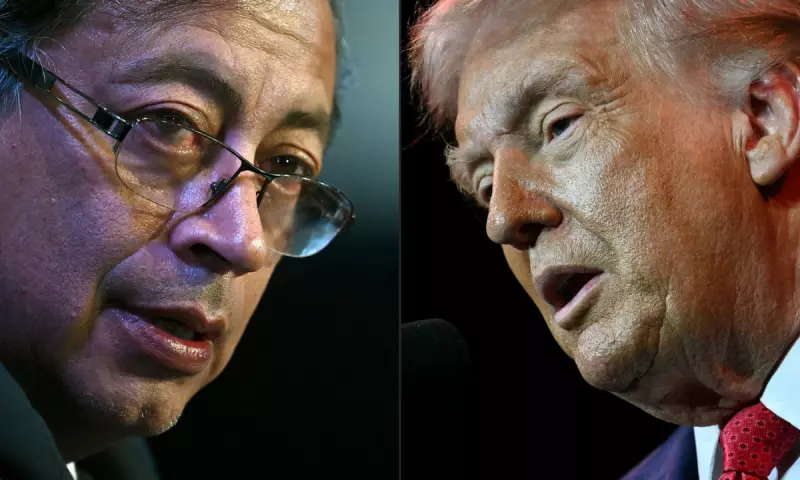
Former United States President Donald Trump has reignited a fiery diplomatic dispute, launching a fresh verbal assault on Colombia's leftist leader, President Gustavo Petro. The public spat, which began during Trump's previous term, has flared up once again, casting a shadow over relations between Washington and a key Latin American ally.
The Roots of the Rift: A History of Clashing Ideologies
The animosity between the two figures is not new. It stems from profound ideological differences. Gustavo Petro, a former guerrilla fighter turned politician, represents a progressive, socially focused agenda for Colombia. Donald Trump, a populist conservative, has frequently clashed with leaders he perceives as socialist or leftist.
The current exchange was triggered by comments from President Petro. He characterised Trump's political movement as "neo-fascist" and suggested its success would be detrimental to Latin America. This critique did not go unanswered.
In a characteristic response on his Truth Social platform, Trump fired back with personal and political insults. He dismissed Petro as a "former guerrilla who is trying to destroy the great country of Colombia" and labelled him a "catastrophe" for the nation. Trump further claimed that the Colombian people held him in high regard, in stark contrast to their view of their own president.
Immediate Fallout and Regional Repercussions
The immediate consequence was a firm rebuttal from the Colombian government. The country's embassy in Washington issued a formal statement rejecting Trump's remarks. It emphasised Colombia's status as a stable democracy and a strategic partner of the US, underscoring that its internal affairs and leadership are chosen solely by its citizens.
This public feud raises significant concerns about the future of US-Colombia relations, a partnership long considered a cornerstone of American policy in the region. For decades, the two nations have collaborated closely on issues ranging from counter-narcotics to trade. A breakdown in diplomatic decorum at the highest levels threatens to undermine this cooperation.
Analysts warn that such rhetoric from a leading US presidential candidate creates uncertainty and instability. It sends a worrying signal to other Latin American nations about the potential volatility of future American foreign policy. The region, already navigating complex challenges, watches closely as personal animosities threaten to dictate international diplomacy.
A Pattern of Provocation and the Road Ahead
This incident fits a familiar pattern of Donald Trump's approach to foreign leaders who criticise him, often involving personal attacks rather than policy-based debate. The focus on Petro's distant past as a guerrilla, for instance, is seen as an attempt to delegitimise his democratic mandate.
As the US moves closer to its next presidential election, the world is reminded that the prospect of a second Trump term carries implications far beyond America's borders. For Colombia and its neighbours, the verbal salvos represent more than just political theatre; they are a potential prelude to a more contentious and unpredictable chapter in inter-American affairs. The stability of a critical bilateral relationship now appears contingent on the whims of a deeply personal and public feud.