US President Donald Trump has declared there is a "good chance" of reaching an agreement to end the war in Ukraine following extensive negotiations with Ukrainian officials in Florida, even as Russian attacks continued to claim civilian lives over the weekend.
Diplomatic Push Amid Ongoing Violence
After what both American and Ukrainian officials described as "productive" discussions in Florida, Secretary of State Marco Rubio acknowledged that "more work" remains to be done. A source within Kyiv's delegation characterised the talks as "not easy," highlighting the complexity of the negotiations.
The talks set the stage for Trump envoy Steve Witkoff to travel to Moscow for anticipated discussions with Russian President Vladimir Putin on Tuesday. The diplomatic engagement comes at a critical moment for Ukraine, which faces mounting pressure on both military and political fronts.
Speaking to reporters aboard Air Force One, Trump referenced Ukraine's "difficult little problems," including a corruption investigation that recently compelled President Volodymyr Zelenskyy to dismiss his chief of staff and top negotiator. Despite these challenges, the US president expressed optimism about reaching a settlement.
Weekend of Deadly Attacks
Even as diplomatic efforts intensified, violence continued to ravage Ukraine. At least six people were killed and dozens wounded in attacks across the country over the weekend, according to reports from Dan Sabbagh and Jane Clinton.
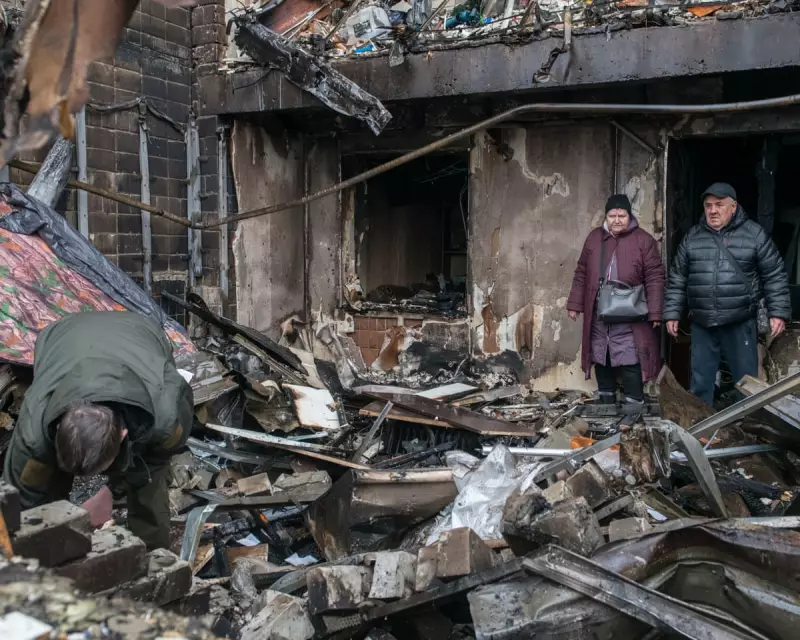
A drone strike on the outskirts of Kyiv on Saturday night claimed one life and left eleven people injured, the regional governor confirmed. The attack came as residents in Vyshhorod, a city in the Kyiv region, surveyed the destruction following a deadly Russian strike on a residential building on Sunday.
In a significant escalation of maritime warfare, Ukrainian security sources claimed responsibility for naval drone attacks on two oil tankers off Turkey's Black Sea coast. The vessels, identified as the Kairos and Virat, were allegedly covertly transporting sanctioned Russian oil as part of what the OpenSanctions database describes as a "shadow fleet" used to evade restrictions imposed on Moscow.
International Reactions and Political Turmoil
The Turkish government strongly condemned the Ukrainian drone strikes, with foreign ministry spokesperson Oncu Keceli stating the attacks occurred within Turkey's exclusive economic zone and "have posed serious risks to navigation, life, property and environmental safety in the region." Crew members from both targeted vessels were reported safe.
Meanwhile, Ukraine's government faced internal turbulence as Zelenskyy's powerful chief of staff, Andriy Yermak, was forced to resign on Friday after anti-corruption officials searched his flat as part of an investigation into an alleged kickback scheme.
Amid these challenges, President Zelenskyy maintained international diplomatic engagement, holding talks with European Commission President Ursula von der Leyen. In a post on X on Sunday, Zelenskyy thanked von der Leyen for backing Kyiv's resistance to Russia's invasion and noted her "close attention to the need to strengthen our resilience amid Russia's constant strikes on our infrastructure and the energy sector."
As diplomatic efforts continue with Witkoff's impending Moscow visit and the aftermath of the Florida talks, the situation remains fluid with both military actions and political manoeuvring shaping the trajectory of the 1,377-day conflict.