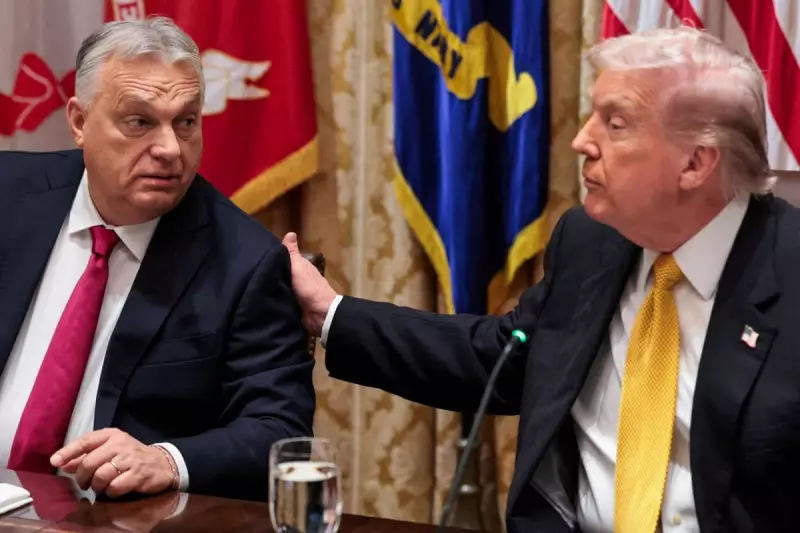
In a significant diplomatic move that has raised eyebrows across European capitals, former US President Donald Trump hosted Hungarian Prime Minister Viktor Orbán at the White House on 7th November 2025. The meeting came as Orbán faces crucial elections in less than six months, with his Fidesz party currently trailing in opinion polls.
A Strategic Alliance Strengthened
The Washington visit represented a strengthening of the political bond between two of the world's most prominent nationalist leaders. Orbán had been the only European Union leader to endorse Trump during the 2016 presidential campaign, and their relationship has deepened since. Steve Bannon, former White House strategist, once described the Hungarian leader as "the Trump before Trump" - a testament to their ideological alignment.
During their Oval Office discussions, Trump agreed to grant Hungary a special exemption from sanctions on Russian energy imports, despite having previously lectured European nations about eliminating all energy imports from Russia. This concession is particularly significant given that Hungary remains the largest consumer of Russian oil within the EU.
Pre-Election Boost for Orbán
The timing of the Washington meeting appears strategically important for Orbán's political fortunes. As he seeks a fifth consecutive term leading what he describes as an "illiberal democracy", the Hungarian prime minister secured valuable concessions that could bolster his campaign.
According to Orbán's account of the meeting, the Trump administration also committed to providing a "financial shield" for Budapest should it encounter future economic difficulties. This assurance comes as Brussels continues to withhold billions of pounds in EU funding from Hungary due to rule-of-law concerns.
Although the precise details of this financial arrangement remain somewhat unclear, Trump recently demonstrated his willingness to support ideological allies through a $20 billion emergency credit line to Argentina's far-right president Javier Milei.
EU Concerns and Regional Implications
Within EU circles, Trump's intervention has heightened concerns about the geopolitical implications of Hungary's upcoming election. The centrist challenger Péter Magyar currently enjoys a comfortable lead in opinion polls, offering potential relief for European leaders who have grown weary of Orbán's obstructionist tactics.
The special energy exemption granted to Hungary particularly rankles Brussels as it directly undermines EU aspirations to phase out Russian fossil fuel imports by 2027. Since 2022, Hungary and Slovakia - the two largest EU importers of Russian oil - have collectively contributed over £10 billion to the Kremlin's war effort through their energy purchases.
Meanwhile, Budapest has repeatedly used its veto power to stymie progress in Ukraine's EU accession talks, creating significant obstacles as Europe strives to maintain a unified strategy for supporting Kyiv. Orbán's Putin-friendly stance continues to complicate diplomatic efforts to strengthen Ukraine's position in potential peace negotiations.
As Brussels watches developments unfold, there's cautious optimism that a change in Hungarian leadership might finally see the country behaving as a constructive EU member. After years of diplomatic trolling and value clashes, European leaders can only wait and hope that the upcoming election might mark a turning point in Hungary's relationship with the European project.