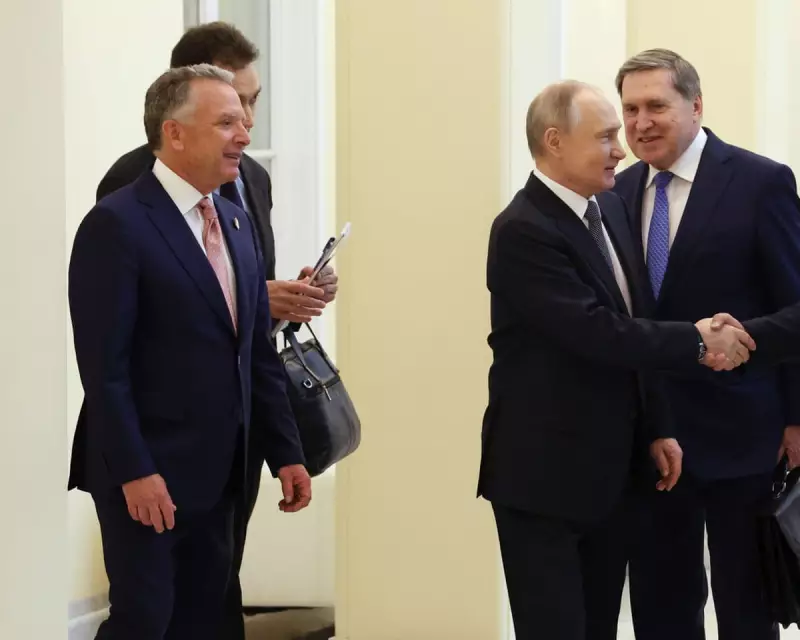
Trump Envoy's Shocking Kremlin Advice Revealed in Recording
Donald Trump's special envoy Steve Witkoff provided direct advice to a senior Kremlin official about peace negotiations in Ukraine, suggesting Russia should gain control of Donetsk and potentially engage in territorial exchanges, according to a recorded phone conversation obtained by Bloomberg.
The extraordinary discussion occurred on 14 October between Witkoff and Yuri Ushakov, the top foreign policy aide to Russian president Vladimir Putin. During the five-minute call, Witkoff outlined what he believed would be necessary to achieve a peace settlement while advising Ushakov on how to approach discussions with Trump.
What the Recording Reveals
According to a transcript of the recording, Witkoff told Ushakov: "Now, me to you, I know what it's going to take to get a peace deal done: Donetsk and maybe a land swap somewhere." The American envoy then suggested the Russian official should frame discussions more optimistically, adding: "But I'm saying instead of talking like that, let's talk more hopefully because I think we're going to get to a deal here."
The conversation represents a significant development in understanding the backchannel communications between Trump representatives and Russian officials regarding the ongoing conflict in Ukraine. Witkoff, who attended talks with Vladimir Putin in St Petersburg back in April, appears to be taking an unusually direct role in shaping negotiation parameters.
Reaction from Ukraine Supporters
Meanwhile, Americans involved in supporting Ukraine's war effort have expressed strong reactions to Trump's continuing pressures on Kyiv. Multiple sources describe feeling embarrassed and dismayed by the administration's approach, with some characterizing the latest peace plan as tantamount to backstabbing and another catastrophic failure of US foreign policy.
The revelations come at a sensitive time in US-Russia relations and raise questions about the Trump administration's diplomatic strategies. The recording suggests Witkoff was not merely observing discussions but actively participating in shaping negotiation tactics between the two nations.
Broader Implications for US Foreign Policy
This development occurs alongside other controversial foreign policy moves by the Trump administration. The justice department has reportedly developed a legal justification for boat strikes against drug cartels in the Caribbean that differs significantly from Trump's public narrative about preventing overdose deaths.
According to internal documents, the administration frames these strikes as collective self-defense efforts on behalf of US allies, despite no public evidence that cartels are waging armed violence against regional security forces. The legal analysis treats casualties as enemy combatants or collateral damage rather than addressing potential murder charges.
Additionally, the interior department announced new "America-first" national park fees that will more than triple costs for international visitors while introducing patriotic fee-free days and commemorative passes featuring Donald Trump. The changes take effect next year and include substantial increases at 11 of the most visited national parks.
Ongoing Developments
This story continues to develop as more details emerge about the nature and extent of communications between Trump representatives and Russian officials. The recording raises significant questions about:
- The official channels being used for Ukraine peace negotiations
- The consistency of US foreign policy messaging
- The potential impact on Ukraine's defensive capabilities
- Long-term implications for US credibility in international conflicts
Follow our liveblog for continuing coverage of this developing story and its implications for international diplomacy and US foreign policy.