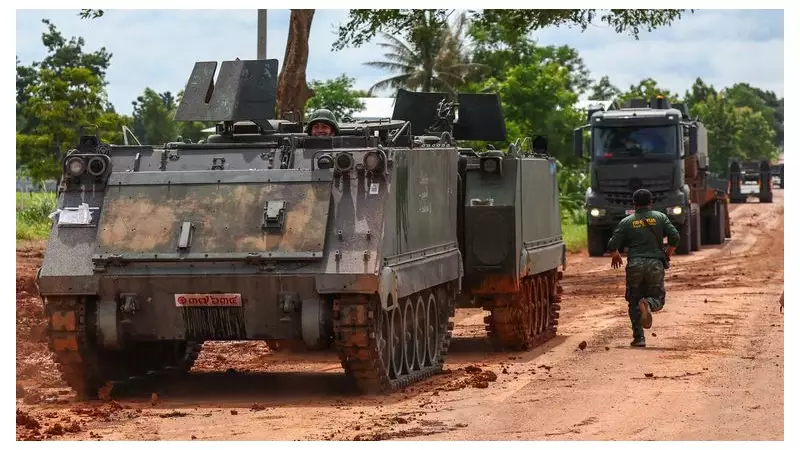
Fragile Truce Shattered by Border Explosion
A US-brokered peace agreement between Thailand and Cambodia has been thrown into jeopardy following a landmine explosion that injured four Thai soldiers. The government in Bangkok has announced an immediate pause on the implementation of the ceasefire, a significant blow to diplomatic efforts led by President Donald Trump.
The incident occurred on Monday in Thailand's Sisaket province, along the contentious border with Cambodia. The Thai army reported that a sergeant lost a foot in the blast, while three other soldiers sustained minor shrapnel injuries.
Accusations and Denials Fly
Thailand has directly accused Cambodia of laying new anti-personnel mines in clear violation of the truce terms established just last month. This accusation was firmly rejected by Cambodian authorities, who instead attributed the explosion to remnants from past conflicts.
Cambodia's Defence Ministry spokesperson, Maly Socheata, urged Thai troops to exercise caution and avoid patrolling in known old minefield areas. She reaffirmed that Cambodia "remains committed to working closely with Thailand to promote peace and stability between the two countries."
In a strong response, Thai Foreign Ministry spokesperson Nikorndej Balankura stated on Tuesday that the incident demonstrated "Cambodia's utter lack of sincerity" and demanded an official apology.
Immediate Consequences and Broader Tensions
As a direct result of the explosion, Thailand has decided to indefinitely halt the release of 18 Cambodian prisoners of war currently held by its military. This was a key component of the truce agreement, which also stipulated the withdrawal of troops and heavy weapons from the border region.
This latest crisis threatens to reignite the severe tensions that flared between the South East Asian neighbours over the summer. The two sides clashed for five days in a conflict that resulted in at least 48 fatalities and displaced approximately 300,000 people, marking the worst fighting in their recent history.
The original ceasefire was signed in Malaysia in October with President Trump personally present. Announcing the deal, Mr Trump had boasted that it was one of eight wars his administration had ended within eight months, amid widespread speculation that his diplomatic efforts are driven by a desire to win a Nobel Peace Prize.
Analysts, however, had expressed scepticism about the longevity of the agreement from the outset. Matthew Wheeler, a Southeast Asia senior analyst for the International Crisis Group, commented that the breakdown was "predictable," suggesting the deal was "concluded to placate President Trump on matters unrelated to the conflict, namely, trade and Trump's desire to be perceived as a peacemaker."