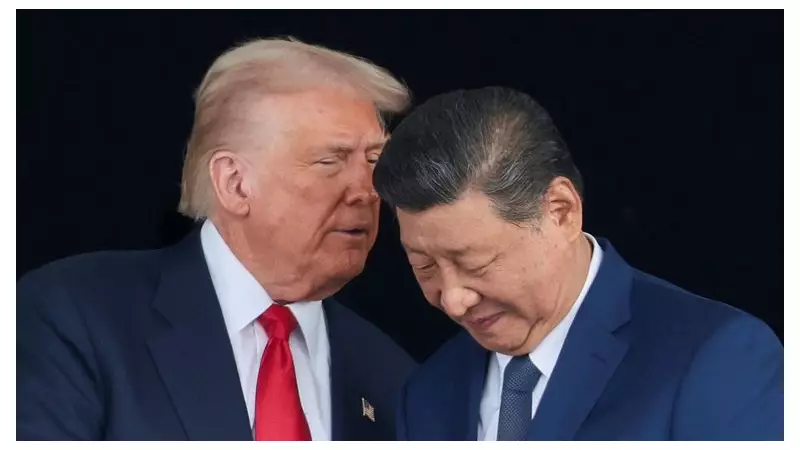
Tensions surrounding Taiwan's status have intensified following high-level diplomatic exchanges between the United States and China. The situation escalated after a phone conversation between US President Donald Trump and Chinese leader Xi Jinping, which prompted a firm public response from Taiwan's democratically elected government.
A Firm Rejection from Taipei
Taiwan's Prime Minister, Cho Jung-tai, delivered a stark message, stating unequivocally that a "return" to mainland China is not a viable path for the island. His remarks came directly after President Xi Jinping discussed the Taiwan issue with his American counterpart. During their call, Xi Jinping characterised Taiwan's return as "an integral part of the post-war international order".
This position was immediately rejected by the government in Taipei, which regards Taiwan as a "fully sovereign and independent country". Prime Minister Cho emphasised the will of the people, adding, "For the 23 million people of our nation, 'return' is not an option - this is very clear."
Regional Tensions and International Stances
The diplomatic friction extends beyond the US-China-Taiwan triangle. Relations between Beijing and Tokyo have recently plunged to new lows. The catalyst was a suggestion from Japan's Prime Minister, Sanae Takaichi, that any attack on Taiwan would trigger a military response from Japan.
China's foreign ministry swiftly denounced these comments, accusing Japan of having "crossed a red line that should not have been touched". Analysts, such as Sun Yun from the Stimson Centre thinktank, believe "China is worried about the escalation with Japan" and that the reference to the post-World War II order directly points to the ongoing spat between the two Asian powers over Taiwan.
Amid these rising tensions, Taiwan's defence ministry reported spotting a single Chinese balloon flying over the Taiwan Strait. Taipei claims this is part of a broader campaign of harassment by Beijing, while Chinese officials have previously dismissed such complaints, arguing the balloons are used for meteorological purposes.
The US Position and Future Diplomacy
The United States maintains a carefully calibrated position on the sensitive issue. Officially, the US has not taken a side on Taiwan's sovereignty but has consistently stated it is opposed to any use of force to seize the territory. The ambiguity extends to the Trump administration's stance on military deployment; it remains unclear whether US troops would be deployed if conflict erupted in the Taiwan Strait.
Despite the underlying tensions, US-China relations have shown signs of improvement in recent weeks. The positive shift followed a face-to-face meeting between Trump and Xi in South Korea, which led to the US president moving to cut tariffs. Trump celebrated the relationship on Truth Social, writing, "Our relationship with China is extremely strong!"
Looking ahead, further high-level dialogue is planned. Donald Trump has confirmed he will visit Beijing in April, with a reciprocal state visit by Xi Jinping to Washington scheduled for later in 2026.