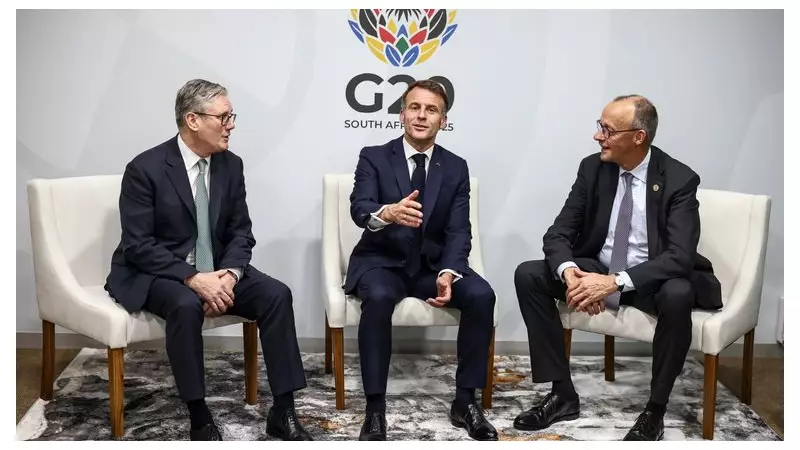
The first G20 summit to be held on African soil opened in Johannesburg on Saturday 22nd November 2025, marked by a significant diplomatic absence. US President Donald Trump boycotted the talks, while UK Prime Minister Sir Keir Starmer used the platform to champion a new international economic strategy.
A Divided Global Stage
Leaders and senior officials from the world's major economies gathered in South Africa for the two-day summit, which aims to tackle pressing issues affecting the planet's poorest nations. However, the United States administration made a conspicuous decision to stay away. The Trump team had signalled its opposition to South Africa's G20 agenda for months, with Secretary of State Marco Rubio skipping a preparatory foreign ministers' meeting in February.
Mr Rubio stated he would not spend American taxpayers' money on an agenda focused heavily on diversity, equity, inclusion, and climate change. As the nation holding the rotating G20 presidency, South Africa had the authority to set the summit's focus.
Starmer's Call for Collective Action
Prime Minister Sir Keir Starmer, who defended his attendance just days before a challenging UK budget, emphasised the bloc's crucial role. "The role of the G20 is critical at this moment," Sir Keir stated during the summit's opening day.
He argued that fostering growth is an essential mission for all nations to improve lives, fund public services, and ensure security. Highlighting the G20's past success in fixing fundamental problems in the global economy, he called for a renewed collaborative spirit. "I'd like to see us come together around a five-point plan for growth that leaves no one behind," he proclaimed, though specific details of the plan were not immediately disclosed.
An Early Declaration and a Claimed Victory
In a break from standard procedure, the G20 leaders adopted a summit declaration at the very start of their meeting, a move that occurred despite the noted opposition from the United States. Vincent Magwenya, spokesman for South African President Cyril Ramaphosa, announced that the leaders' declaration was adopted unanimously.
"Normally the adoption of the declaration happens right at the end," Mr Magwenya explained. "But there was a sense that we should actually move to have the summit declaration adopted first as the first order of the day." While the contents of the declaration were not detailed, the South African government promoted its early adoption as a significant achievement for the summit.
The G20, formed in 1999 as a bridge between wealthy and developing nations to confront financial crises, represents a substantial portion of global activity. Its members account for approximately 85% of the world's economy, 75% of international trade, and over half of the global population.