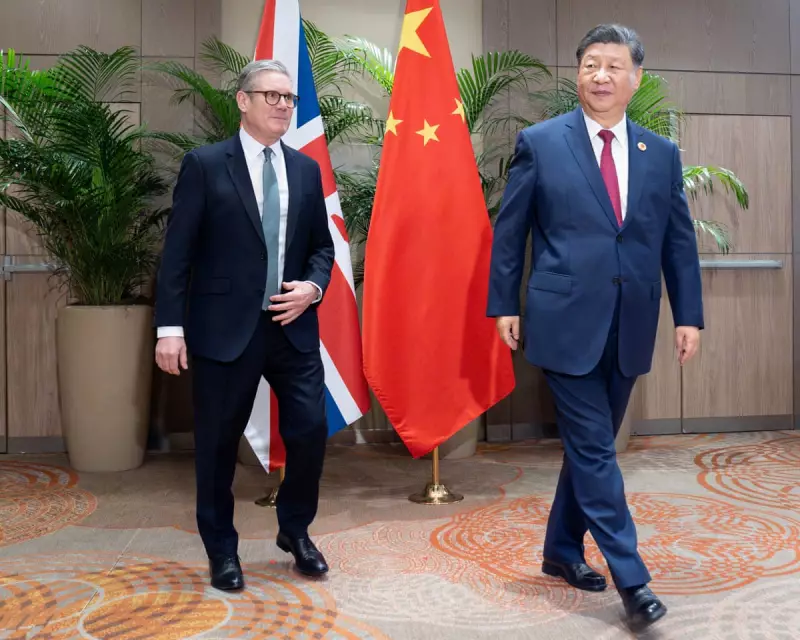
Starmer's Diplomatic Mission: Seeking Stability in UK-China Relations
Prime Minister Keir Starmer has embarked on his inaugural visit to China with a clear objective: to establish "stability and clarity" in the United Kingdom's approach to Beijing. This marks the first visit by a British prime minister in eight years, coming after what Starmer has characterised as years of "inconsistency" under previous Conservative administrations. However, his mission to bolster ties with the world's second-largest economy faces immediate challenges across multiple fronts that will test his diplomatic skills.
The Human Rights Conundrum: Jimmy Lai and Beyond
One of the most pressing issues confronting Starmer is the case of Jimmy Lai, the imprisoned former media magnate and prominent Hong Kong pro-democracy advocate. As a British citizen recently convicted on national security charges that the UK views as politically motivated, Lai's situation has become a focal point. Foreign Secretary Yvette Cooper has already demanded his immediate release and summoned the Chinese ambassador following the verdict.
With Lai potentially facing life imprisonment amid growing concerns about his health, Starmer faces significant pressure to advocate for his freedom. The Prime Minister, a former human rights lawyer, may also address the treatment of the Uyghur Muslim minority in China, who have reportedly been subjected to forced labour programmes. These human rights concerns represent a fundamental tension between diplomatic engagement and Britain's traditional commitment to defending human rights globally.
The Taiwan Question: Navigating Diplomatic Sensitivities
President Xi Jinping may raise the issue of Taiwan during discussions, despite China's preference for Western nations to avoid involvement in what it considers an internal matter. Unification remains one of Xi's primary objectives, and he has not excluded the possibility of using military force to achieve this goal. Under his leadership, China has intensified both military intimidation and non-military pressure campaigns against Taiwan.
With US intelligence suggesting Xi has instructed the military to prepare for potential conflict by 2027, this represents a particularly delicate diplomatic moment. The UK maintains no formal diplomatic relations with Taiwan and does not recognise it as a sovereign state. Starmer will need to tread carefully, particularly given last year's incident when China threatened to cancel high-level trade talks following a British minister's visit to the territory.
Embassy Developments and Reciprocal Diplomacy
In a significant diplomatic development, the UK government recently approved China's controversial plan to construct a new mega-embassy near the Tower of London. This project, initially approved during Boris Johnson's tenure as foreign secretary, had faced opposition from MPs across the political spectrum who expressed concerns about potential espionage risks from the large site located near critical data cables serving the City of London.
Security officials ultimately reassured ministers that these risks could be managed, leading to the approval. President Xi had personally raised this matter during his first phone conversation with Starmer in August 2024, making the timing particularly advantageous for the Prime Minister. Government insiders hope this decision might provide leverage regarding the UK's own deteriorating embassy in Beijing, whose renovation had been stalled due to diplomatic tensions.
National Security Concerns and Espionage Threats
There exists widespread concern across British politics regarding China's alleged attempts to spy on politicians and infiltrate critical national infrastructure. MI5 issued an espionage alert last November following attempts to recruit parliamentarians through LinkedIn profiles linked to Chinese intelligence services. China has sanctioned several British MPs and peers, while the UK has previously imposed sanctions on groups accused of cyber espionage campaigns targeting politicians, journalists, and critics of Beijing.
Additional concerns include allegations of harassment against Hong Kong pro-democracy activists in the UK and suppression of academic criticism at British universities. Downing Street has emphasised that Starmer maintains a "clear-eyed" perspective on the national security threats posed by China, both domestically and internationally, and will not hesitate to address difficult issues. This may include pressing Xi on Russia's war in Ukraine, where China has provided Moscow with financial support, components, and diplomatic cover while maintaining official neutrality.
Economic Priorities and Trade Relationships
The central purpose of Starmer's visit revolves around economic engagement, evidenced by his delegation of approximately fifty business and cultural representatives. Beyond any specific agreements that might be signed, the symbolic importance of this first prime ministerial visit in eight years cannot be overstated, signalling the UK's renewed focus on growth and prosperity through international partnerships.
Starmer will seek to secure ongoing Chinese investment in critical national infrastructure sectors, including steel production. However, within Beijing's broader international relationships, the UK represents a relatively minor player. Despite China being Britain's third-largest trading partner, the UK does not rank among China's top ten trading partners, with Beijing showing greater interest in the European Union as a collective entity.
The Trump Factor and Global Geopolitics
The unpredictable nature of US foreign policy under Donald Trump adds another layer of complexity to Starmer's diplomatic calculations. Trump's particularly strong views on China were demonstrated when he threatened Canada with 100% tariffs on imported goods if it pursued a trade deal with Beijing following Mark Carney's visit. Although the Canadian prime minister quickly clarified no such deal was planned, this served as a warning to other Western nations considering deeper economic ties with China.
The British government has highlighted Starmer's positive relationship with Trump, noting that the US president plans his own visit to Beijing in April. Starmer may also seek assurances from China regarding its intentions toward the Chagos Islands, following Trump's unexpected reversal of his previous support for related agreements.
A Delicate Balancing Act
Keir Starmer's mission to China represents a complex diplomatic balancing act, attempting to strengthen economic ties while addressing serious concerns about human rights, national security, and regional stability. His approach will need to navigate between Britain's economic interests, its commitment to human rights, and the realities of an increasingly multipolar world where China's global influence continues to grow as American engagement evolves. The success of this diplomatic initiative will depend on Starmer's ability to maintain this delicate equilibrium while advancing British interests on the world stage.