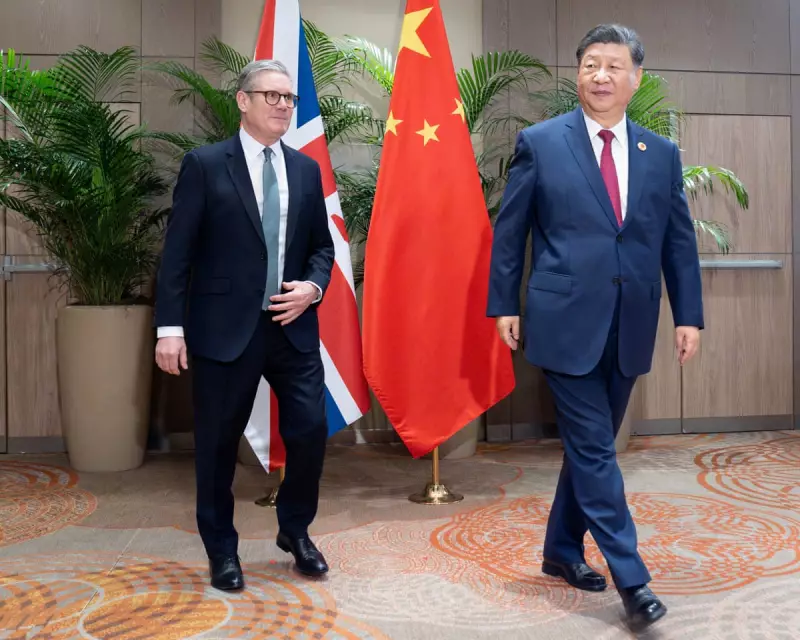
Starmer's Diplomatic Challenge in Beijing
Prime Minister Keir Starmer is poised to undertake a significant diplomatic mission to China, representing the first visit by a British leader since Theresa May's trip to Beijing in 2018. This journey comes at a critical juncture, as relations between London and Beijing have grown increasingly complex and strained over recent years. The visit will serve as a crucial test of Starmer's foreign policy vision and the United Kingdom's position on the global stage.
The Delicate Balance Between Security and Commerce
UK-China relations currently exist in a state of careful equilibrium, where security apprehensions must be weighed against substantial economic interdependence. Recent incidents have heightened tensions, including a Foreign Office disclosure in December about a sustained cyber-attack suspected to originate from a Chinese group known as Storm 1849. Security agencies have repeatedly issued warnings concerning technology transfer and data exposure within sensitive industries, while investigations into alleged espionage involving parliamentary researchers have further complicated the diplomatic landscape.
Despite these security challenges, the economic ties between the two nations remain deeply entrenched. British supply chains and trade networks maintain significant connections to Chinese manufacturing and production capabilities, making complete disengagement impractical. The recent controversy surrounding approval for a new Chinese embassy in London exemplifies the divided opinions within Britain regarding how to best manage this multifaceted relationship.
Britain's Geopolitical Leverage in Question
As Starmer prepares for his discussions in Beijing, he must carefully consider what diplomatic cards Britain holds in this high-stakes engagement. The United Kingdom retains important elements of global influence through its permanent seat on the UN Security Council, nuclear capabilities, and membership in the G7 alliance. However, questions persist about whether this institutional weight translates into meaningful leverage on issues such as human rights or regional security concerns.
China approaches these discussions from a position of considerable strength as the world's second-largest economy and a central hub in global manufacturing networks. Beijing's objectives appear clear: securing more predictable relations with Western nations, limiting criticism of its domestic and regional policies, maintaining access to British financial markets, and expanding cooperation in education, research, green technology, and investment sectors.
China's Strategic Global Positioning
Over the past three decades, China has systematically constructed extensive international networks through substantial investments in infrastructure, energy, and transportation projects, often in regions where Western capital has been hesitant to venture. This strategic approach has yielded significant influence across Asia, Africa, the Caribbean, and Latin America, positioning China as a development-focused partner rather than one emphasizing governance reform.
China has simultaneously worked to reduce its own dependencies while embedding itself deeply within global supply chains. Through targeted investments in strategic sectors including ports, railways, energy, mining, telecommunications, and manufacturing, Beijing has expanded international market access while strengthening domestic insulation from external pressures. The country's dominance in clean energy technologies, from photovoltaic cells to wind turbines and batteries, exemplifies this dual strategy of environmental benefit and strategic self-sufficiency.
Trade Realities and Policy Constraints
Recent trade data reveals China's formidable economic position, with the country projected to achieve a trade surplus of $1.19 trillion this year despite various international trade restrictions. This economic strength directly influences British policy considerations, as decisions regarding security, human rights, or technology must be evaluated against potential trade disruptions, increased consumer costs, and possible retaliatory measures against key sectors.
China has demonstrated willingness to employ coercive economic tools, as evidenced by tariffs imposed on the EU dairy industry following European protections for its automotive sector. For Britain, this reality creates genuine constraints on foreign policy options, requiring careful calibration between principle and pragmatism.
Defining Britain's Global Role
Starmer's Beijing visit represents more than a routine diplomatic engagement; it offers an opportunity to articulate Britain's vision for its place in an evolving global landscape. The prime minister must navigate fundamental questions about whether Britain sees itself primarily as a gateway to Europe, a close ally of the United States, or a nation facing relative decline in international influence.
This diplomatic challenge arrives at a time when Britain's national security faces significant vulnerabilities, arguably reaching their highest level since the conclusion of the Second World War. How Starmer manages both the opportunities and risks presented by this visit will contribute to defining his premiership and clarifying Britain's strategic direction during a period of substantial global transformation.
The Beijing trip provides a platform for Starmer to demonstrate whether Britain can effectively balance its security concerns with economic realities while maintaining principled positions on international issues. The world will be watching closely as the British leader attempts to chart a course through these complex diplomatic waters, seeking areas of potential collaboration while establishing clear boundaries where necessary.