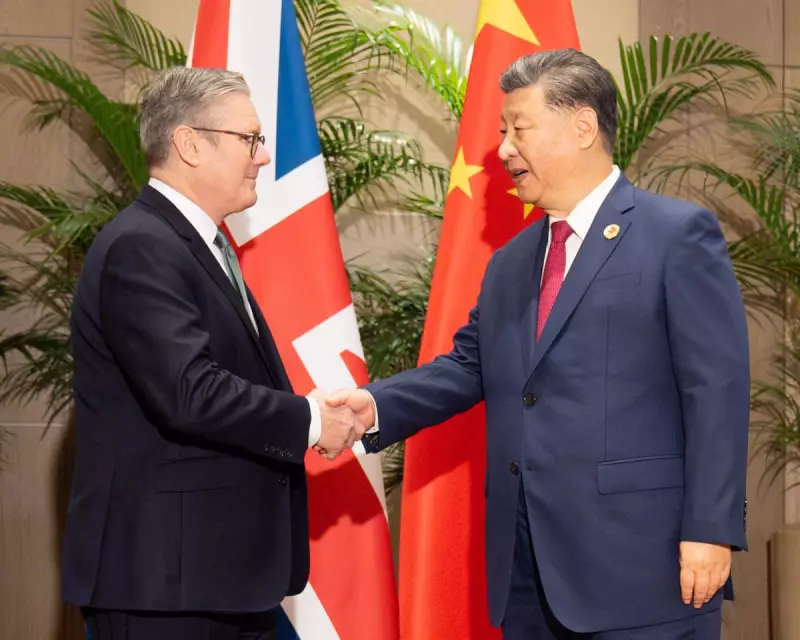
Prime Minister Keir Starmer has embarked on a significant diplomatic mission to China, pledging to maintain a "clear-eyed and realistic" stance on national security threats while seeking to bolster economic ties with the world's second-largest economy. This visit marks the first by a UK leader to Beijing in eight years, signalling a potential shift in Britain's approach after years of what Starmer describes as Tory "inconsistency."
A Delicate Balancing Act in Beijing
As western powers increasingly look to China for economic stability amid concerns about US reliability, Starmer's trip arrives at a complex geopolitical juncture. Tensions between Britain and its close ally, the United States, have surfaced over Donald Trump's controversial remarks regarding Greenland and criticism of the Chagos Islands agreement. Downing Street emphasised that in this era of growing global instability, the Prime Minister would act firmly in the UK's national interest during his discussions with Chinese President Xi Jinping and Premier Li Qiang.
Security Concerns and Economic Imperatives
The Prime Minister faces domestic criticism for pursuing warmer relations with China while the country continues to pose acknowledged national security threats to Britain. Recent controversies include China's approval for a new mega-embassy in London, allegations of attempts to recruit parliamentary informants, harassment of Hong Kong activists in the UK, suppression of academic criticism, and persistent cyber-attack concerns.
Downing Street has clarified that Starmer will maintain essential "guardrails" on national security matters while engaging in economic discussions with Chinese leadership. Officials stress that security and economic interests will not be traded against each other, with the Prime Minister prepared to raise areas of disagreement including human rights abuses during his conversations in Beijing.
The Pragmatic Approach to Engagement
Starmer has articulated a more pragmatic stance toward China, arguing that Britain cannot afford to ignore the economic opportunities presented by its third-largest trading partner, which supports approximately 370,000 British jobs. "For years, our approach to China has been dogged by inconsistency, blowing hot and cold, from golden age to ice age. But like it or not, China matters for the UK," the Prime Minister stated before his departure.
He emphasised that establishing a strategic and consistent relationship with China serves Britain's national interest, while acknowledging this does not mean ignoring the challenges China poses. "That does not mean turning a blind eye to the challenges they pose – but engaging even where we disagree," Starmer explained, outlining his government's philosophy of constructive engagement.
Political Opposition and International Context
The Conservative opposition has strongly criticised Starmer's decision to visit China, with Shadow Foreign Secretary Priti Patel accusing the Prime Minister of lacking leverage and backbone in his approach. Patel highlighted concerns about China's new embassy plans in London and the Chagos Islands agreement, warning against further concessions to Beijing.
However, Number 10 sources countered that refusing to engage with China would represent "a staggering dereliction of duty" that would make British people less safe, cut off economic opportunities, and weaken Britain's ability to address global challenges like climate change and public health. They noted that while French President Emmanuel Macron has visited China three times since 2018 and German leaders have made four visits during the same period, no British prime minister has travelled to Beijing until now.
Business and Cultural Delegation
Starmer's three-day visit to Beijing and Shanghai includes a substantial delegation of approximately sixty British businesses and cultural organisations, featuring prominent names such as HSBC, GSK, Jaguar Land Rover, and the National Theatre. Business Secretary Peter Kyle, who is accompanying the Prime Minister, emphasised the need for serious engagement after a decade of insufficient focus on the China relationship.
"We want to see trade flourish between us. From financial services to advanced manufacturing and the global energy transition, the UK's strengths increasingly align with the rapidly evolving Chinese economy," Kyle stated. He added that "the first duty of government is security, and we protect ourselves best through active engagement and pragmatic cooperation, not by shutting the door."
Regional Diplomacy Continues
Following his China visit, Prime Minister Starmer will travel to Tokyo for meetings with Japanese Prime Minister Sanae Takaichi, continuing his Asian diplomatic tour. This broader engagement reflects the government's commitment to strengthening Britain's relationships across the Asia-Pacific region while navigating complex security and economic considerations in an increasingly multipolar world.
The Prime Minister's approach represents a calculated attempt to establish what he calls "stability and clarity" in UK-China relations, balancing necessary security precautions with pragmatic economic engagement. As global power dynamics continue to shift, Britain's strategy toward China will remain a critical test of Starmer's foreign policy vision and his government's ability to protect national interests while pursuing international opportunities.